





Victorian Tapestry Picture
A victorian tapestry picture brings the textured warmth of needlework and wool into a room through framed scenes of animals, portraits, and historical subjects.
Victorian Tapestry Picture
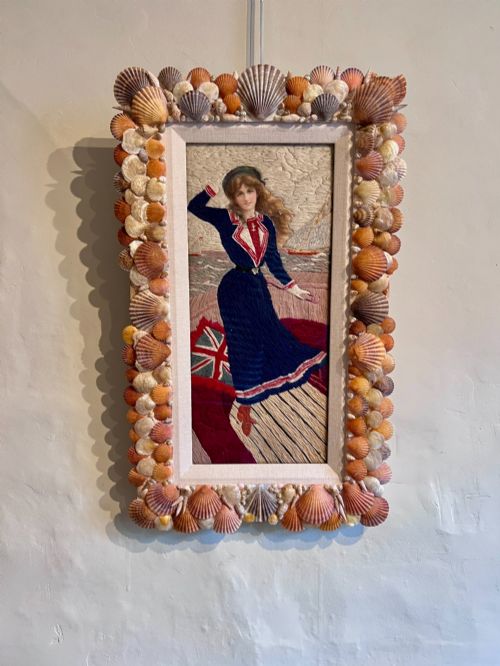
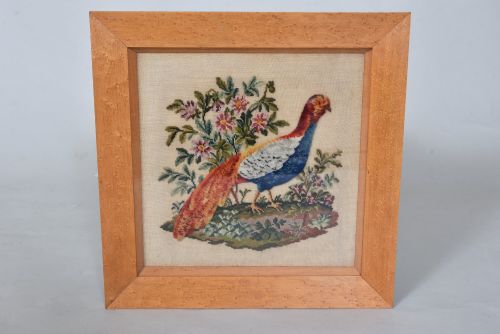
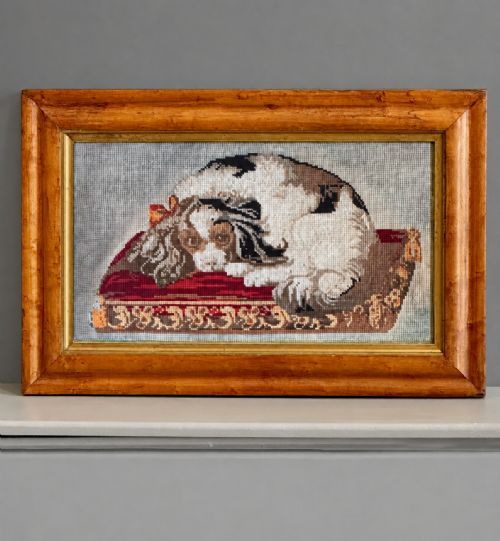
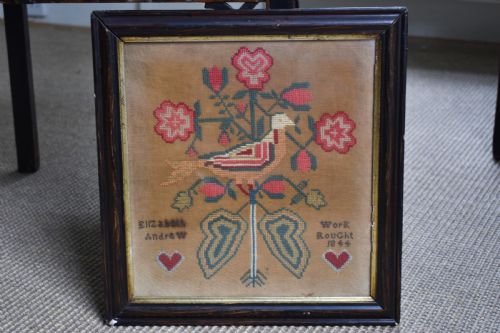
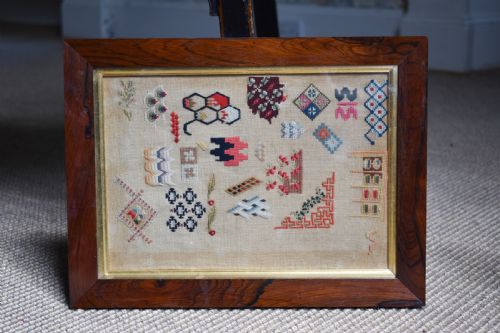
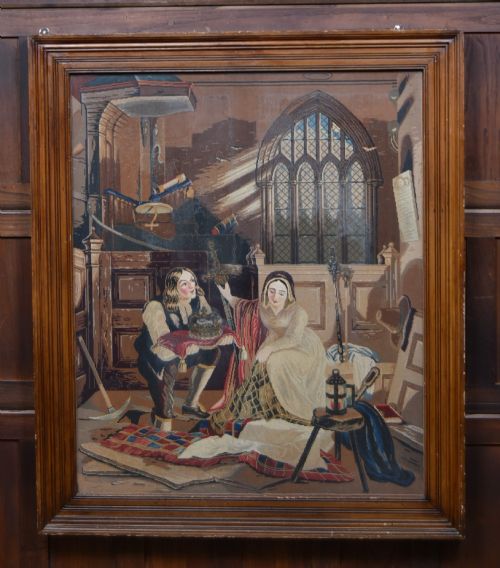
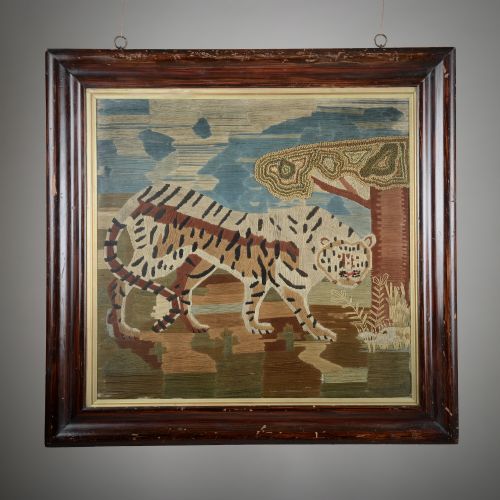
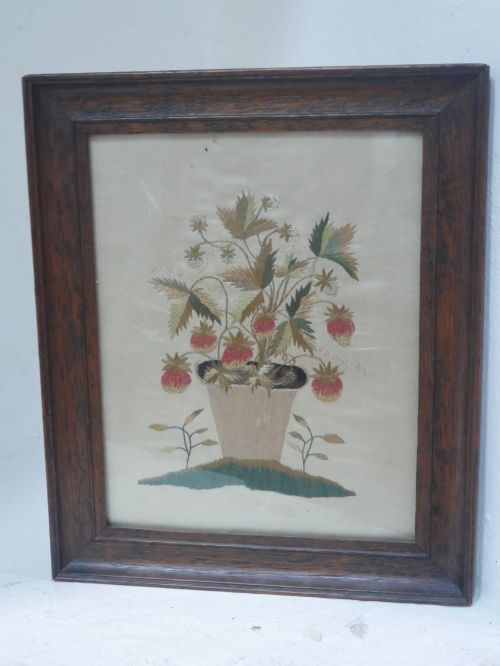
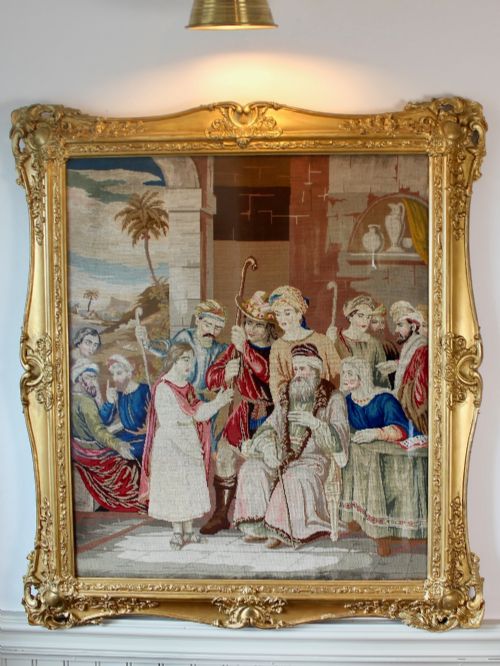
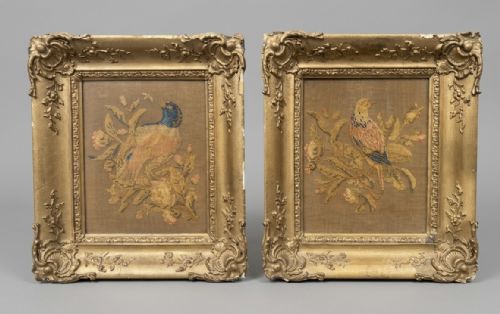
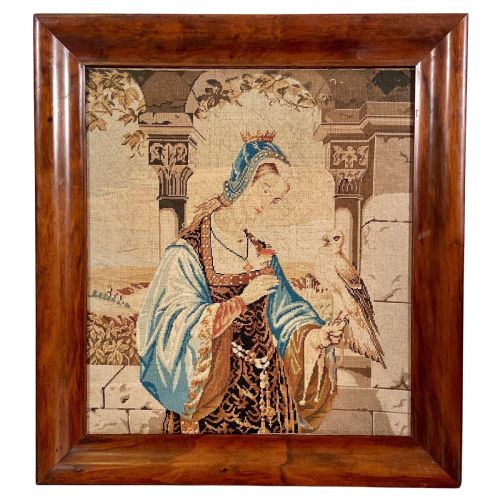
A victorian tapestry picture spans a variety of subjects, from portraits of noblemen and religious figures to domestic animals, birds, and botanical studies. These works appear as wall art, framed textiles, and samplers created during the nineteenth century across Britain, Italy, Germany, and Flanders.
The most common examples on this page include woolwork pieces such as Berlin wool work, plushwork, and gros-point needlework, often preserved behind glass in original giltwood or rosewood frames.
Materials and Technique
Maker execution relies primarily on wool, silk, and linen stitched onto canvas grounds using counted-thread methods like Berlin wool work and gros-point or petit-point embroidery. Plushwork introduces raised, textured pile surfaces for subjects such as animals.
Framing materials complete the construction, utilising carved giltwood, burr maple, oak, and rosewood, frequently protecting the delicate textile panels behind glass.
Materials recorded across the inventory include wool, silk, linen, glass, canvas, rosewood, and giltwood.
Judging Quality
Quality rests upon the fineness of the stitching and the complexity of the colour shading within the wool or silk threads, distinguishing skilled pictorial needlework from simpler domestic exercises. The precision of the execution defines the depth and expression found in portrait and animal subjects.
The integrity and originality of the surrounding frame, whether rosewood, burr maple, or giltwood, contributes significantly to the integrity of the surviving piece.
The Victorian Tapestry Picture Glossary
- Berlin wool work
- A type of counted-thread embroidery popular in the nineteenth century, worked in wool on canvas using printed colour-charted patterns.
- Gros-point
- A coarse needlepoint stitch executed on canvas that provides a durable textured surface for backgrounds and heavy drapery.
- Plushwork
- An embroidery technique that creates a raised, velvet-like pile by cutting loops of yarn after stitching.
- Sampler
- A piece of needlework demonstrating proficiency in various stitches and alphabets, often signed and dated by younger makers.
Victorian Tapestry Picture: Frequently Asked Questions
How do I care for a victorian tapestry picture?
Keep the textile away from direct sunlight to prevent the wool and silk threads from fading. Display the piece in a stable environment with moderate humidity to protect the original canvas and wooden frame.
Dust the glass gently with a soft cloth and avoid applying any cleaning agents directly to the exposed textile or antique framing.
What is the difference between gros-point and petit-point?
Gros-point uses a larger stitch on coarser canvas, creating a bolder texture suitable for architectural elements, foliage, and backgrounds. Petit-point employs a much finer stitch on a tight mesh, allowing artisans to render delicate facial expressions and intricate details.
Many nineteenth-century works combine both techniques within a single composition to create depth and contrast.
Are these pieces original to their frames?
Many examples retain their original giltwood, rosewood, or burr maple frames, which show period construction methods appropriate to the mid to late nineteenth century. Original glazing and backing boards often remain intact behind the textile panel.
Frames were selected to complement the scale and subject of the needlework, ranging from simple polished wood mouldings to ornate carved gilt gesso.
How can I tell the age of a needlework picture?
Dating relies upon stylistic markers such as costume details, framing materials, and inscribed dates found on samplers or commemorative pieces. The materials themselves, including specific wool dyes and canvas types, point toward mid-nineteenth-century production eras.
Historical subjects and literary themes also reflect the prevailing taste of the Victorian period when these textile artworks were produced.