




Victorian Tapestry Fire Screen
A victorian tapestry fire screen blocks hearth heat while framing intricate hand-stitched needlework.
Victorian Tapestry Fire Screen
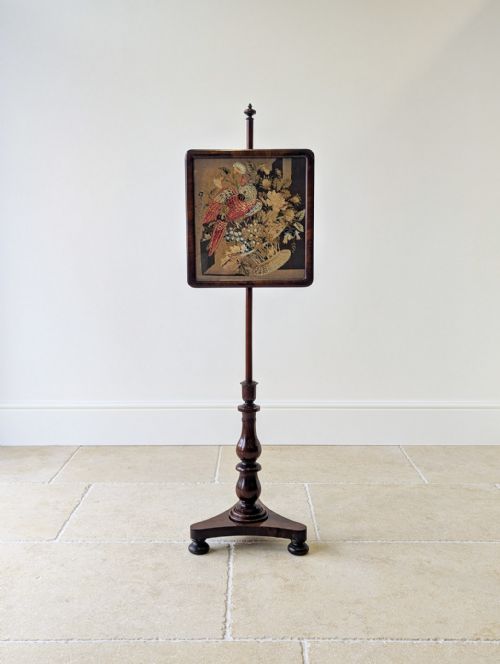
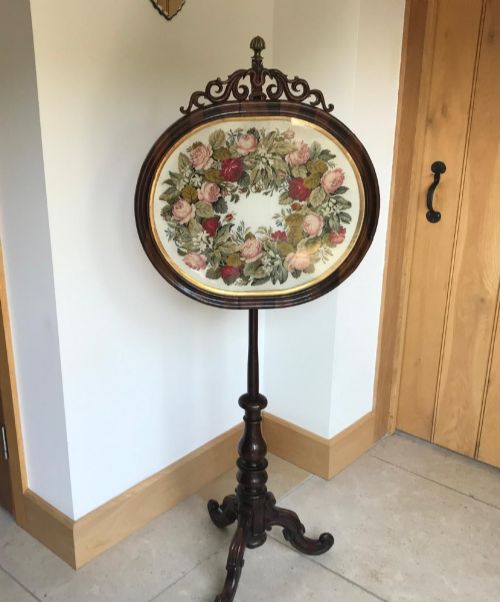
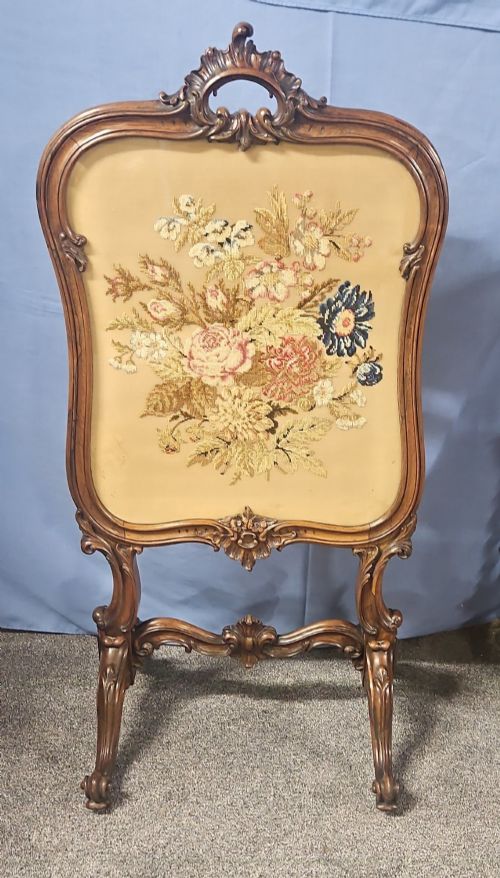
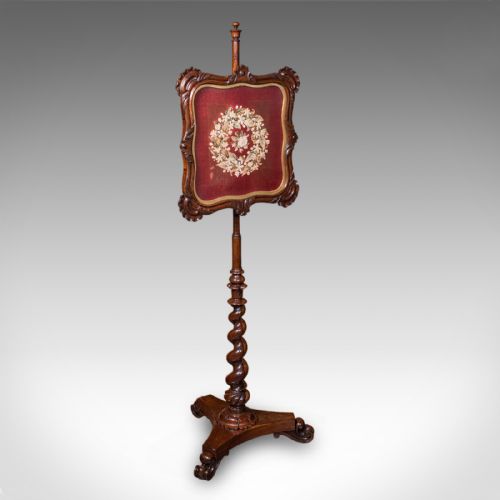
A victorian tapestry fire screen serves to protect room occupants from the intense radiated heat of an open coal fire whilst doubling as a decorative canvas panel. These pieces appear primarily as vertical framed textiles or adjustable pole screens supported on tripod and pedestal bases.
The selections recorded here span the nineteenth century, taking forms such as cheval frames, wall hangings, and metamorphic occasional tables. Rosewood and mahogany predominate among the timber frameworks, complemented by walnut, oak, and brass elements.
Materials and construction
Makers utilised dense hardwoods like rosewood, mahogany, and walnut to build stable frames and turned poles that could withstand hearthside warmth without warping. These timbers frequently feature carved details, barley twists, or gilded finishes.
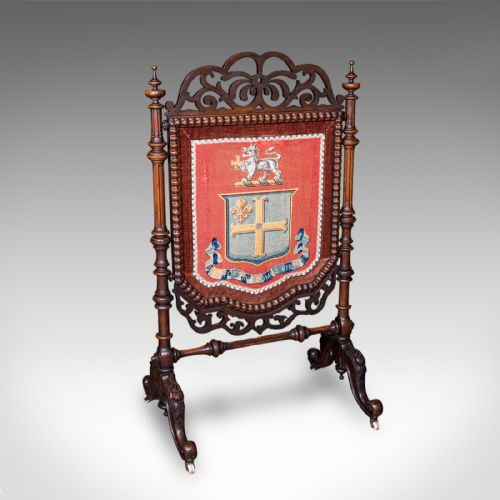
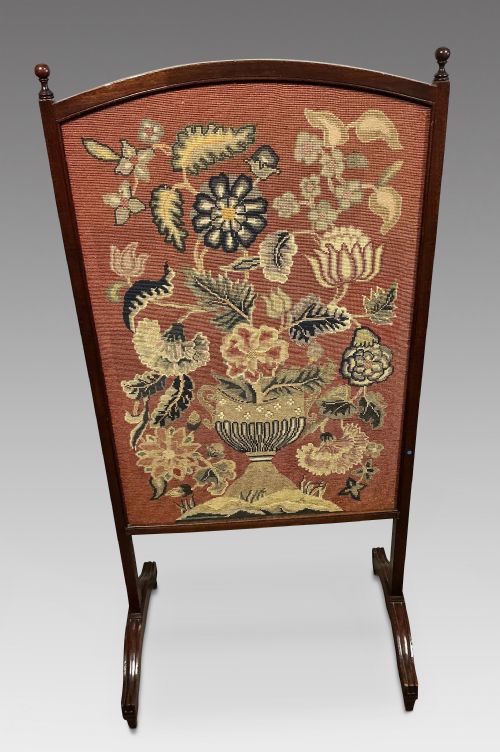
The central panels display hand-worked wool, silk, and canvas textiles executed in needlepoint, tapestry, and woolwork. Artisans stitched pastoral scenes, armorial bearings, and floral motifs directly onto the supportive fabric base.
Certain Victorian screens double as metamorphic tables, proving that ancestors loved dual-purpose furniture just as much as we do.
Assessing craftsmanship
The distinction between standard examples and superior pieces rests on the complexity of the timber carving and the density of the needlework stitches. Fine specimens display crisp botanical or figural detail within the woolwork and robust, well-turned support bases.
Adjustment mechanisms on pole screens, including brass thumbscrews and sliding brackets, reveal the precision of the original joinery. Heavier framing timbers and balanced tripod legs indicate superior structural ambition.
The Victorian Tapestry Fire Screen Glossary
- Pole screen
- A vertical textile panel mounted on a slender adjustable shaft above a weighted base. This design allows the user to raise or lower the screen to deflect heat from the face.
- Needlepoint
- A form of counted thread embroidery stitched onto an open weave canvas ground. It provides the rigid, durable surface required for heavy use near fireplaces.
- Cheval screen
- A standing frame supported by two lateral pillars and feet that allows the panel to swing on a horizontal axis. This configuration accommodates larger rectangular textile compositions.
- Armorial
- A textile design featuring a heraldic coat of arms or family crest. These bespoke panels indicate commissioned pieces made for specific households.
- Woolwork
- Embroidery executed primarily with wool yarns on a canvas backing. The thick fibres create textured, durable depictions of pastoral and floral subjects.
Victorian Tapestry Fire Screen: Frequently Asked Questions
What is a pole screen?
A pole screen is a hearthside furnishing featuring an adjustable panel mounted on a tall turned wooden shaft. It was positioned to protect a lady's face from the direct heat of an open fire.
The sliding mechanism allowed the textile panel to be raised or lowered depending on the proximity to the hearth and the intensity of the flames.
How were fire screens used?
These screens sat before open fireplaces during periods when the hearth was unlit or when occupants needed a barrier against intense radiant heat. They also served to display elaborate domestic needlework.
When the fire burned low, the screen was adjusted to shield the face from residual warmth or simply positioned to decorate an empty grate during warmer months.
Are tapestry panels original?
The needlework panels housed within these frames are typically contemporary to the nineteenth-century woodwork. Many pieces feature hand-stitched woolwork created by women within the home.
Needlepoint and floral tapestries were standard domestic pursuits during the Victorian period, meaning the textile and the frame share a common era of origin.
How do I care for needlework?
Protect antique textiles from direct sunlight to prevent the wool and silk threads from fading. Keep them away from damp environments and excessive moisture to safeguard the natural fibres.
Dust the wooden frames regularly with a dry cloth and avoid placing screens directly against active, high-output heat sources that might dry out the antique timber.