



Victorian Tall Wooden Stools
Victorian tall wooden stools are sturdy practical seats built for high desks, taverns and country workrooms.
Victorian Tall Wooden Stools
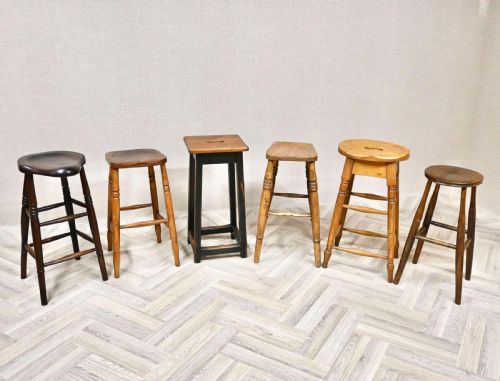
Victorian tall wooden stools encompass nineteenth century seating designed for working at height, including clerk's chairs, pub and tavern stools, and dairy pieces. These forms served practical functions in counting houses, commercial premises, and rural settings.
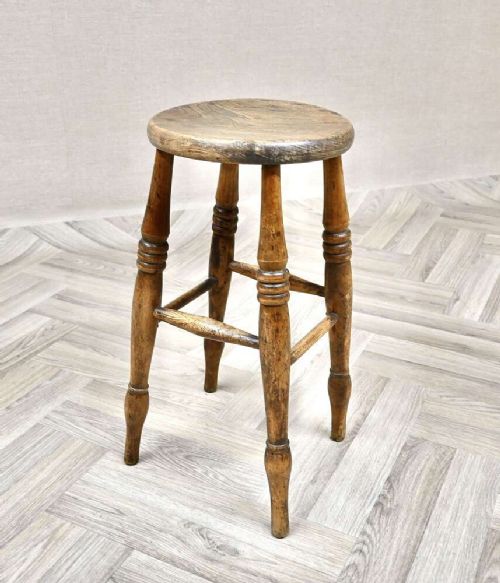
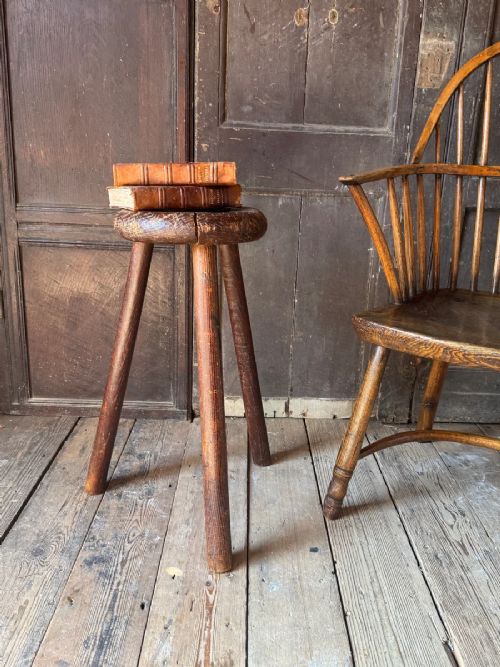
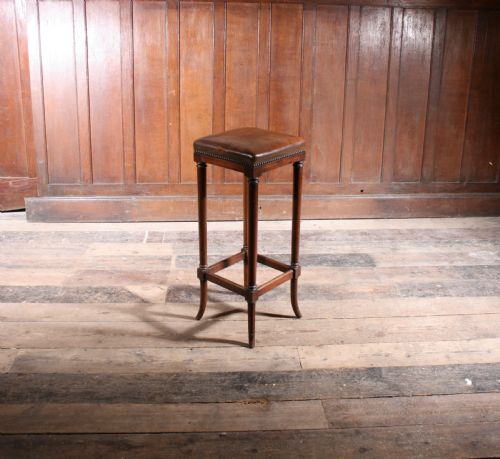
The versions most commonly found here are nineteenth century clerk's stools and tavern seats, often featuring simple timber construction and elevated frames. Many examples display the honest wear of daily commercial use rather than formal parlour polish.
Origins span English country workshops and local joinery, with occasional pieces reflecting broader styles such as rustic farmhouse or vernacular traditions. The selection frequently bridges domestic utility and commercial enterprise.
Materials and construction
Makers relied on durable native hardwoods, chiefly elm, sycamore, beech, oak, and birch, selected for their strength under constant heavy use. Pine also appears in structural frames and associated desk pieces.
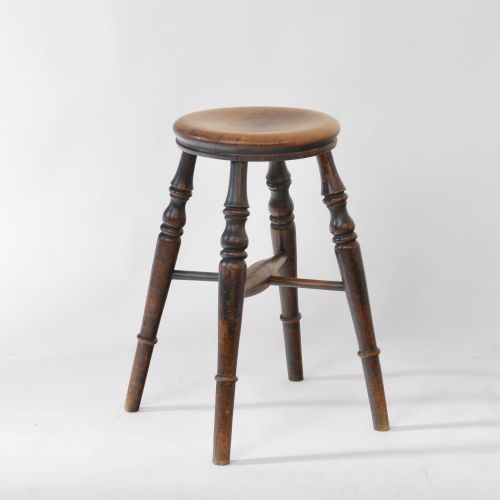
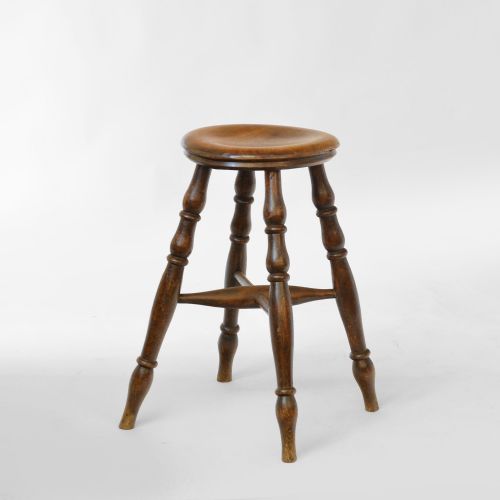
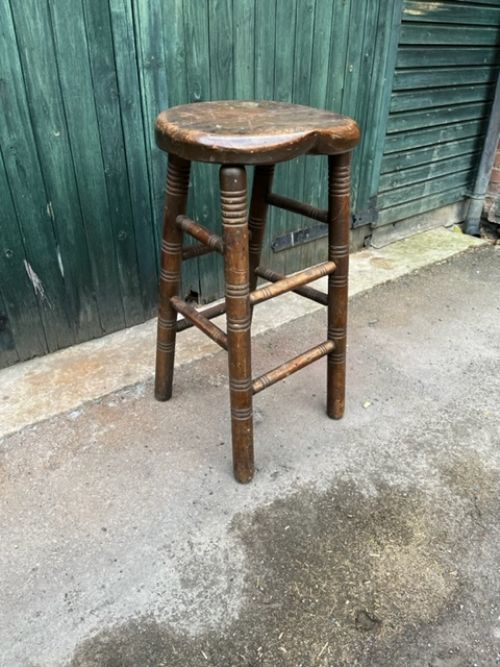
Turned legs and braced stretchers provided necessary rigidity for tall seating, while solid timber tops were frequently shaped or dished for comfort. Some examples incorporate leather upholstery or retain traces of early paint.
Wild elm seats bring unpredictable grain patterns straight from the woodland edge into the tavern.
Assessing quality and character
Quality rests in the integrity of the timber, the stability of the tall frame, and the honesty of the patina built up through decades of handling. Firmer joints and well-balanced proportions distinguish better workshop production.
Surface finish significantly affects character, with untouched timber surfaces and original paint layers holding greater appeal than later sanding or modern refinishing.
The Victorian Tall Wooden Stools Glossary
- Clerk's stool
- A tall seat designed for working at a high writing desk in an office or counting house. These typically feature sturdy turned legs and a compact wooden top.
- Pub or tavern stool
- A high commercial seat intended for use in public houses and taprooms. They are built to withstand heavy daily wear in busy environments.
- Vernacular
- Objects made by local craftsmen following regional traditions rather than high style blueprints. This approach prioritises function and local materials above all else.
- Stretchers
- Horizontal wooden bars connecting the legs of a stool to provide structural stability and support. On tall seating, multiple tiers of stretchers are often necessary.
Victorian Tall Wooden Stools: Frequently Asked Questions
How were tall wooden stools used?
These tall wooden stools served clerks working at high standing desks, patrons in taverns, and workers in dairies and workshops. Their elevation allowed users to work comfortably at raised surfaces before modern adjustable seating existed.
Over time, many migrated from commercial spaces into domestic settings as kitchen breakfast bar seating or decorative accents.
What woods are most common?
Elm, sycamore, beech, and oak appear frequently across nineteenth century examples, chosen for their toughness and ability to handle heavy weight. Pine was also utilised for simpler utilitarian pieces and associated desk sets.
Each timber brings a distinct grain and weight to the finished seat, reflecting the regional materials available to the local maker.
How should I care for a wooden stool?
Keep these pieces away from direct heat sources and rapid temperature fluctuations to prevent the old timber from drying out or splitting. Gentle dusting and occasional application of appropriate wax will help maintain the dry historic finish.
Avoid harsh modern cleaning products that might strip away the accumulated character and patination of the wood.
Are these stools stable enough for daily seating?
Most nineteenth century examples remain structurally sound thanks to original stretcher bracing and robust hardwood construction. However, due to their height and age, checking the tightness of joints is sensible before heavy daily use.
Different pieces vary in their footprint and bracing, so matching the seat to its intended modern environment is recommended.