


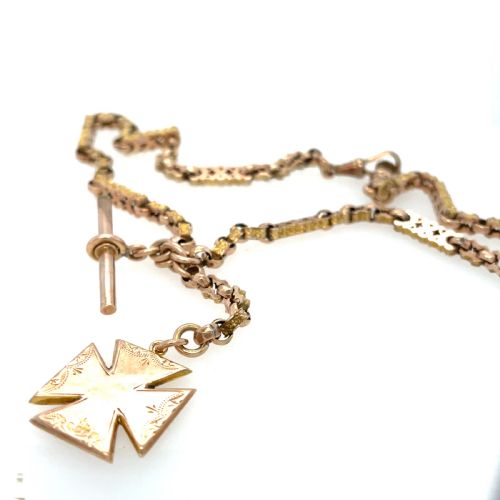
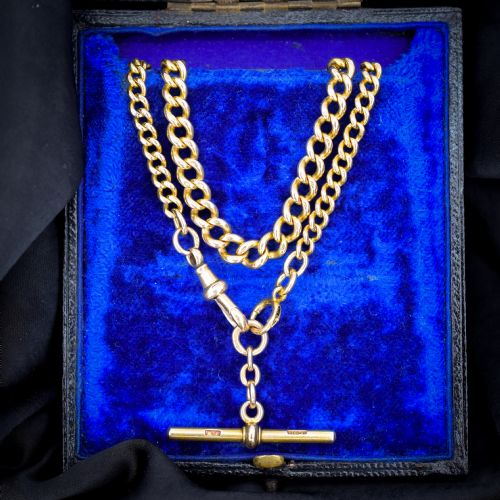


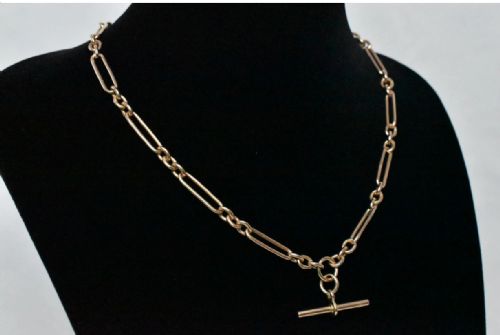

Victorian T Bar Necklace
A victorian t bar necklace repurposes a functional pocket watch chain into a striking neckpiece, offering a distinctive historical design.
Victorian T Bar Necklace
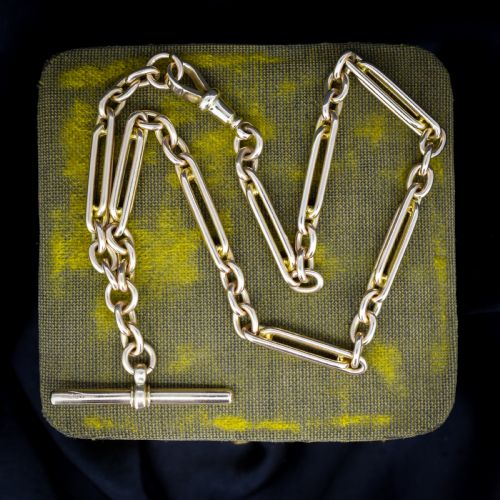
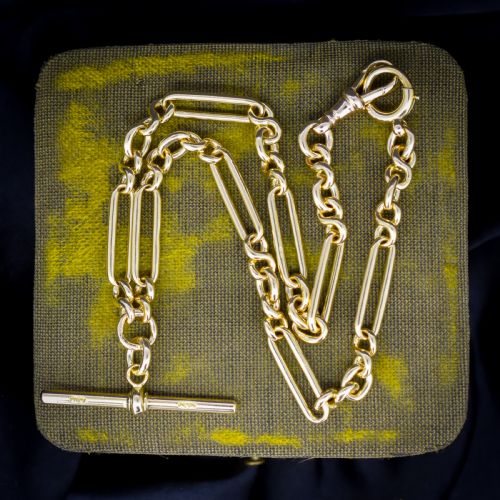
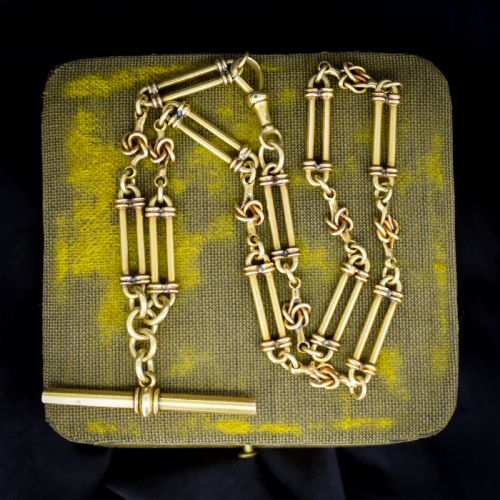
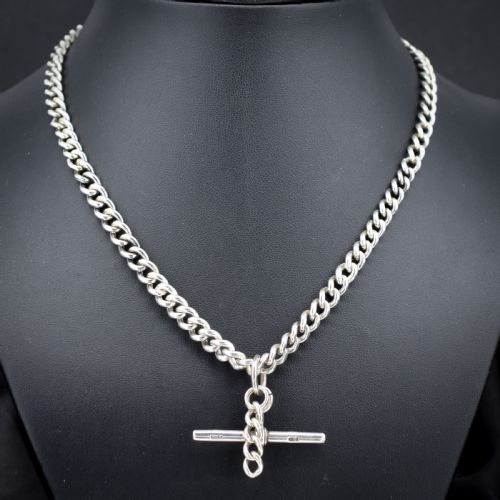
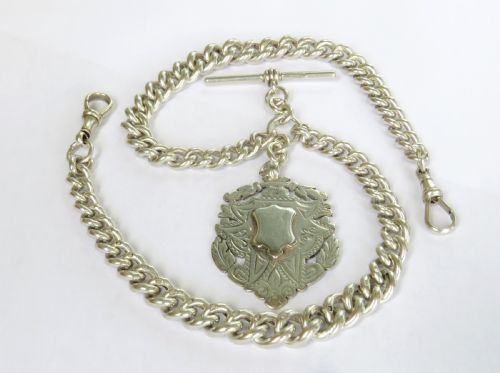
A victorian t bar necklace originates from the conversion of nineteenth century watch chains, specifically Albert chains designed to secure pocket watches to waistcoats. These pieces frequently incorporate a central T-bar drop and swivel dog clips that now serve as decorative or functional clasps. The inventory demonstrates that these items emerge primarily from the Victorian and Edwardian eras, spanning sterling silver and various gold alloys.
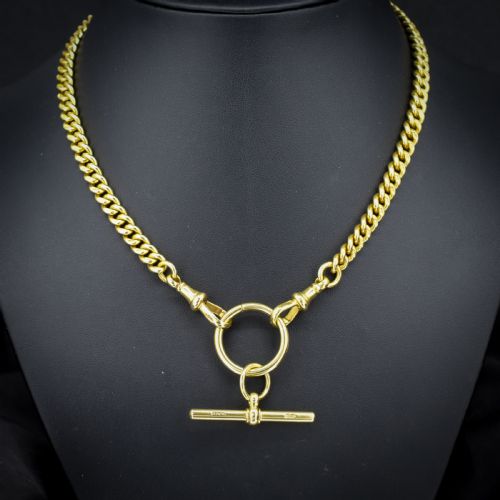
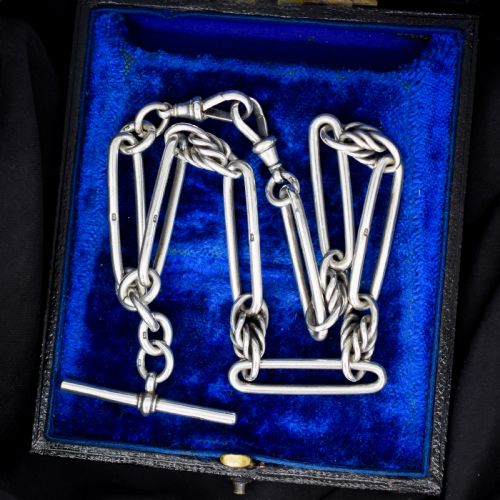
The fundamental architecture relies on linked chains such as curb, trombone, figaro or belcher patterns, often adapted into necklaces ranging from shorter choker lengths to longer formats. Pieces frequently retain associated elements like fobs, keys, or bloodstone pendants, maintaining their original modular character. Buyers encounter both silver and gold variants, including warm rose gold and yellow gold tones typical of the period.
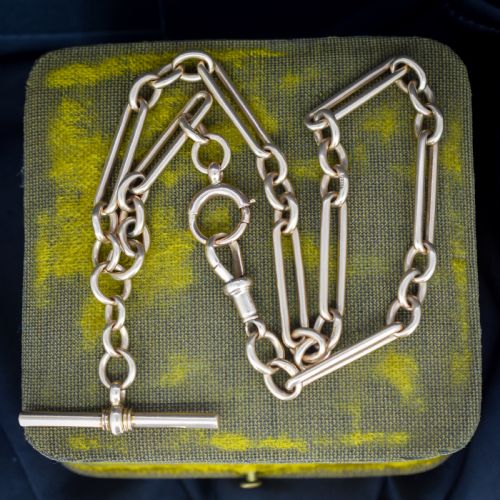
While many examples retain their original pocket watch chain configuration, others exhibit contemporary or period conversions where the T-bar rests centrally against the collarbone. The historical utility persists in the presence of dog clips and bolt rings, allowing wearers to attach pendants or suspend the T-bar independently. This category bridges utilitarian gentleman's accessories and distinct feminine or unisex neckwear.
Materials and Construction
Metals span sterling silver and solid gold standards, specifically nine carat, fifteen carat, and eighteen carat variations in yellow, rose, and platinum settings. Workshops formed individual links by hand or through early industrial methods, soldering each connection to endure daily wear from pocket watches. Surface finishes include polished yellow gold, rosy copper-alloyed gold, and bright sterling silver that patinas with age.
Link construction defines the physical weight and drape of each piece, utilising hollow or solid stamped components like trombone bars, flat curb links, and rounded cable shapes. Mechanical fastenings such as spring-loaded dog clips, swivel connectors, and bolt rings require precise steel internal springs to maintain tension over decades of use.
The listings demonstrate that these necklaces utilise sterling silver, nine carat rose gold, and eighteen carat yellow gold across the nineteenth and early twentieth centuries.
Assessing the Pieces
Substantial gram weight and solid link construction distinguish superior examples from lighter, hollow alternatives that dent easily under pressure. The integrity of the original joints, swivels, and spring clips indicates the level of maker craftsmanship and the preservation of the piece.
Original hallmarks stamped onto individual links, T-bars, and dog clips provide crucial evidence of metal purity and date, elevating the historical interest of the item.
The Victorian T Bar Necklace Glossary
- Albert chain
- A heavy watch chain designed in the nineteenth century to secure a pocket watch through a waistcoat buttonhole. These chains form the basis of most T-bar necklaces.
- T-bar
- The crossbar component attached to a central drop on the chain, originally slid through a buttonhole to anchor a pocket watch. It now hangs as a decorative focal point on the chest.
- Dog clip
- A spring-loaded snap hook used to attach a watch or pendant to the chain. This mechanical clasp provides secure fastening.
- Trombone link
- An elongated rectangular metal link alternated with smaller round or oval links. This pattern creates a geometric rhythm along the length of the chain.
- Fob
- A small ornament, seal, or stone attached to a short chain drop. Examples frequently include bloodstone or carved hardstones set in metal.
Victorian T Bar Necklace: Frequently Asked Questions
How do I wear a victorian t bar necklace?
Position the T-bar at the front so it drops centrally against the collarbone or sternum, allowing the chain links to drape evenly around the neck. The attached dog clips can secure the T-bar in place or hold additional small pendants.
Alternatively, tuck the T-bar through a link to alter the drop length or wear the clasp at the back for a simpler chain appearance.
Are these necklaces converted watch chains?
Many examples originate as pocket watch chains, specifically Albert chains, which were subsequently adapted into necklaces during the period or later. The presence of a T-bar and dog clips directly reflects this utilitarian origin.
Collectors prize this dual heritage because it preserves the original mechanical fastenings and sturdy link construction intended for daily pocket watch security.
What metals are these necklaces made from?
Materials include sterling silver and various gold purities, most notably nine carat rose gold, fifteen carat yellow gold, and eighteen carat yellow gold. Platinum also appears in select Edwardian stone-set variations.
Rose gold hues derive from a higher copper alloy content popular during the Victorian era, while silver examples often display a soft historical patina.
How do I tell the difference between periods?
Victorian pieces often feature robust curb or trombone links in sterling silver or rose gold, sometimes accompanied by engraved fobs or bloodstone seals. Edwardian examples lean towards finer platinum work or lighter gold structures.
Hallmarks stamped onto the links or T-bars offer definitive assay office marks and date letters to confirm the exact year of manufacture.