

Victorian Style Desk
A victorian style desk brings solid nineteenth-century presence into a room, offering practical writing space combined with period timber and brass detail.
Victorian Style Desk
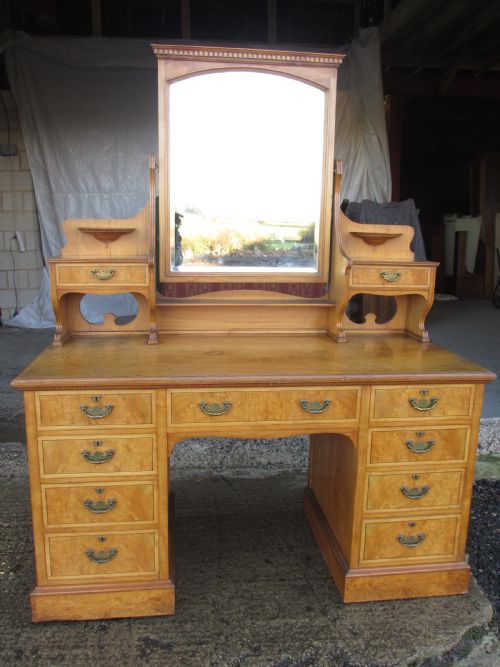
A victorian style desk encompasses writing tables, partner desks, and bureau forms originating from the nineteenth century and subsequent revival periods. These pieces serve as functional workstations while displaying the substantial proportions and rich timber grains characteristic of the era.
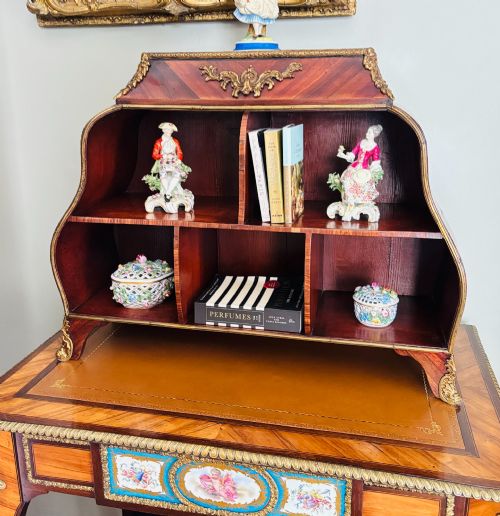
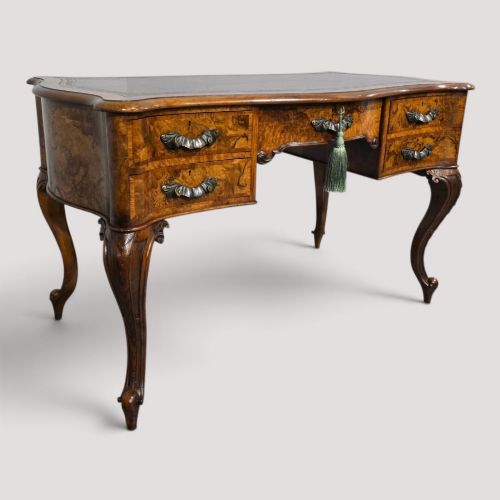
The selection on this page centres on walnut and mahogany constructions, frequently featuring inlaid surfaces and leather inserts. Buyers encounter pedestal formats alongside smaller writing tables influenced by French Louis XV revival tastes.
Originating primarily from nineteenth-century British and French workshops, these items integrate storage drawers and brass hardware into traditional frameworks. The form balances robust daily utility with decorative cabinet-making.
How They Were Made
Craftsmen built these desks using dense hardwoods like mahogany and burr walnut, often applied as veneers over secondary timbers to display striking grain patterns. Leather writing surfaces were inset into the top and bordered with gilt tooling.
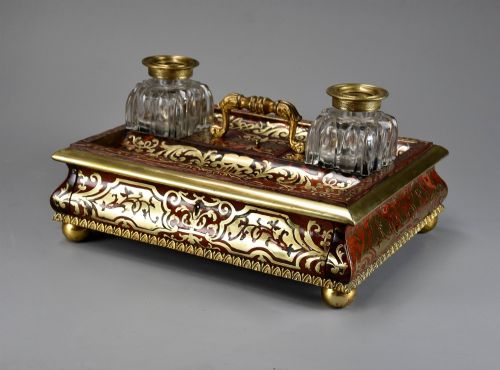
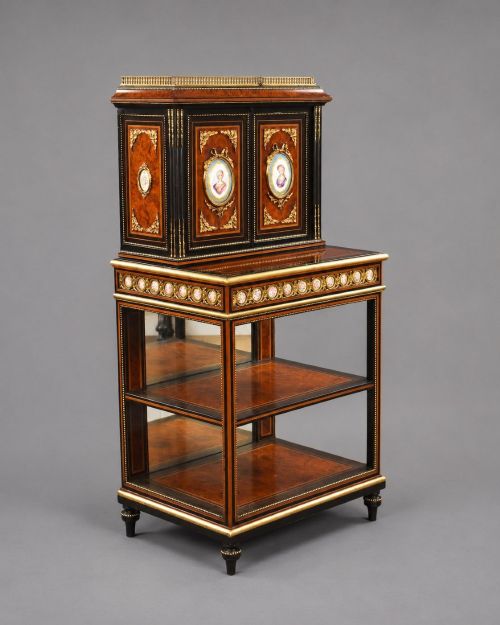
Metal components included cast brass campaign handles, drop pulls, and fire-gilded ormolu mounts that decorated the angles and friezes. Secondary materials such as satinwood and kingwood provided contrasting inlay details.
Joinery relied on traditional techniques including dovetailing for drawer construction and mortise and tenon frames for structural stability. Ormolu mounts and decorative bronzes were cast and chased before being secured to the timber carcasses.
Victorian Style Desk Retail Price Guide 2026
Typical asking prices for victorian style desk among the pieces listed under this phrase on Sellingantiques today, from the lower quarter to the upper quarter. They describe what is for sale here now, not the wider market.
Listings feature nineteenth-century walnut and mahogany alongside brass, leather, and ormolu mounts.
What Varies in Quality
The distinction between standard production and top-tier work rests on the selection of timber figures, such as highly figured burr walnut or dense mahogany, and the precision of the parquetry inlay. Cabinet-makers of higher standing utilised superior brass hardware and heavier gauge ormolu mounts.
Structural refinement shows in the execution of secondary woods inside drawers and the crispness of hand-carved mouldings. Pieces associated with documented makers demonstrate superior internal joinery and thoughtful proportioning across large partners desks and smaller writing tables alike.
Gillows·JAS Shoolbred
The Victorian Style Desk Glossary
- Partners desk
- A large double-sided writing table designed for two people to work opposite one another, typically fitted with drawers and cupboards on both faces.
- Ormolu
- Gilded bronze ornamentation applied to furniture and clocks, cast in detailed shapes and finished by hand chasing.
- Burr walnut
- Timber taken from the wart-like growth on a walnut tree, yielding an intricate, swirling grain pattern prized for veneering.
- Bureau
- A sloping desk with a hinged flap that opens to reveal internal compartments and pigeonholes for correspondence.
Victorian Style Desk: Frequently Asked Questions
How do I care for leather top desks?
Leather writing surfaces require gentle cleaning with a slightly damp cloth followed by a neutral leather cream to keep the material supple. Avoid using harsh chemical solvents or placing hot cups directly on the leather.
Keeping the room humidity stable prevents the underlying timber from expanding and protects the gilt tooling around the edges of the insert.
What is burr walnut?
Burr walnut is a decorative veneer harvested from the knot or burl growth on a walnut tree. This growth produces a dense, swirling grain pattern with rich tonal variation.
Cabinet-makers applied these veneers to the primary display surfaces of high-end desks and tables to create striking visual movement.
How do I distinguish revival styles?
Revival styles draw on earlier design vocabularies, such as French Rococo or Chippendale forms, adapted by nineteenth-century makers. Look for the combination of period decorative motifs with the heavier construction methods typical of the Victorian era.
Details like ormolu mounts, kingwood banding, and parquetry inlay often indicate French influence within a British-made framework.