

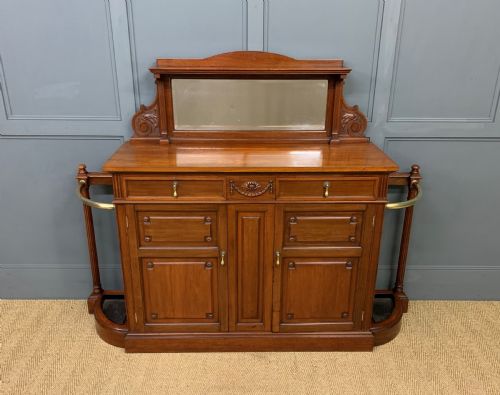
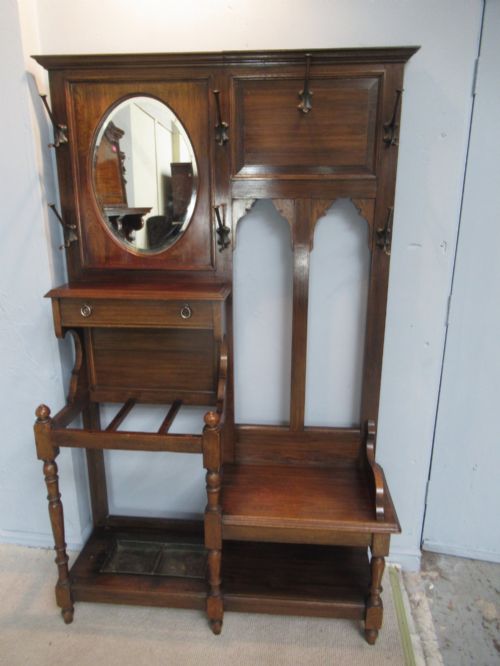
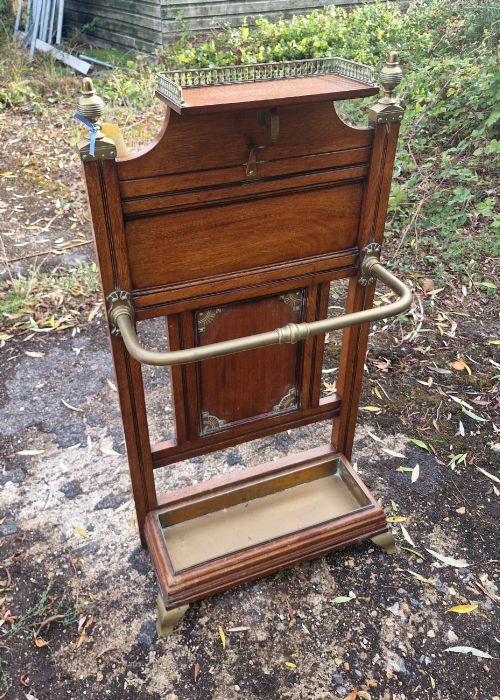
Victorian Stick Umbrella Stand
A victorian stick umbrella stand keeps heavy entranceways orderly while anchoring a hallway scheme through functional metalwork or timber.
Victorian Stick Umbrella Stand
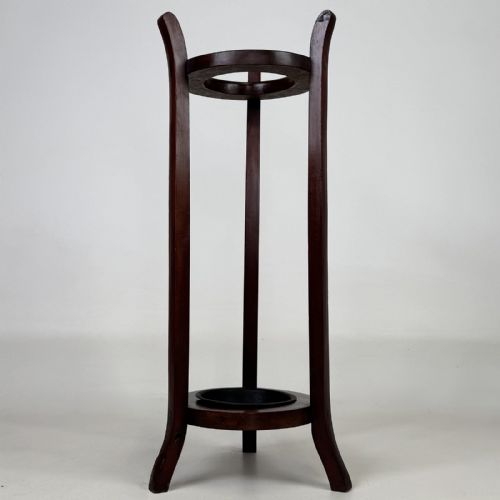
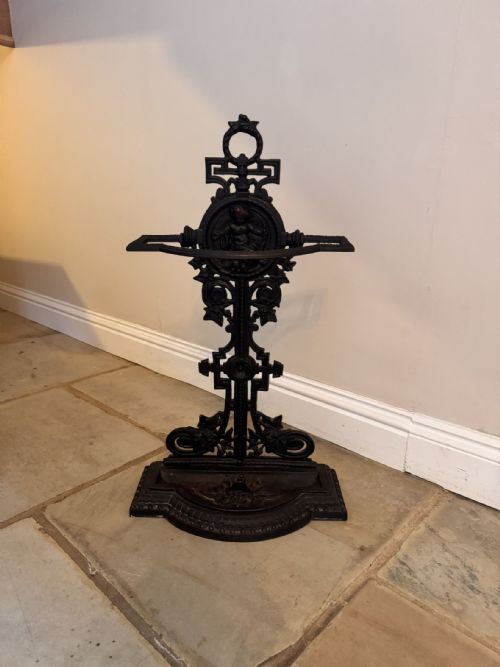
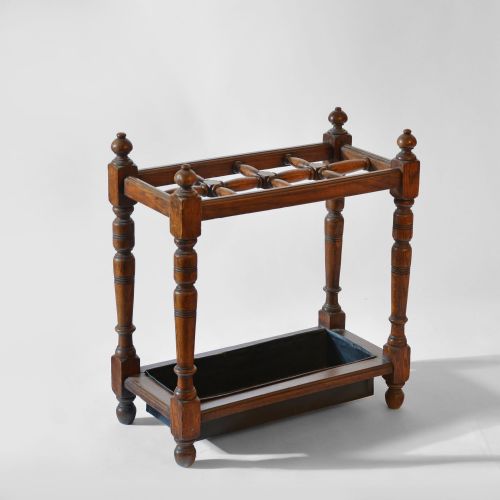
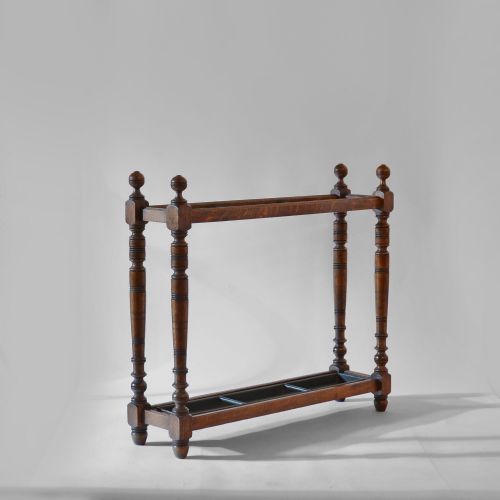
A victorian stick umbrella stand serves as a dedicated hallway repository for walking canes, parasols and wet weather gear, designed to protect interior timber floors from dripping rainwater. These furnishings appear frequently in heavy cast iron, polished brass and turned oak, often combining structural metal frameworks with segmented dividers.
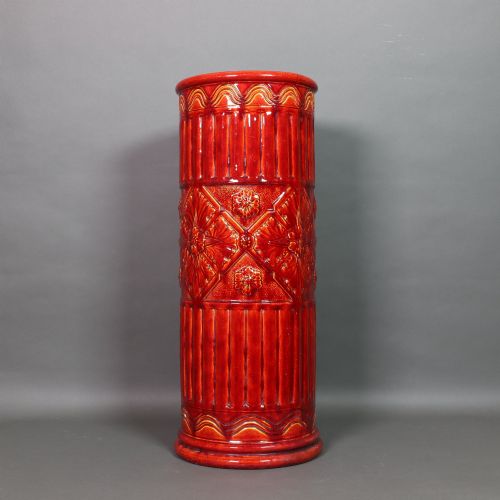
The domestic hall environment dictated the form, leading makers to construct semi-circular demi-lune profiles that fit tight against walls alongside robust freestanding cylindrical barrels. Many examples integrate drip pans at the base to catch moisture, preventing pooling around the feet of the rack.
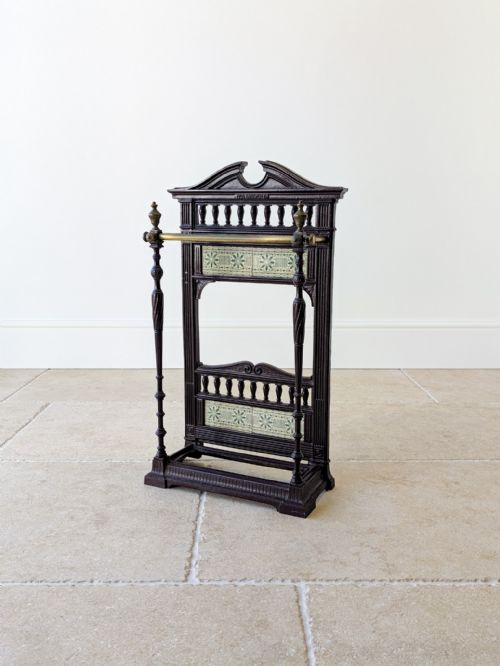
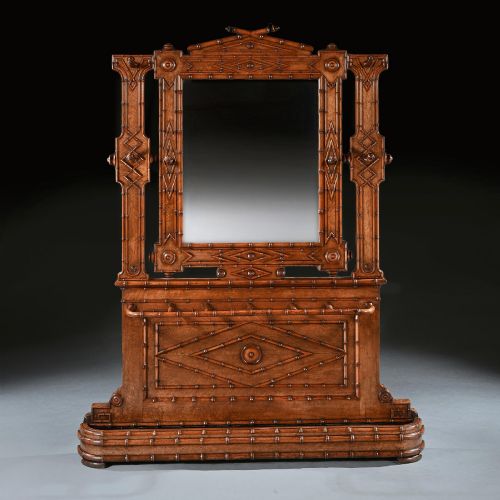
Beyond standalone racks, many pieces take the form of larger hall stands incorporating hat hooks, central mirrors and glove drawers alongside the umbrella wells. These multifaceted items anchored the entrance of nineteenth century homes, welcoming visitors while organising daily outdoor attire.
Materials and construction
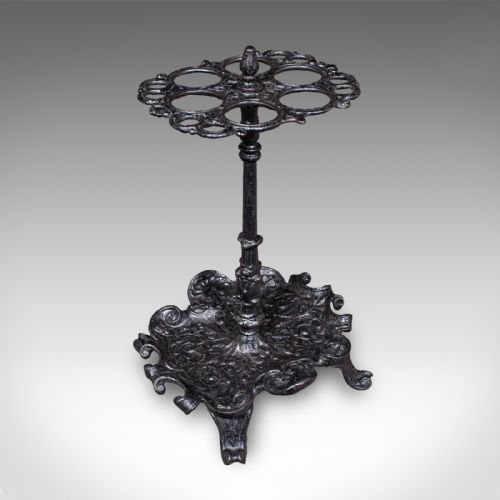
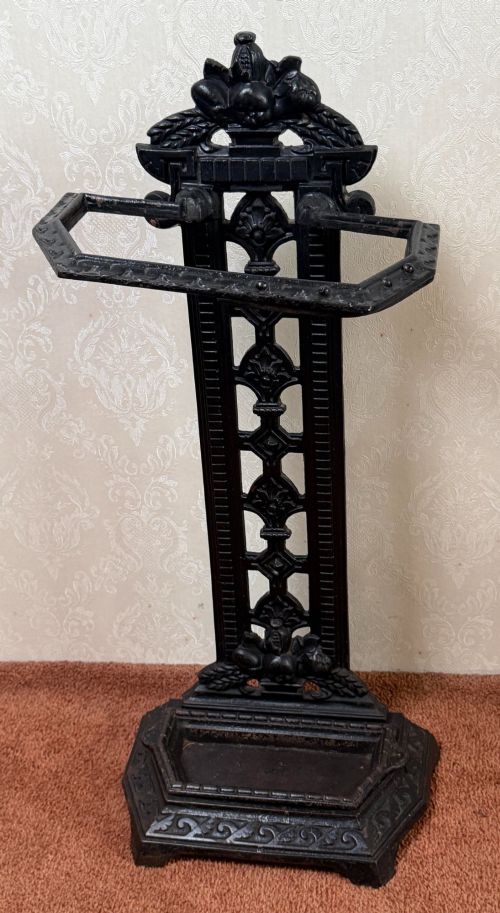
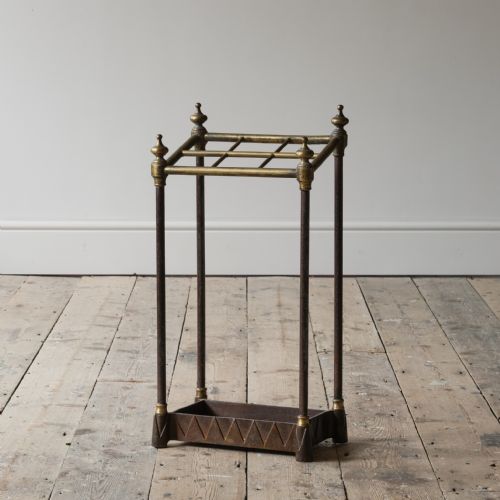
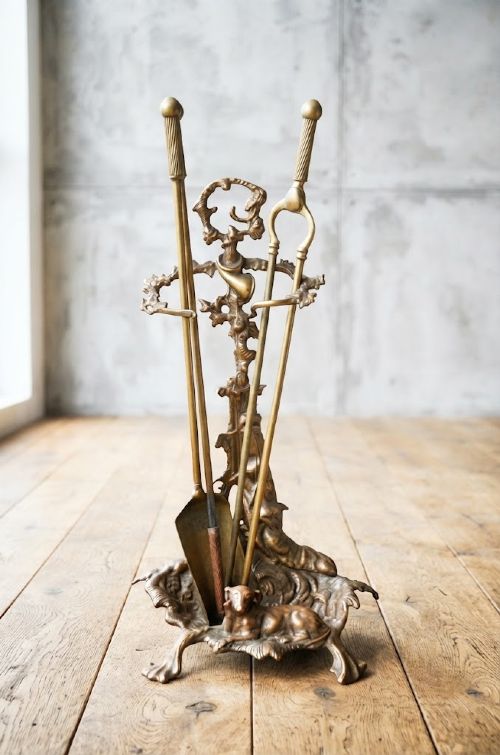
Foundries utilised sand casting to produce intricate iron frames, shaping openwork patterns of foliage, geometric strapwork or figural motifs while ensuring the heavy base stayed stable under a load of wet timber sticks. Brass components, including decorative ball finials, rolled top rails and tubular supports, were joined to these iron bodies using threaded fasteners or brazing.
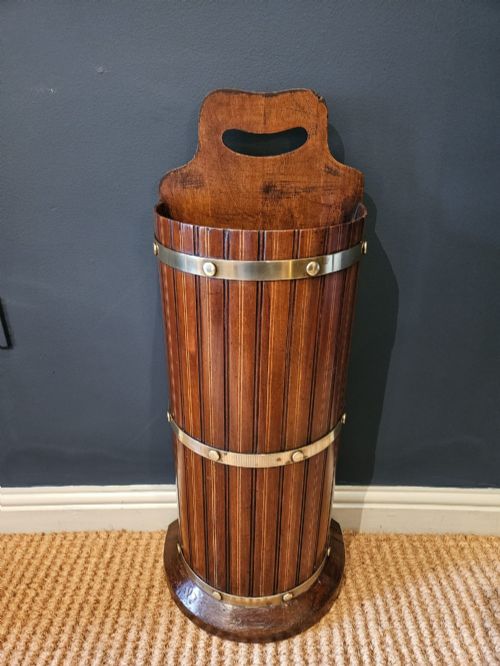
Timber variants relied on cooperage techniques, binding staves of oak or mahogany with brass hoops much like a traditional barrel or bucket. Cabinetmakers also employed steam bending for bentwood frames, alongside carved solid oak and figured veneers for grander architectural hall furniture.
Listings feature structural forms spanning heavy cast iron foundry work, coopered oak barrels, and bamboo frames reflecting Aesthetic Movement tastes.
Evaluating standard and design
The merit of a cast iron stand rests in the crispness of the foundry work, where cleanly defined surface details and symmetrical openwork indicate superior pattern making. Weaker examples exhibit blurred casting edges and rough, uncleaned seams from careless finishing.
For coopered and joined timber pieces, structural integrity depends on the tightness of the stave joints and the preservation of the original metal binding bands without modern replacement screws. The presence of matching, original drip trays at the base preserves the utility and completeness of the piece.
Coalbrookdale·Thomas Jeckyll·Thonet·Shoolbred & Co.·Liberty & Co.·Frederick Hufton·J. Parker of Woodstock·Théodore Deck
The Victorian Stick Umbrella Stand Glossary
- Demi-lune
- A half-moon shape designed to sit flush against a hallway wall. This configuration saves floor space in narrow corridors.
- Coopered
- Constructed from wooden staves bound together with metal hoops in the manner of a cask or barrel. This technique prevents wood splitting when exposed to damp umbrellas.
- Japonisme
- The influence of Japanese art on European design during the late nineteenth century. It appears through stylized avian and botanical motifs on decorative panels.
- Finial
- A decorative terminal ornament finishing the top of a post or upright rod. These elements often take the form of polished brass spheres.
- Stave
- A narrow strip of shaped wood forming the sides of a coopered vessel. Tight fitting staves create a watertight cylinder for umbrella storage.
Victorian Stick Umbrella Stand: Frequently Asked Questions
How do I clean a brass and iron stand?
Wash metal surfaces gently using warm soapy water and a soft cloth to remove dust without stripping the aged patina. Avoid harsh chemical polishes that strip historical surface character from nineteenth century brass.
Dry the metal thoroughly immediately afterwards to prevent active rust formation on the cast iron sections. Treat wooden elements with a microcrystalline wax to nourish the grain.
Where should I place an umbrella stand?
Position the piece immediately inside a primary entrance hallway where wet walking gear and umbrellas accumulate upon arrival. Ensure adequate room allows wet items to drip into the integrated tray without splashing surrounding carpets.
Keep wooden and iron stands away from direct heat sources such as radiators to prevent timber shrinkage and metal stress. Sufficient clearance around the frame prevents accidental knocks in busy passageways.
Are these stands suitable for daily use?
Solid cast iron and heavy oak pieces handle daily household storage of modern umbrellas and walking sticks without difficulty. Their original construction was intended for robust, utilitarian domestic service in busy entrance halls.
Ensure any original or replacement drip tray sits properly at the base to protect modern flooring from lingering moisture. Metal liners require occasional emptying and drying to prevent internal corrosion.
How do I spot a later reproduction?
Examine the casting quality and surface wear patterns for signs of modern manufacturing methods or machine tooling marks. Antique iron displays hand finished surfaces and consistent oxidation appropriate for its age.
Check assembly fixings for modern Phillips screws or metric threading which indicate twentieth century alteration. Authentic pieces show period appropriate joinery, hand cut slots, and genuine wear around the base from decades of use.