


Victorian Sterling Silver Cup
A victorian sterling silver cup brings solid craftsmanship and historic weight to a desk or cabinet, uniting utility with ornamental design.
Victorian Sterling Silver Cup
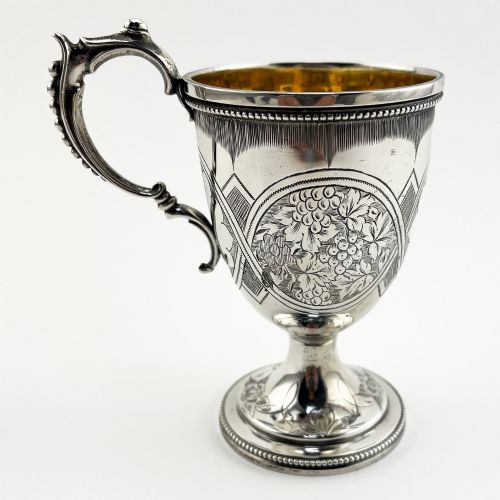
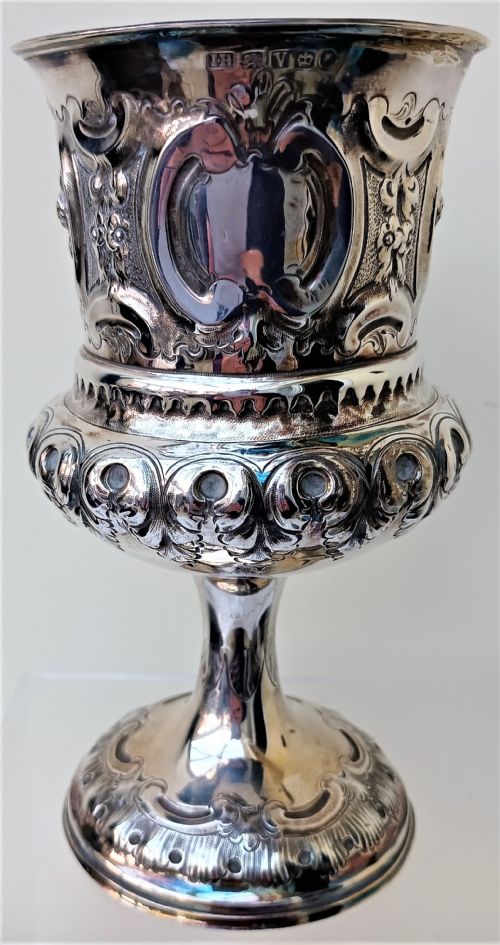
A victorian sterling silver cup encompasses domestic and ceremonial vessels, including christening mugs, chalices, presentation trophies, and pocket hip flasks. Christening mugs and small tankards emerge frequently, often featuring baluster forms or floral engravings.
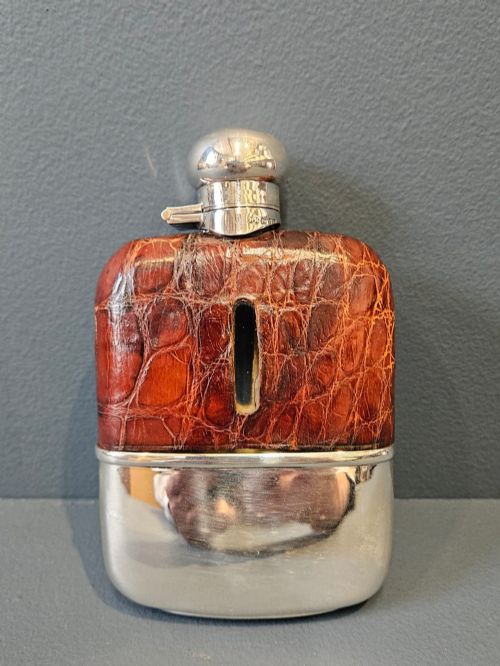
Presentation pieces record sporting events and competitions, while hybrid items combine silver mounts with glass, leather, ceramic, or horn bodies. These objects reflect the varied uses of silver in the nineteenth century, from personal gifts to athletic prizes.
The pieces on this page span the mid to late nineteenth century and extend into Edwardian and later periods, showing diverse revival styles such as Rococo and Renaissance influences alongside novelty designs.
Assessing the work
Quality rests on the crispness of chased decoration, the depth of repoussé relief, and the structural integrity of handles and mounts. Hand-engraved foliage and heraldic crests show distinct levels of artisan skill.
Weight, gauge of silver, and the balance of form separate standard utilitarian items from presentation cups and specialised novelty pieces made by known workshops.
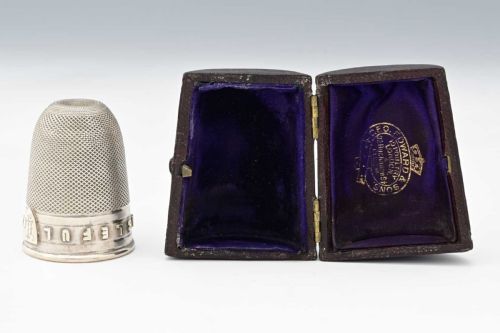
One novelty piece shrinks the drinking vessel into a thimble inscribed with the phrase just a thimbleful.
Hukin and Heath·Asprey London·George Unite·Doulton Lambeth·Bernard Muller·Mackay and Chisholm·John Hunt and Robert Roskell·Henry Tatton and Son
The Victorian Sterling Silver Cup Glossary
- Sterling silver
- A silver alloy containing 92.5 percent pure silver and 7.5 percent other metals, usually copper, ensuring durability for domestic plate. This standard is verified by official assay office hallmarks.
- Silver gilt
- Sterling silver coated with a thin layer of gold on the interior or exterior surfaces. This technique protected the silver from tarnishing when exposed to acidic liquids.
- Repoussé
- A metalworking technique where the artisan hammers the silver from the reverse side to form a raised design in relief. Details are then refined from the front using chasing tools.
- Chasing
- Working the front surface of metal with punches and hammers to sink the metal and sharpen details around repoussé work. It creates texture and contrast on presentation cups.
- Baluster
- A vertical architectural form with a swelling lower body tapering toward a narrower neck. This silhouette frequently defines nineteenth-century mugs and tankards.
Victorian Sterling Silver Cup: Frequently Asked Questions
What were christening mugs used for?
Christening mugs served as traditional gifts for newborns and young children, marking significant early milestones in a family. They functioned as functional drinking vessels as well as keepsakes meant to be displayed or stored in presentation boxes.
Over time, many of these mugs survived as decorative objects rather than utility items. Their presence in collections reflects Victorian gift-giving customs and silversmithing output.
How do you clean antique silver cups?
Cleaning requires a soft cloth and a specialised silver polish formulated to remove tarnish without stripping the underlying metal. Harsh abrasive pads and chemical dips damage fine engravings and wear down hallmarks.
Preserving the original patina involves minimal polishing, focusing only on active tarnish. Storing items in dry environments prevents rapid re-oxidation.
What is the difference between a goblet and a chalice?
A goblet generally describes a drinking vessel with a bowl, stem, and foot used for secular dining and celebrations. A chalice typically refers to a cup with similar architecture designed specifically for religious ceremonies and communion services.
In antique markets, these terms occasionally overlap based on the vessel's proportions and decorative motifs. Inscribed religious symbols or presentation text usually clarify the intended function.
How can you date a silver cup?
Dating relies on the stamped hallmarks showing the assay office mark, the date letter corresponding to a specific year, and the maker's mark. Stylistic clues such as Rococo scrollwork or Aesthetic Movement patterns also narrow down the period.
Additional context comes from engraved presentation inscriptions recording specific sporting events or historical dates. Comparing these marks with official assay records yields precise production years.