



Victorian Sterling Silver Chalice
A victorian sterling silver chalice brings centuries of rich ecclesiastical and ceremonial history straight to the table.
Victorian Sterling Silver Chalice
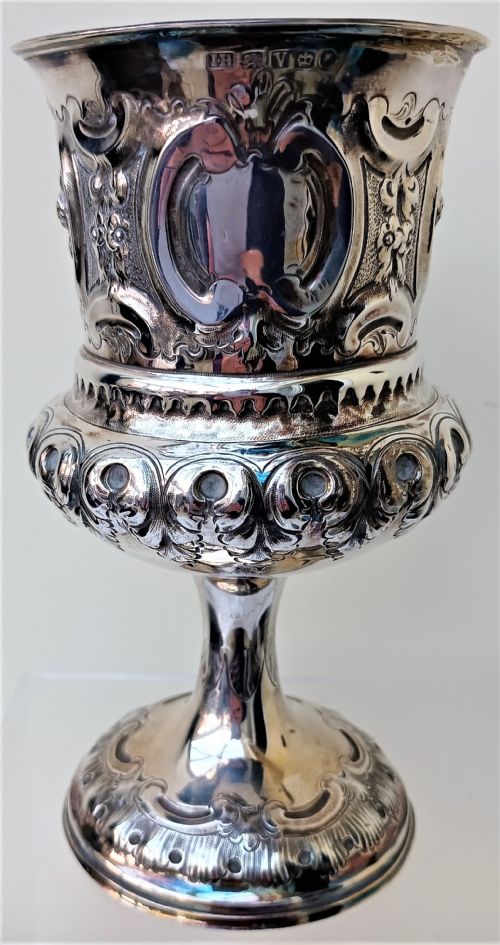
A victorian sterling silver chalice is a deep-bowled ceremonial or sacramental vessel resting on a stem and foot, shaped by the needs of nineteenth-century ritual and presentation. Buyers searching this phrase will find pieces spanning communion sets, presentation cups, and decorative goblets from across the nineteenth century.
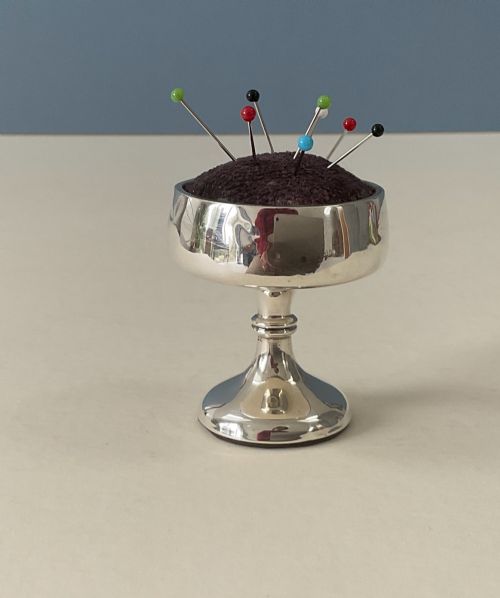
The versions most frequently met on this page combine traditional ecclesiastical forms with secular presentation pieces, including inscribed dedication cups and novelty pin cushions. These objects bridge the gap between religious devotion and Victorian civic celebration.
Originating predominantly from English workshops, these pieces often bear hallmarks from major assay offices such as Sheffield and London. They reflect the diverse social and religious functions of the era, from quiet parish communion to lavish sports trophies.
Assessing Quality
Quality in these silver vessels rests on the crispness of the hand-engraving, the weight and balance of the metal, and the authority of the maker's mark. Superior examples display deep, legible hallmarks and finely executed decorative borders that remain sharp through generations of handling.
The integrity of the gilding and the smoothness of the bowl's interior surface further distinguish finer workshop output from standard commercial silverware. Pieces retaining their original fitted cases or bespoke presentation inscriptions command particular attention for their historical completeness.
Listings feature sterling silver, silver gilt, and gold gilt items alongside fitted travel sets incorporating velvet, glass, leather, and ebonised wood.
George Unite·John Hunt and Robert Roskell·Henry Tatton and Son·D and J Wellby·Charles Hougham·Henry Holland
The Victorian Sterling Silver Chalice Glossary
- Sterling silver
- A silver alloy containing 92.5 percent pure silver and 7.5 percent other metals, usually copper, chosen for durability in tableware. This standard is verified by official assay office hallmarks.
- Parcel gilt
- Silver objects that are partially gilded with a thin layer of gold, typically applied to the interior bowl of a chalice for aesthetic contrast and protection against acidic contents.
- Wringer-work
- An engraving technique involving a rocking chisel pushed across the metal surface to create a zig-zag patterned border. It was widely used on Victorian silver to frame inscriptions.
- Paten
- A small shallow plate or saucer used to hold the Eucharistic bread during Christian communion services, frequently found paired with chalices in ecclesiastical sets.
Victorian Sterling Silver Chalice: Frequently Asked Questions
How are chalices distinguished from standard goblets?
Ecclesiastical chalices generally feature deeper, heavier bowls and heavier knops on the stem designed for liturgical use, whereas secular goblets often serve for toasts or displays.
Religious examples frequently accompany patens or form part of portable travelling communion sets intended for private worship.
Can these silver chalices be used for drinking?
Most antique silver vessels remain structurally sound for serving drinks, provided they are washed gently by hand without harsh abrasives.
Many collectors prefer to use parcel gilt vessels for sacramental or special celebratory toasts, though heavily engraved presentation pieces are often kept primarily for display.
How do I date a Victorian silver chalice?
British sterling silver bears mandatory hallmarks that include a date letter indicating the exact year it was assayed and stamped.
Additional sovereign duty marks and maker's stamps help narrow down the decade of production alongside stylistic clues like gothic revival or neoclassical motifs.
What maintenance do silver chalices require?
Regular dusting with a soft cloth prevents dust accumulation in the engraved crevices of the floral and arabesque decoration.
When polishing becomes necessary, a non-abrasive silver cream applied lightly helps preserve the original patina and hallmark clarity.