



Victorian Star Setting
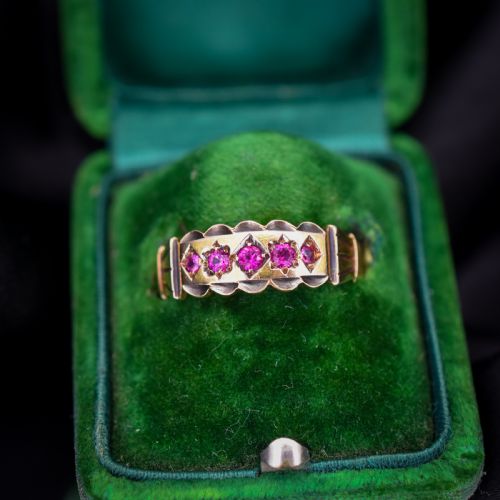
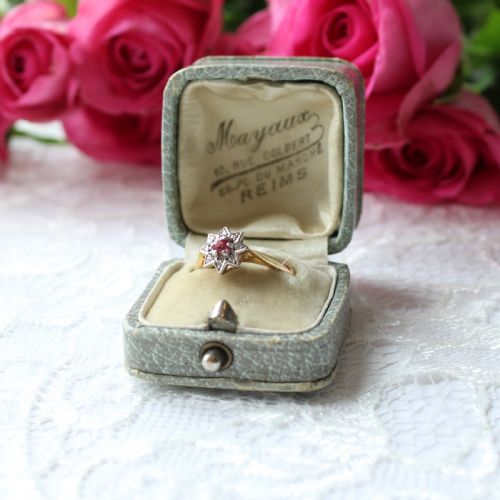
When you search for a Victorian star setting, you seek celestial jewellery flush-mounted with brilliant gems.
Victorian Star Setting
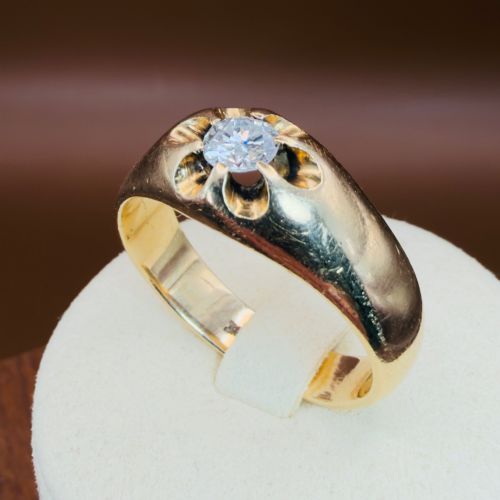
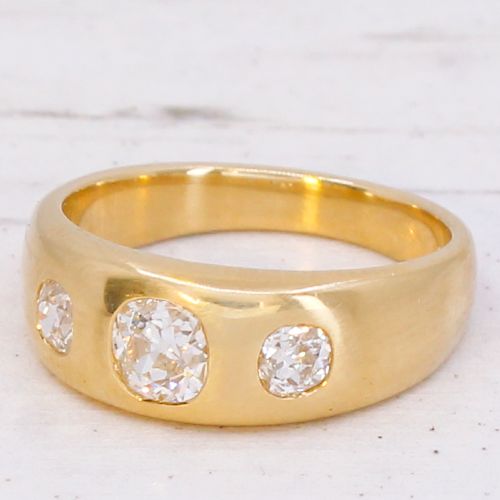
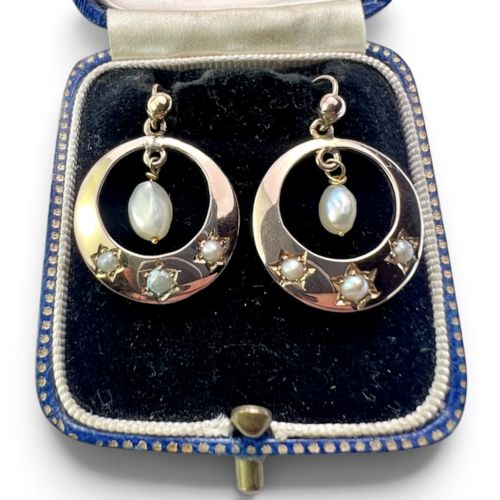
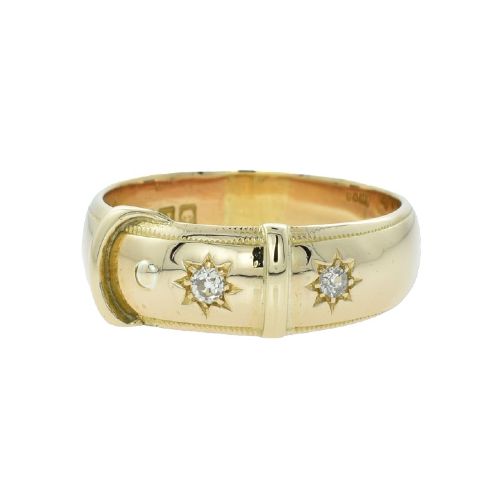
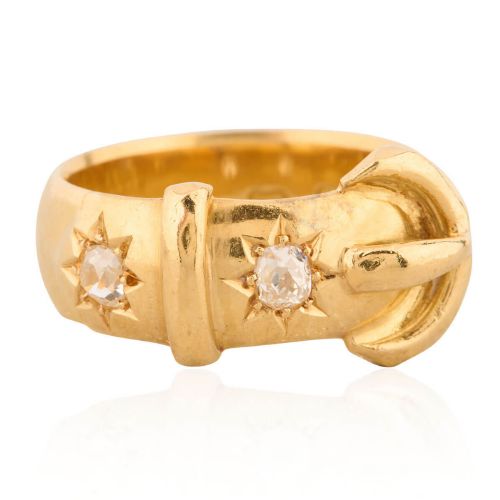
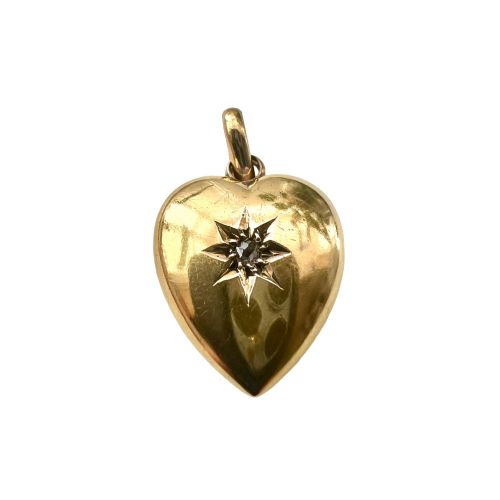
The gypsies, bands, and solitaire rings on this page demonstrate how goldsmiths integrated celestial motifs into everyday wear, protecting fragile stone edges beneath the metal flush line. These forms range from simple gold bands to ornate lockets and buckle rings carrying old-cut diamonds alongside rubies, sapphires, and pearls.
How they were made
Goldsmiths utilised high-karat yellow gold, alongside silver-topped gold for early brooches, pressing or hammering the metal tightly over the gemstone girdle to secure it without traditional tall prongs. Hand engraving then scored sharp, radial lines outward from the stone to create the characteristic starburst pattern.
Makers set old-cut diamonds, rose-cut diamonds, rubies, sapphires, and pearls directly into sturdy shank walls or thick plaque surfaces, ensuring the gems sat flush with the surrounding metal to withstand daily friction.
Victorian makers engraved tiny metal starbursts around gems so wearers could carry a piece of the night sky on their finger.
What varies in quality
The precision and depth of the hand-engraved starburst rays separate finer examples from simpler production, as crisp, deep lines catch the light distinctly compared to worn or shallow engraving. The symmetry of the metal star points and the neatness of the burnished rim around the stone reveal the bench skill of the original maker.
Weight and structural substance also dictate grade, with heavier 18ct gold bands and substantial mountings offering greater durability than thinner 9ct or 15ct counterparts that may show thinning across the shoulders.
The Victorian Star Setting Glossary
- Star setting
- A mounting technique where a gemstone is flush-set into metal surrounded by hand-engraved radial lines resembling a star. This secure method protected fragile stone girdles during the nineteenth century.
- Gypsy ring
- A ring style featuring a thick band where stones are flush-mounted directly into the heavy gold shoulders. These functional designs gained immense popularity during the Victorian and Edwardian periods.
- Old-cut diamond
- A hand-faceted diamond shape preceding modern brilliant cuts, characterised by a smaller table, higher crown, and open culet. These stones display a softer, warmer candlelit sparkle.
- Silver-topped gold
- A composite technique where a thin layer of silver is soldered over gold to mount diamonds, as silver's bright white colour enhanced the stones while gold provided structural strength beneath.
Victorian Star Setting: Frequently Asked Questions
What is a star setting?
A star setting is a jewellery technique where a diamond or gemstone is set flush into the metal surface with hand-engraved rays spreading outward.
This method protected the stone while creating a distinct celestial motif popular in nineteenth-century design.
How do I care for star-set jewellery?
Clean these pieces gently with warm soapy water and a soft brush to remove debris trapped in the engraved star rays.
Avoid harsh chemical dips, particularly on pieces containing pearls, turquoise, or enamel.
Are star-set rings durable?
Star-set rings are exceptionally durable for daily wear because the gemstone sits flush with the metal surface rather than elevated on prongs.
This low profile prevents the stone from catching on fabrics or taking direct knocks.
What gold purities were used?
Victorian and Edwardian makers most frequently utilised 18ct yellow gold, alongside 15ct and 9ct variations, depending on the period and piece function.
Heavier rings often carry clear hallmarks indicating assay offices such as Chester or Birmingham.