





Victorian Star Set Band
A victorian star set band brings together nineteenth-century craftsmanship and flush-set stones, offering a secure everyday ring with genuine historical character.
Victorian Star Set Band
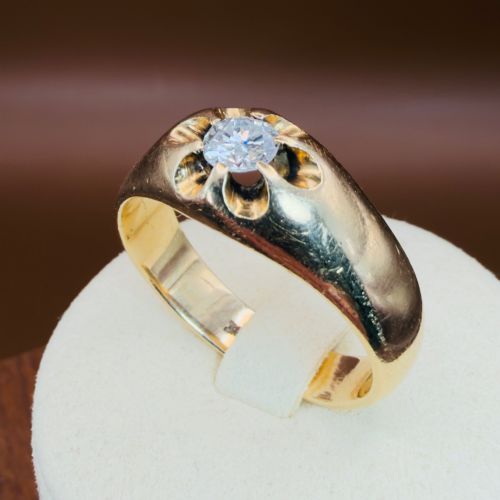
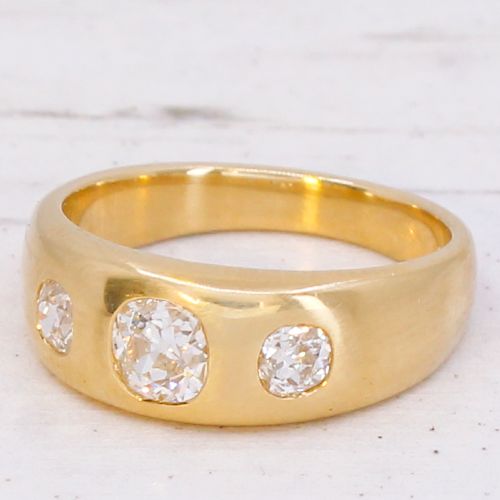
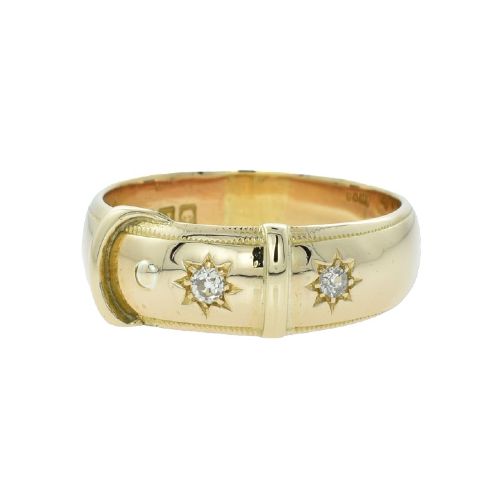
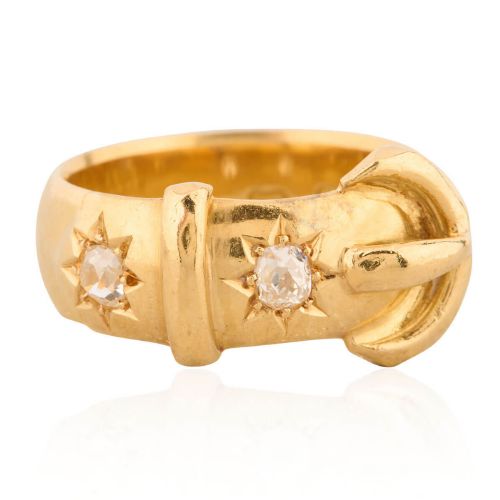
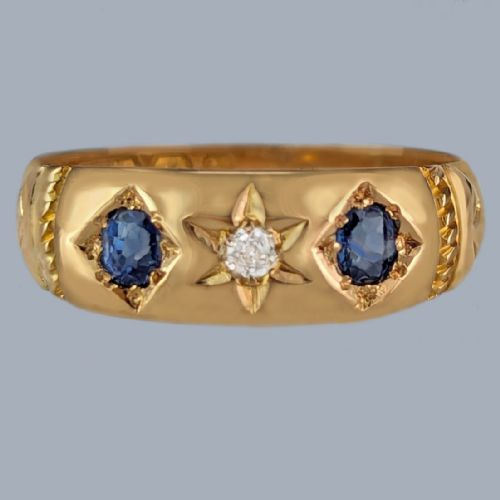
A victorian star set band typically takes the form of a gypsy ring, a buckle design, or a boat mounting where the stones sit flush with the metal surface. These pieces emerge predominantly from the nineteenth century and the Edwardian era, constructed with low profiles designed to catch the eye through engraved starburst motifs around the gemstones.
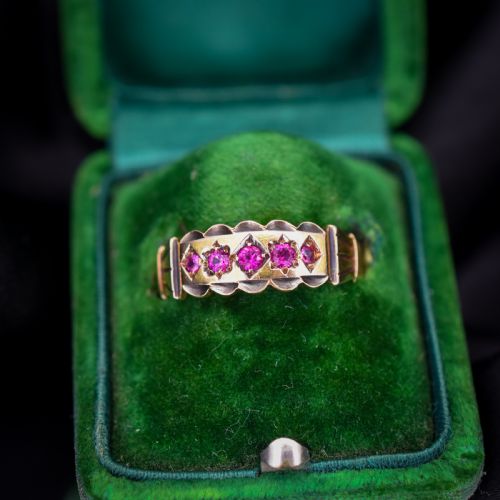
The versions most commonly met on this page combine 18ct yellow gold or 9ct yellow gold with old cut diamonds, rubies, sapphires, or emeralds. They frequently carry hallmarks from assay offices such as Chester and Birmingham, indicating British provenance alongside other traditional period examples.
How they were made
Goldsmiths worked with 18ct yellow gold, 15ct gold, and 9ct yellow gold to form sturdy bands that could support flush or gypsy settings. Stones were driven directly into the heavy metal, and hand-engraved starbursts or celestial rays were chiseled around each diamond or ruby to enhance the sparkle.
Master jewellers incorporated old cut diamonds, sapphires, and rubies directly into the thick shoulders and heavier profiles of the gold bands, sometimes adding black onyx, blue enamel, or pearls to create contrasting textures.
Some nineteenth-century makers hid twin serpents alongside star-set sapphires to whisper eternity straight onto your finger.
What varies in quality
The crispness of the hand-engraved starbursts around the stones dictates much of the visual distinction between examples, as worn or shallow chisel work loses the celestial definition intended by the maker. Heavier gold weights, such as bands reaching eight grams, provide a more substantial feel than lighter counterparts.
The selection and cut of the central gemstones, particularly old cut diamonds matched with natural rubies or sapphires, establish the refinement of the piece. Clear hallmarks indicating specific assay years add historical clarity that elevates certain specimens above unmarked variants.
The Victorian Star Set Band Glossary
- Gypsy ring
- A ring style where the gemstone is set flush into the thick, tapering metal band rather than held in raised claws. This setting style protects the girdle of the stone and prevents snagging on clothing.
- Star set
- A gem setting surrounded by hand-engraved rays forming a star shape on the metal surface. This technique reflects light toward the stone to increase perceived brilliance.
- Old cut
- A vintage diamond faceting style predating modern brilliant cuts, characterised by a smaller table, higher crown, and open culet. These stones display a softer, warmer candlelit gleam under low lighting.
- Buckle ring
- A band shaped to resemble a buckled belt, symbolising loyalty and durability in nineteenth-century jewellery. These often feature star-set diamonds positioned near the buckle motif.
- Hallmark
- An official stamp applied by an assay office to indicate metal purity and the year of testing. British marks often include town marks like Chester or Birmingham alongside the maker's mark.
Victorian Star Set Band: Frequently Asked Questions
What is a star set band?
A star set band is a historic ring featuring gemstones flush-mounted into the metal with hand-engraved starburst patterns surrounding them.
These pieces date primarily from the Victorian and Edwardian eras, combining durability with subtle celestial ornamentation.
How do I wear a gypsy ring daily?
Gypsy rings suit everyday wear because their flush settings leave no exposed claws to catch on fabrics or sustain knocks.
Their sturdy gold bands distribute pressure evenly, making them practical choices for continuous daily use.
What gold purity should I expect?
These rings appear most frequently in 18ct yellow gold and 9ct yellow gold, alongside occasional examples in 15ct gold.
Higher karat options offer a richer colour and greater historical weight.
How do I tell Victorian from Edwardian pieces?
Victorian examples often feature heavy gypsy or buckle bands with deep star engravings, sometimes incorporating black onyx or enamel.
Edwardian variations tend toward lighter, ornate yellow gold bands paired with old cut celestial diamond settings.