
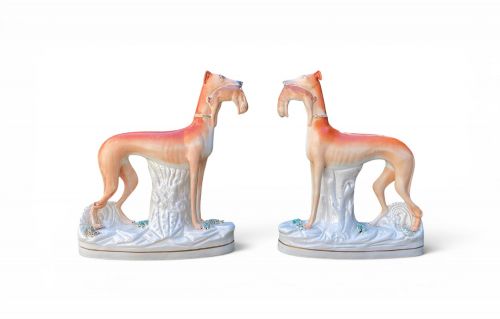


Victorian Staffordshire Whippets
Victorian Staffordshire whippets are characterful pottery figurines capturing nineteenth-century hound forms, prized by collectors for their charming depiction of hunting dogs.
Victorian Staffordshire Whippets
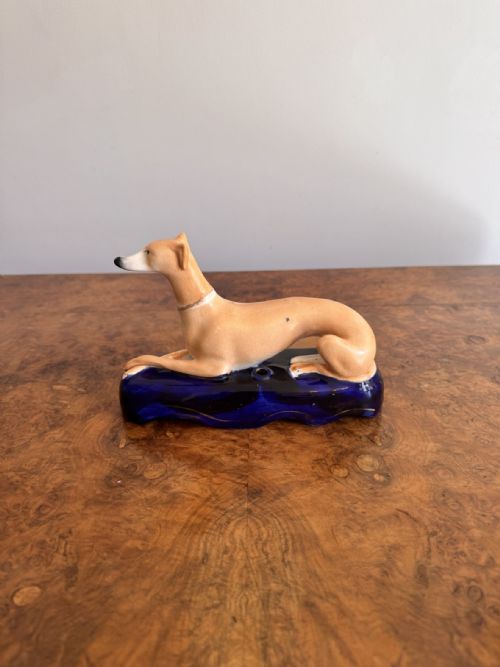
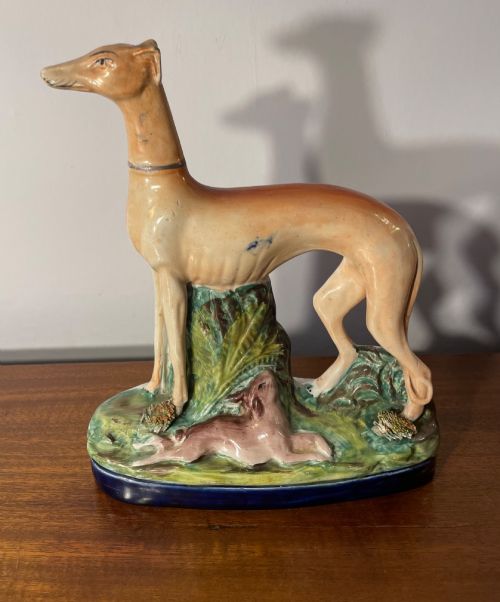
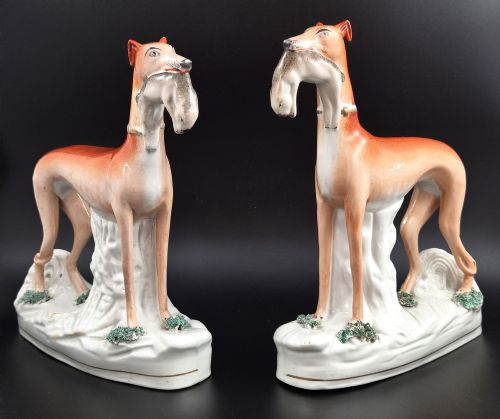
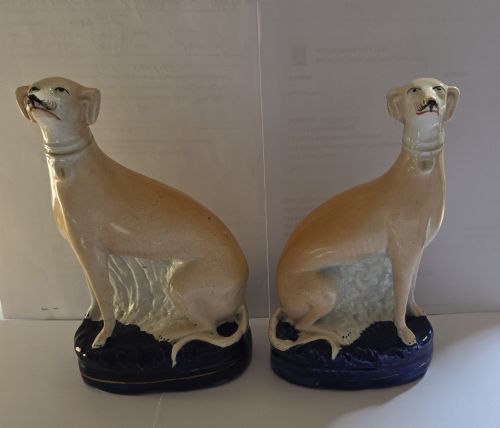
When searching for victorian staffordshire whippets, buyers encounter nineteenth-century earthenware pottery figurines and decorative ornaments modelled as hounds, greyhounds, and hunting dogs with hares. These pieces originate largely from the Victorian era, spanning dates from eighteen fifty to eighteen eighty.
Materials and Making
Certain examples incorporate gold leaf highlights to accent collars and bases. Figures were cast in moulds during the nineteenth century before hand painting and firing in pottery kilns.
Several hounds keep watchful guard over captured hares, proving that even Victorian pottery dogs appreciated a successful hunt.
Judging Quality
Enamel painting preservation and the application of gold leaf dictate visual impact. Stronger modelling distinguishes prominent pairs and large figures from standard commercial output.
Thomas Parr
The Victorian Staffordshire Whippets Glossary
- Earthenware
- Porous pottery fired at lower temperatures, serving as the standard body for nineteenth-century Staffordshire figures. It requires a glaze coating to hold liquids and achieve a finished surface.
- Lead Glaze
- A glossy vitreous coating containing lead, applied to pottery before firing to give a smooth finish. This technique creates the characteristic sheen seen on Victorian figures.
- Enamel Paint
- Vitreous coloured pigments fused to the glazed pottery surface during a secondary low-temperature firing. It provides the bright red, black, and gilt details on the dogs.
- Quill Holder
- A desk accessory featuring a moulded channel or rest designed to hold writing feathers. These functional pieces combine utility with decorative canine sculpture.
- Inkwell
- A small lidded pot incorporated into the base of a figure to hold writing ink. They frequently accompany hound figures on desk bases.
Victorian Staffordshire Whippets: Frequently Asked Questions
What are staffordshire whippet figures?
Staffordshire whippet figures are nineteenth-century ceramic ornaments modelled as greyhounds and hunting hounds. Potters in England produced them as decorative mantel pieces and functional desk accessories.
They frequently appear as seated pairs or accompanied by hares. The forms reflect the Victorian fascination with coursing and canine companions.
How were quill holders used?
Quill holders provided a designated resting place for writing feathers on nineteenth-century desks. Potters integrated these slots directly into the ceramic bases alongside the hound figures.
Owners kept them in studies and libraries for practical writing use. Today they survive as decorative desk antiques.
How do I date these figures?
Dating relies upon stylistic markers, glaze characteristics, and recorded potters' output from the nineteenth century. Pieces generally date between eighteen fifty and eighteen eighty.
Victorian examples show specific moulding styles and enamel colour palettes typical of that period. Base construction and potting weight also offer clues to age.
Are these figures waterproof?
Earthenware bodies coated in lead glaze are generally water-resistant for basic inkwell use. However, centuries of age make historic ceramic bodies delicate.
Modern daily use is discouraged to preserve the enamel paint and glaze integrity. Inkwells and quill holders are best appreciated as display pieces.