
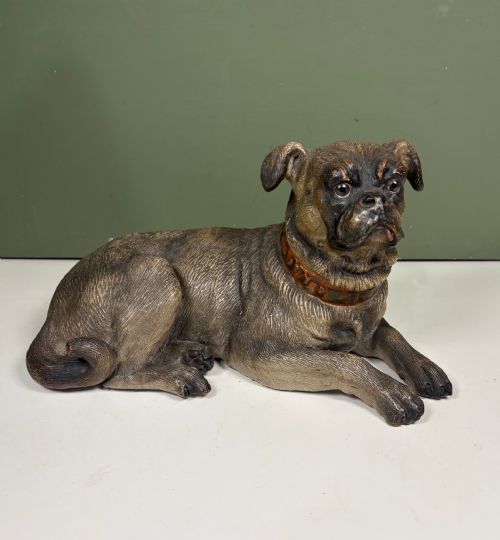


Victorian Staffordshire Dog Figure
A victorian staffordshire dog figure brings the hearths of nineteenth-century parlours straight to modern mantelpieces through cheerful ceramic modelling.
Victorian Staffordshire Dog Figure
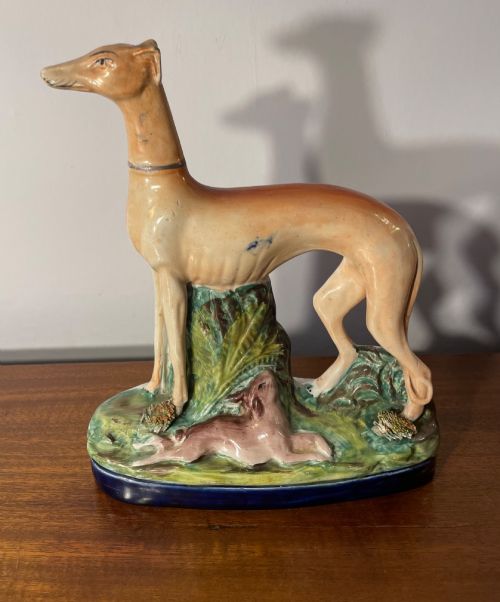
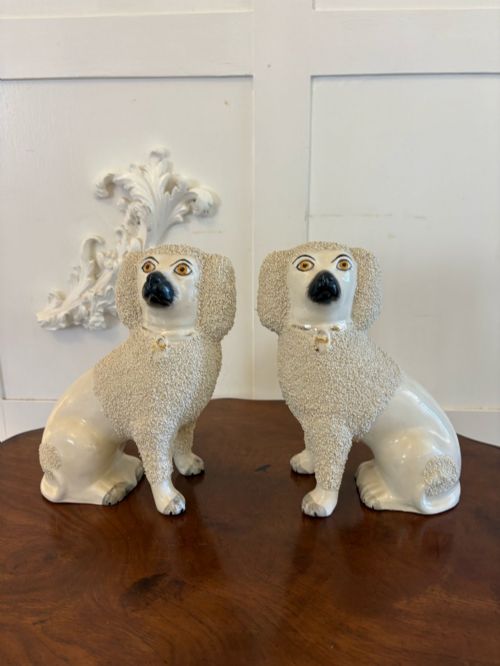
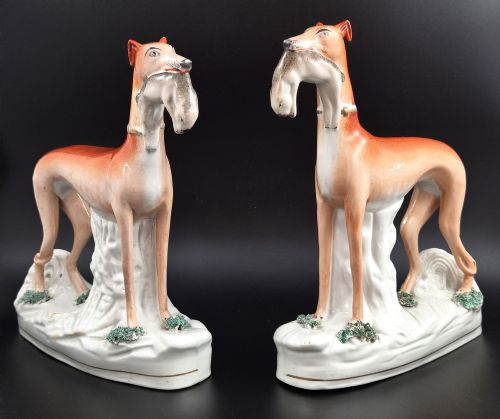
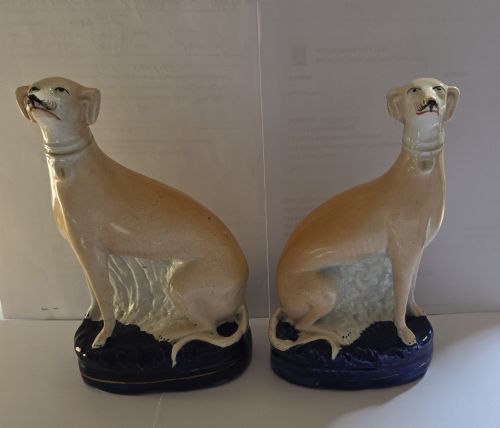
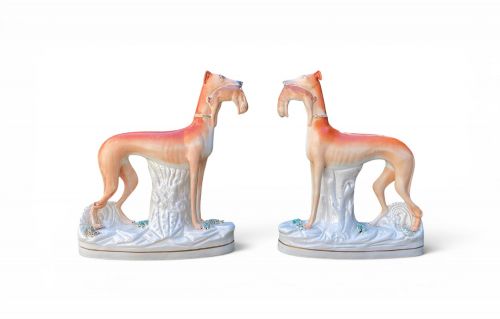
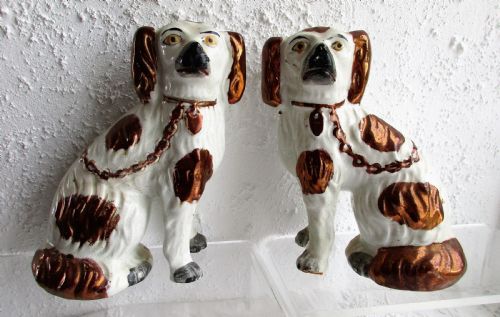
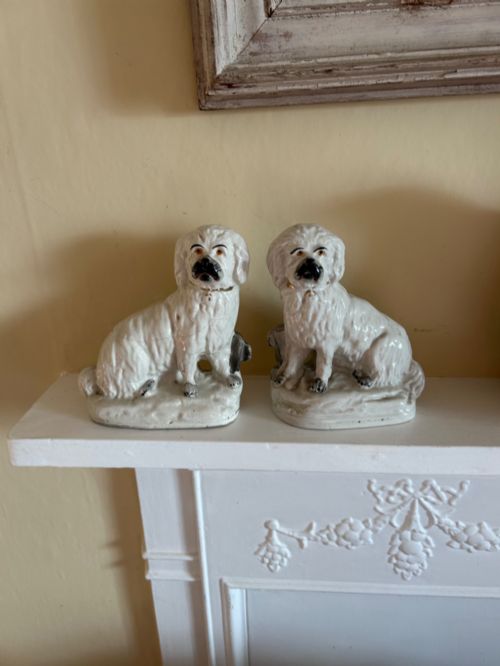
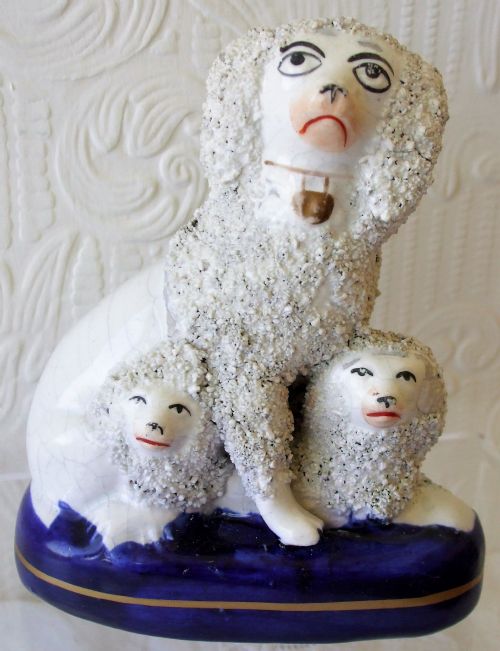
A victorian staffordshire dog figure typically takes the form of seated spaniels, poodles, greyhounds, and whippets modelled as ornamental pairs for display on chimney pieces. These decorative ceramics appear across the nineteenth century, with many examples originating from the Victorian period alongside earlier Georgian pieces.
Beyond standard mantel ornaments, buyers encounter specialised functional forms such as inkwells, quill holders, and money boxes modelled as pugs, dalmatians, and spaniels. The selection also includes figure groups featuring hunting dogs with hares or human companions.
Most pieces on this page belong to the broader Victorian Staffordshire style, produced in English potteries as domestic ornaments. Pairs dominate the listings, reflecting the symmetrical aesthetic favoured for nineteenth-century interior display.
Materials and production
Potters shaped these figures from earthenware and ceramic bodies, frequently applying a clear lead glaze to seal the clay before firing. Stoneware and porcelain appear among the material variants used across different workshops.
Functional pieces among the ceramic dogs include inkwells, quill holders, and coin banks alongside standard decorative figurines.
Judging the standard
Quality rests upon the crispness of the modelling and the precision of the hand-painted enamels, where sharply defined facial expressions and careful gilding distinguish finer figures from hasty commercial output. The crispness of transfer printing and hand-applied details dictates visual impact.
Proportion and scale also separate the standard production pieces from exceptionally large or miniature examples that require greater skill in the kiln. Intact original pairs command particular attention from collectors seeking matched sets.
Thomas Parr·Wooley
The Victorian Staffordshire Dog Figure Glossary
- Earthenware
- Porous pottery fired at lower temperatures, forming the primary body material for these figures.
- Lead Glaze
- A glossy coating applied to ceramic surfaces before firing to give a smooth, reflective finish.
- Enamel
- Opaque coloured glass fused to the ceramic body during secondary firing to decorate the figures.
- Gilt
- A thin layer of gold leaf or gold paint applied to highlights such as chains, lockets, and collars.
- Quill Holder
- A desk accessory featuring a modelled dog with receptacles designed for holding writing feathers.
Victorian Staffordshire Dog Figure: Frequently Asked Questions
Why were they made in pairs?
Potters produced these figures in mirror-image pairs specifically designed to sit at either end of a nineteenth-century fireplace mantelpiece.
This symmetrical arrangement matched the formal interior decoration standards of Victorian sitting rooms.
How do I date a figure?
Dating relies on stylistic clues, glaze characteristics, and potting techniques recorded across the nineteenth century.
Earlier Georgian pieces often display different clay bodies compared to standard late Victorian examples.
What are comforter spaniels?
Comforter spaniels represent the popular toy spaniels kept by Victorian nobility and reproduced widely by Staffordshire potters.
These mantle dogs typically feature painted locks, golden chains, and upright seated postures.
Did they serve any purpose?
While primarily decorative ornaments for the parlour, some variations incorporated practical functions into the ceramic design.
Listings include specialised forms configured as inkwells, quill holders, and money boxes.