


Victorian Spirit Dispenser
These Victorian spirit dispensers are heavy, functional pieces of nineteenth-century barware designed to serve drinks with mechanical efficiency and style.
Victorian Spirit Dispenser
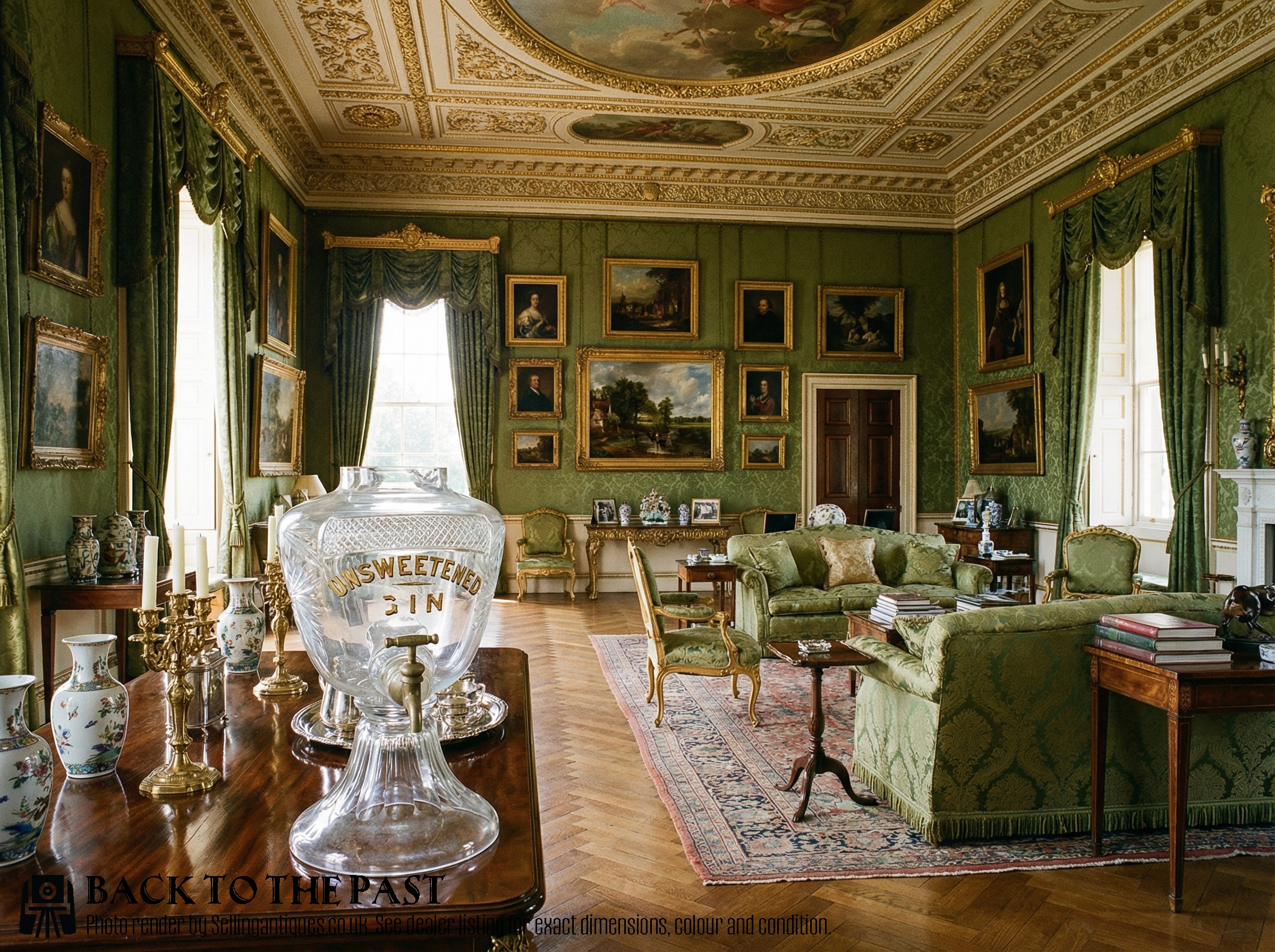
A victorian spirit dispenser is a heavy barware vessel designed to hold and pour liquor such as whiskey, gin, or brandy. You will frequently encounter glass barrels, cut crystal vessels, and oak casks mounted on stands.
The forms range from single table lamps and table-top barrels to triple spirit barrel sets and serpentine fronted flat back dispensers. Many examples sit within silver plated frames or intricate Black Forest stands.
Origins stretch across the nineteenth century into the early twentieth century, taking in both domestic pieces and commercial brewery fountains used for service.
How they were made
Makers utilised clear and frosted cut crystal alongside blown glass for the liquid containers, often pairing them with brass taps and silver plate mountings. Oak and stoneware provided sturdy alternatives for barrel bodies.
Wooden casks relied on traditional coopering techniques, incorporating brass bands for structural strength and gold leaf lettering for labelling the contents. Stands employed carved woodwork in Black Forest styles or fitted metal framing.
Victorian Spirit Dispenser Retail Price Guide 2026
Typical asking prices for victorian spirit dispenser among the pieces listed under this phrase on Sellingantiques today, from the lower quarter to the upper quarter. They describe what is for sale here now, not the wider market.
Barware forms on this site range from single glass dispensing lamps to triple oak barrel sets on stands.
What varies in quality
The distinction between ordinary and superior pieces rests on the complexity of the housing and the clarity of the glass. Triple barrel sets mounted on elaborate stands or paired with tot pails demonstrate higher ambition than single vessels.
Quality shows in the precision of the metal mounts, the depth of the crystal cutting, and the integration of functional elements like working taps and secure stoppers.
Walker & Hall·L. Lumley
The Victorian Spirit Dispenser Glossary
- Tot pail
- A small bucket used for holding measures or ice alongside a dispenser. These accompany sets of multiple barrels.
- Flat back dispenser
- A vessel designed to sit flush against a wall or back bar. This form saves counter space in busy settings.
- Black Forest stand
- A carved wooden base, often featuring naturalistic foliage or animal motifs. These stands elevate oak and glass barrels.
- Samovar
- A heated metal urn adapted for beverage service. Edwardian examples share similar metalwork techniques with spirit dispensers.
Victorian Spirit Dispenser: Frequently Asked Questions
How do these spirit dispensers work?
Most pieces utilise a gravity feed system through a brass tap fitted at the base of the glass barrel or oak cask. Turning the spigot releases the liquor directly into a glass or tot pail.
Larger commercial fountains and multi-barrel sets operate on the same principle, allowing a host to pour multiple spirits from a single static station.
Were they used at home or in pubs?
Nineteenth-century examples served both domestic dining rooms and commercial establishments like public houses and hotel bars. Brewery-branded vessels supplied to specific houses indicate heavy commercial use.
Smaller single barrels and novelty triple sets were typically manufactured for affluent Victorian households entertaining guests in private.
How do I date a spirit dispenser?
Dating relies on examining the materials, registration marks, and manufacturing techniques present in the glass and metalwork. Pieces marked with registry dates from the mid-nineteenth century provide a clear point of origin.
Stylistic shifts from mid-Victorian glass barrels to Edwardian silver-plated samovars help narrow down the decade of production.
Can I still use them to serve drinks?
Many glass and crystal dispensers remain functional provided the internal corks, seals, and brass taps are clean and intact. Regular maintenance ensures the vintage spigots operate smoothly without leaking.
Careful hand washing protects fragile nineteenth-century glass and preserves the original silver plating on the mounts.