




Victorian Spirit Bottle Stopper
A victorian spirit bottle stopper finishes the neck of a nineteenth-century decanter, sealing the contents and completing the piece.
Victorian Spirit Bottle Stopper
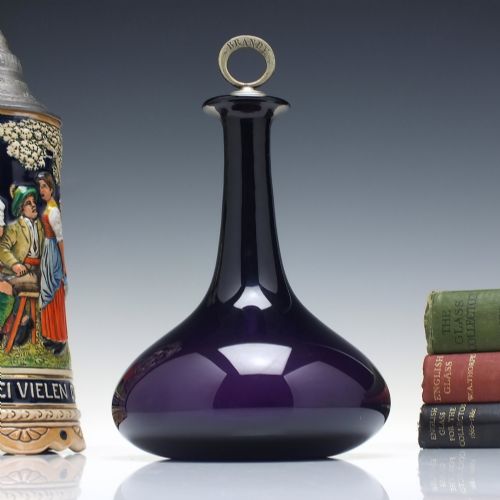
A victorian spirit bottle stopper belongs to glass decanters, whisky decanters, and scent bottles originating in the nineteenth century. These items appear in clear, cut, lead crystal, ruby, amber, and amethyst glass.
The objects stem from periods spanning the middle and late nineteenth century, including specific years like 1850, 1860, 1870, 1880, 1900, and Arts and Crafts examples. Many pieces arrive as matched pairs with their original glass or crystal stoppers intact.
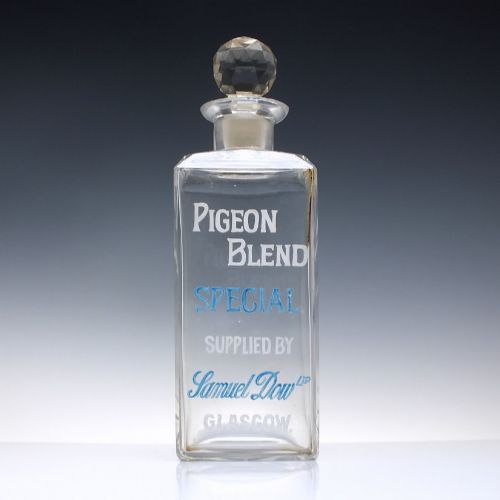
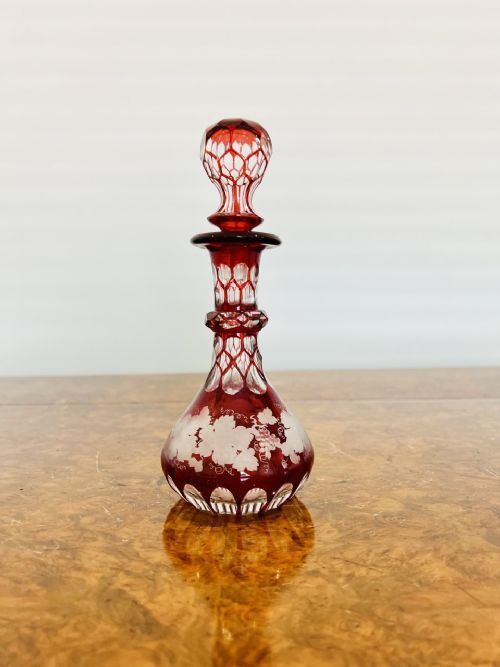
Makers and styles include Bohemian, Highland Revival, Folk Art, and Regency influences alongside Scottish enamel-painted whisky pieces. Certain designs incorporate silver mounts, silver-plated hardware, or locking mechanisms by Betjemann Brothers.
Glass and Crystal Technique
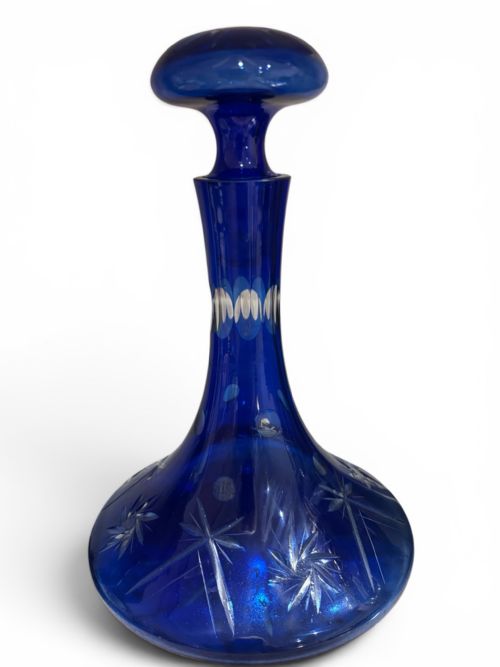
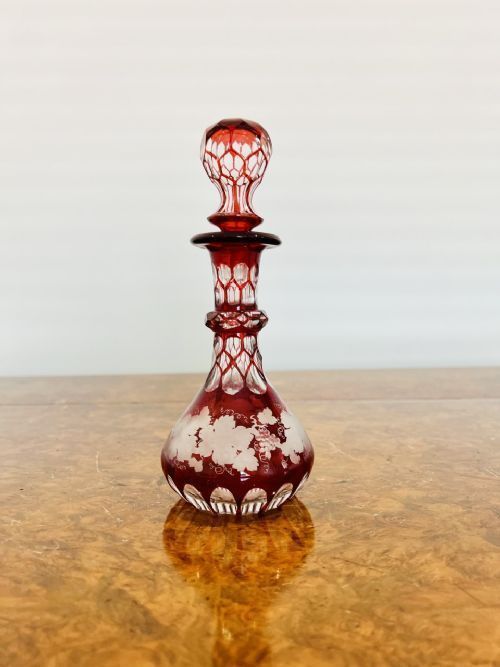
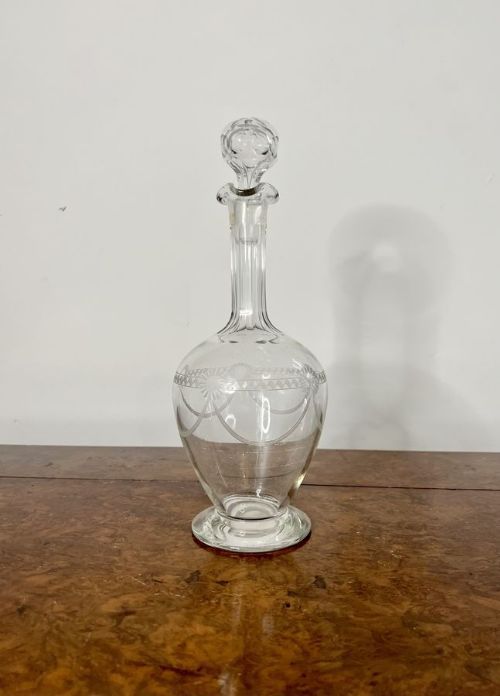
Makers utilised cut glass, lead crystal, and clear glass, shaping vessels through optical blowing and heavy facet-cutting. Coloured pieces relied on ruby, amber, amethyst, and cranberry glass overlays.
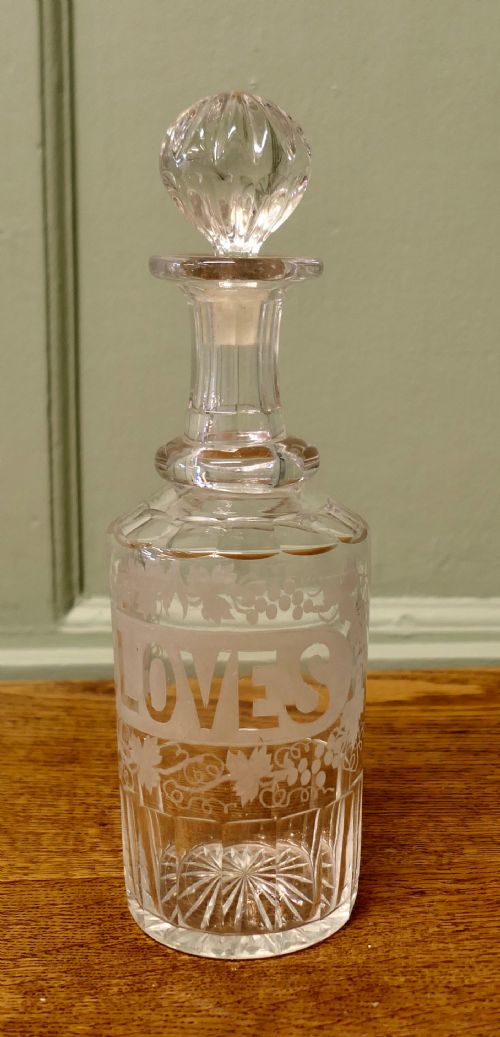
Decoration involved acid etching, enamel painting, and engraving, particularly on Scottish whisky decanters and shaft and globe forms. Metalwork components combined sterling silver necks and silver-plated mounts with glass stoppers.
Listings feature Victorian glass decanters alongside Nailsea type pieces and enamelled Scottish whisky vessels dated from 1850 to 1900.
Form and Finish
Quality rests in the crispness of the glass cutting and the weight of the lead crystal. Heavy, deep facets reflect light cleanly, whereas softer edges indicate simpler production.
The survival of the matching original stopper dictates desirability. Complete pairs matched to their original stoppers command greater attention than mismatched replacements.
James Powell·Betjemann Brothers·Stevens and Williams
The Victorian Spirit Bottle Stopper Glossary
- Stopper
- The glass or crystal plug that seals the neck of a decanter. It prevents evaporation and preserves the spirit within.
- Cut Glass
- Glass shaped and patterned by grinding wheels. The process creates deep facets that catch the light.
- Lead Crystal
- Glass containing lead oxide, known for its high refractive index and heavy weight. It rings when struck gently.
- Overlay
- A layer of coloured glass fused over a clear glass body. Cutting through the top layer reveals the clear glass beneath.
Victorian Spirit Bottle Stopper: Frequently Asked Questions
What is a spirit bottle stopper?
A spirit bottle stopper is the matching glass or crystal closure designed to fit tightly into the neck of a nineteenth-century decanter. It keeps air away from whisky, wine, or cordials.
Most stoppers feature hand-cut facets or shaped finials that match the pattern carved onto the body of the decanter itself.
How do I know the stopper is original?
An original stopper shares the exact glass colour, tint, and degree of wear found on the interior rim of the decanter neck. The ground glass mating surfaces often show matching fine rotation marks.
Matching the pattern and the weight of the crystal helps confirm that the stopper belongs to that specific bottle rather than a later replacement.
What styles of decanters exist?
Decanters appear in straightforward cut glass, coloured ruby and amethyst glass, and enamelled Scottish whisky styles. Some incorporate silver mounts, thistle shapes, or locking mechanisms.
Production spans the Victorian era, including Arts and Crafts examples and Bohemian crystal work.
How should I clean these items?
Cleaning requires warm water and mild soap, avoiding harsh scrubbing that might scratch antique glass or enamel paint. Wooden bottle brushes help reach the interior base safely.
Stoppers should be washed separately to prevent chipping against the heavy sides of the decanter body.