
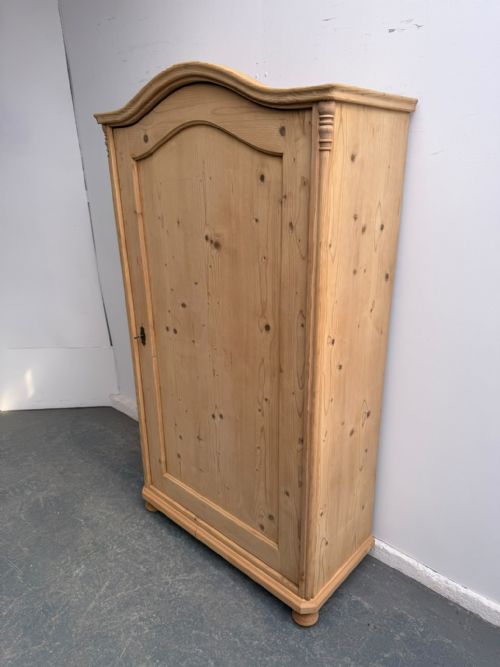
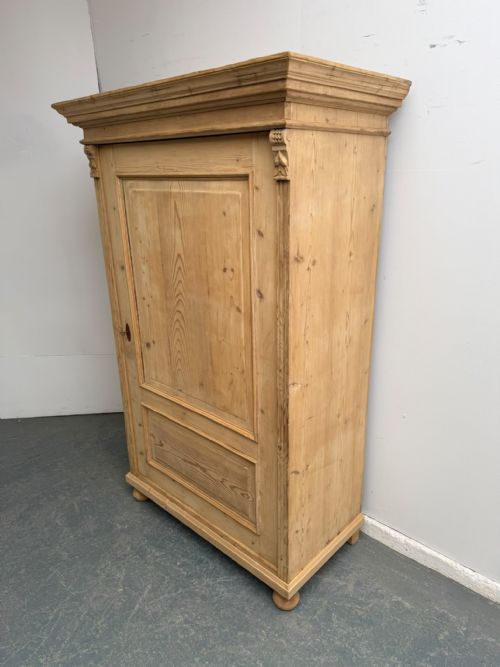
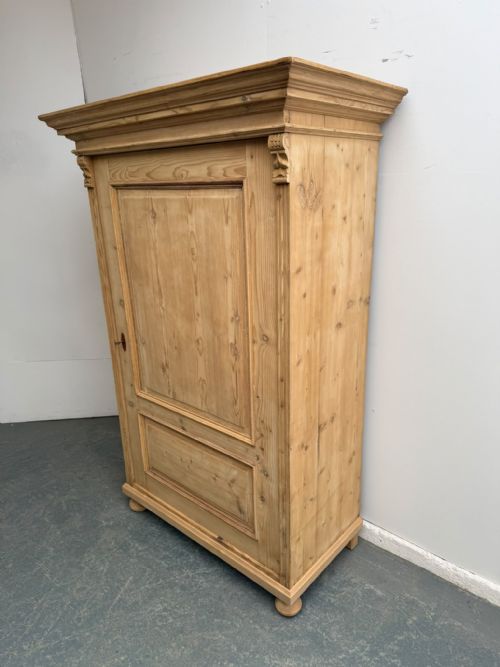
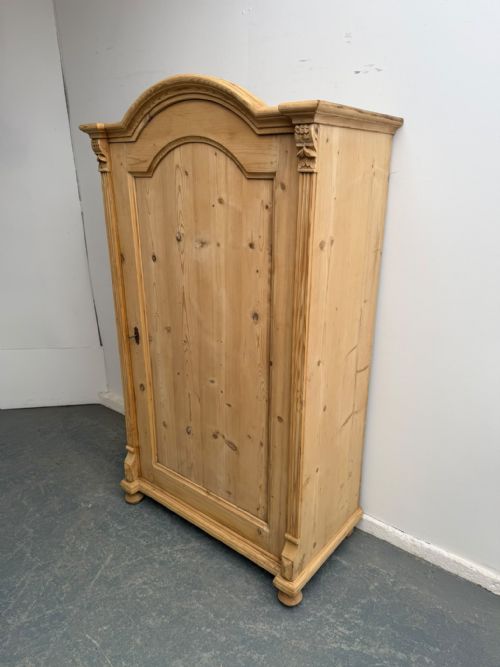
Victorian Single Armoire
A victorian single armoire offers compact clothes storage, combining period timber work and slender proportions to fit rooms where double wardrobes fail.
Victorian Single Armoire
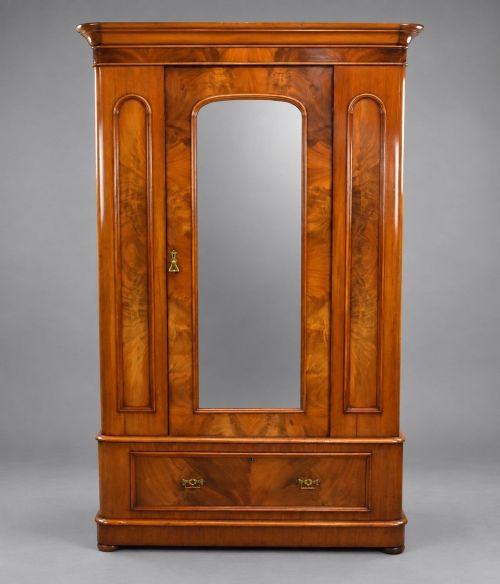
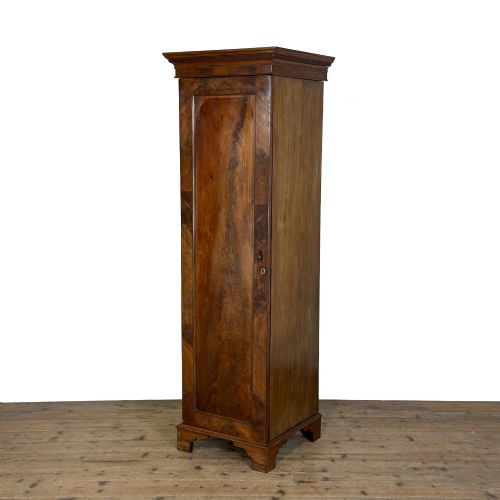
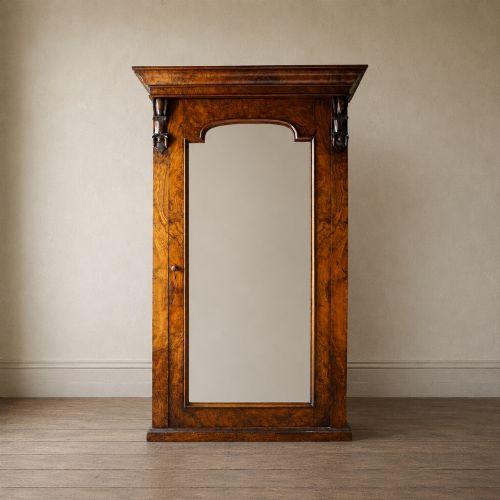
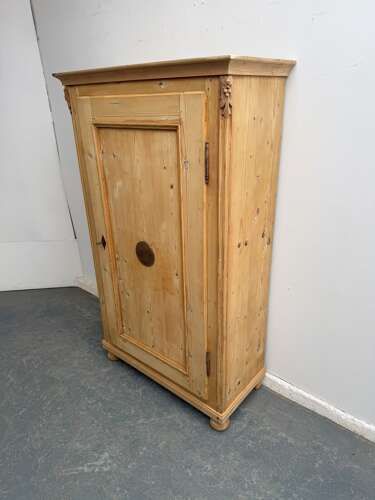
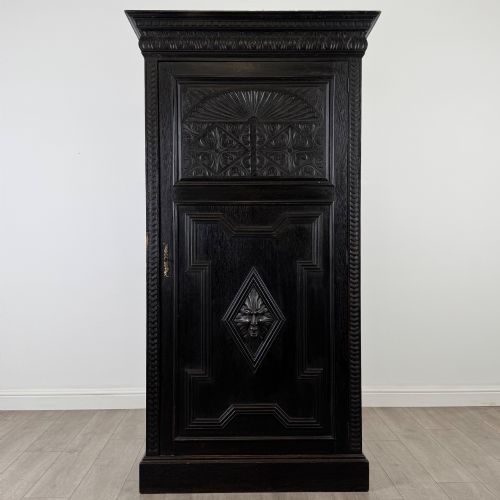
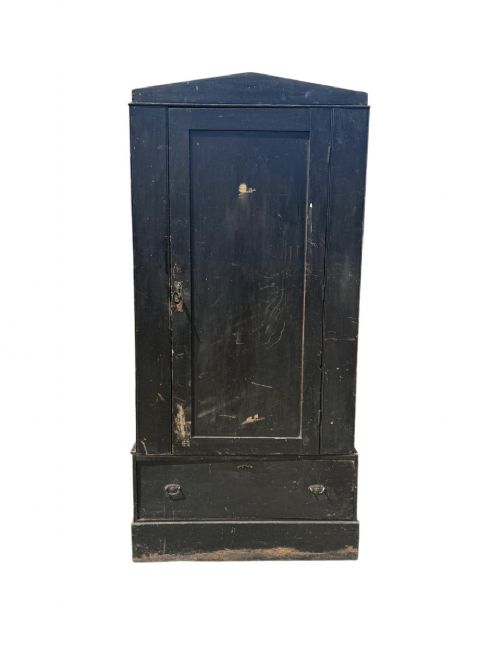
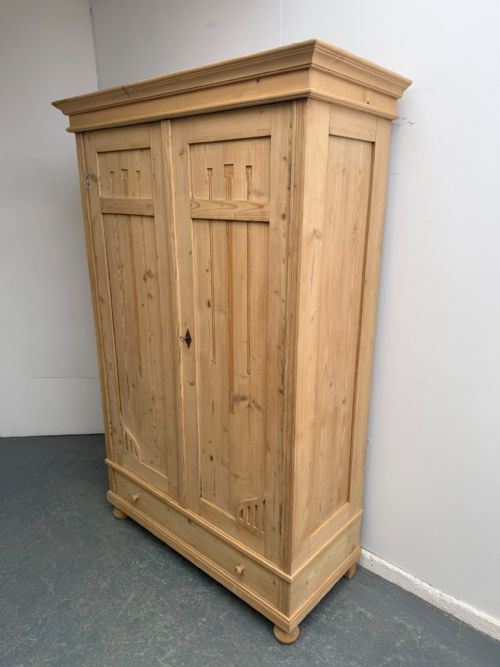
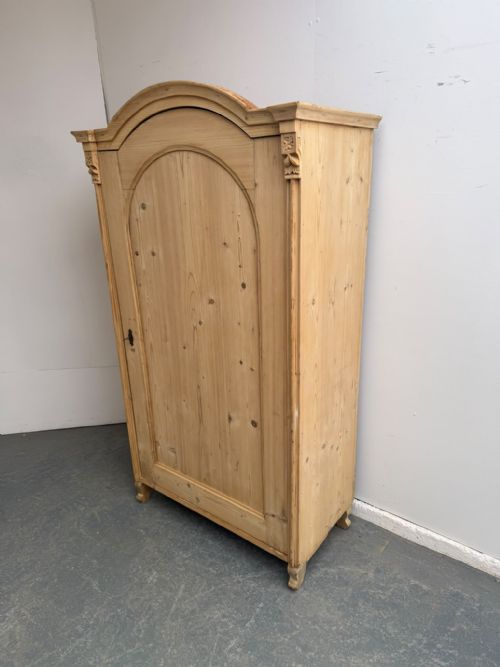
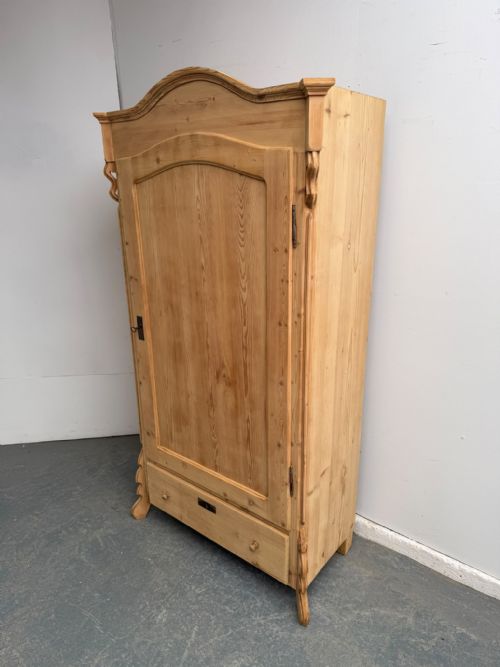
A victorian single armoire is a tall storage piece designed for hanging garments or holding linen within a single-door footprint. When you search for a victorian single armoire, you encounter single-door wardrobes, compactum variants, and tall cupboards made primarily in pine, mahogany, oak, ash, and walnut.
The pine examples span simple country workshop builds to arched and fielded door designs, often finished with wax or paint. Alongside pine, darker hardwoods such as mahogany, oak, and figured walnut appear with mirrors or internal drawers.
Most items on this page date from the Victorian and Edwardian periods, with styles ranging from plain rustic farmhouse to gothic revival, french aesthetic movement, and arts and crafts.
Materials and Construction
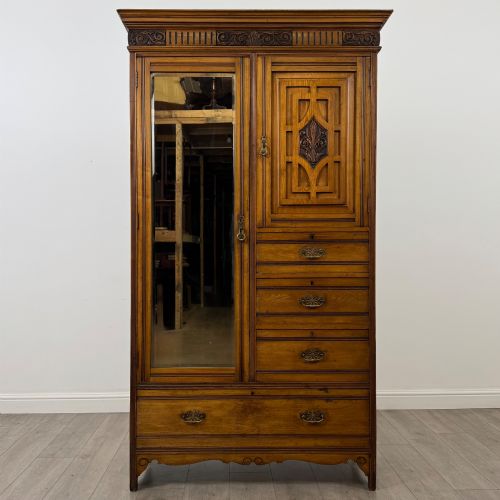
Makers built these single wardrobes using solid timbers including pine, mahogany, oak, ash, and walnut, frequently pairing them with iron and brass hinges, locks, and handles. Glass plates fitted into door frames provide full-length mirrors on select walnut and maple pieces.
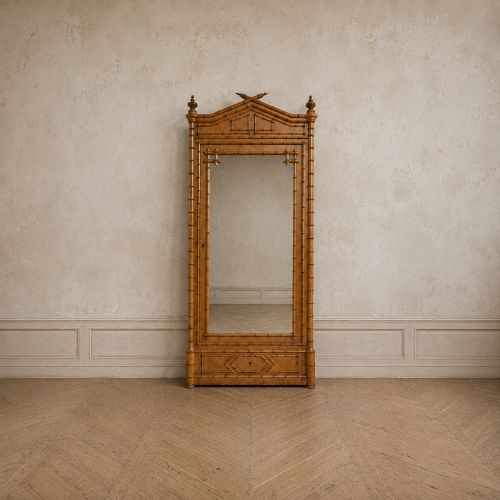
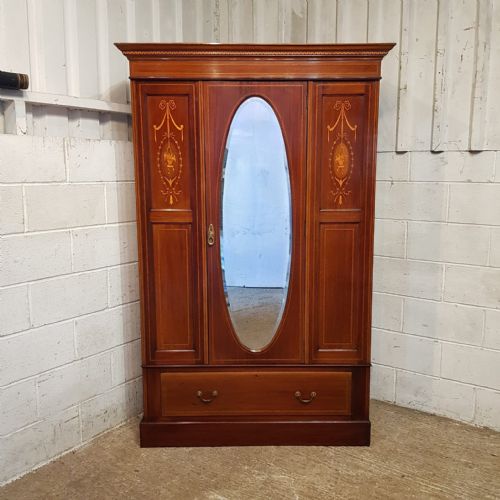
Cabinetmakers employed traditional joinery techniques such as fielded panels and carved ornamentation, while others applied marquetry inlay to oak surfaces or utilised faux bamboo shaping on maple frames.
A child's hall wardrobe offers pint-sized hanging space, proving that even Victorian children had coats that needed a proper home.
Variations in Quality
Quality rests in the choice of timber and the sophistication of the exterior detailing, moving from simple softwood kitchen cupboards to finely figured walnut and marquetry-inlaid hardwoods. The presence of carved decoration, shaped arches, and fitted internal drawers elevates a standard utility piece into finer cabinet work.
Original hardware, sound door hanging, and intact mirrored glass separate well-preserved surviving examples from those altered or rebuilt over time.
Gillows of Lancaster
The Victorian Single Armoire Glossary
- Compactum
- A multi-compartment wardrobe combining hanging space with internal drawers, shelves, or compartments. This design maximises storage within a single unit.
- Fielded panel
- A wooden panel with bevelled or recessed edges fitted into a frame. This technique allows the timber to expand and contract with humidity changes.
- Marquetry
- Decorative inlay work using various coloured wood veneers to create geometric or pictorial patterns. Artisans apply this directly onto solid furniture carcases.
- Skeleton cupboard
- A specialised storage unit featuring an open frame or slatted interior structure. These pieces were often used for linens or specialised storage.
- Faux bamboo
- Wood turned and carved to imitate natural bamboo stalks. This style gained popularity during the late nineteenth century under aesthetic movement influences.
Victorian Single Armoire: Frequently Asked Questions
What fits inside a single armoire?
These single-door pieces typically contain a hanging rail, hooks, or fixed shelving suited for folded garments and linens. Some variants include a lower drawer beneath the main door for additional storage.
Because widths are narrow, they suit smaller bedrooms, hallways, or guest rooms where a standard double wardrobe dominates the floor space.
How do I care for waxed pine?
Waxed pine requires occasional treatment with a quality beeswax polish to nourish the timber and maintain a soft sheen. Avoid placing wooden furniture directly beside heat sources or in damp conditions.
Dust regularly with a soft dry cloth and wipe up spills immediately to protect the traditional wax finish from water marks.
Are these wardrobes easy to dismantle?
Pine country cupboards and older armoires often feature solid one-piece construction rather than knock-down frames. It is essential to check exterior dimensions against your stairwells and doorways before transport.
Heavier hardwood models made from mahogany or oak can be exceptionally heavy and require two people for safe moving and installation.
How do I date a Victorian wardrobe?
Dating relies on observing timber choices, hardware styles, and construction methods characteristic of the nineteenth century. Early pieces often feature hand-cut joints and simpler lines, while later items show machine-planed boards and different aesthetic influences.
Design details such as gothic arches, arts and crafts simplicity, or french faux bamboo finishes help narrow the decade of production.