


Victorian Silver Toilet Bottle
These Victorian silver toilet bottle pieces combine heavy cut glass and sterling silver mountings to organise dressing tables and travel cases.
Victorian Silver Toilet Bottle
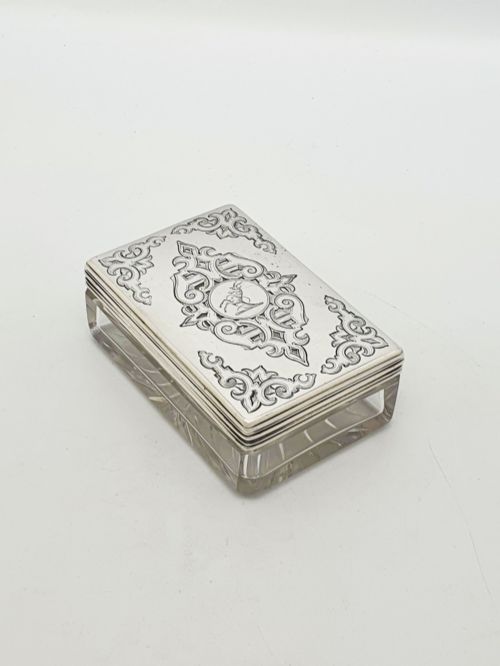
A victorian silver toilet bottle encompasses cut glass jars, perfume flasks and scent bottles fitted with solid silver tops, often found housed within fitted dressing cases and vanity boxes.
The pieces appearing on this page span the nineteenth century, including dated examples from the eighteen-forties, sixties, seventies, eighties and nineties.
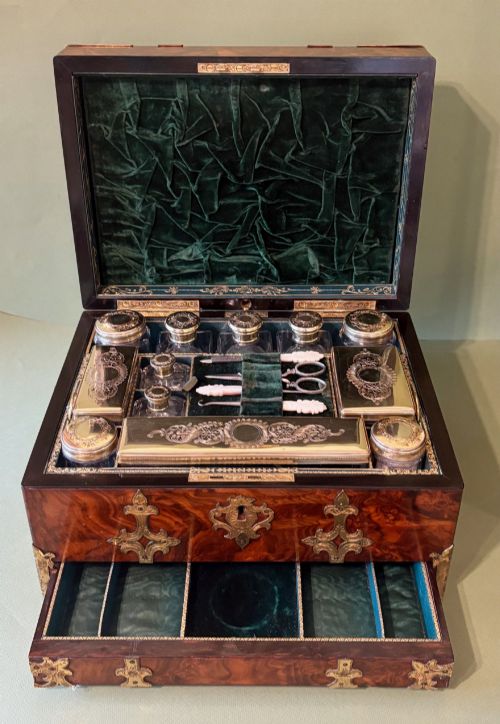
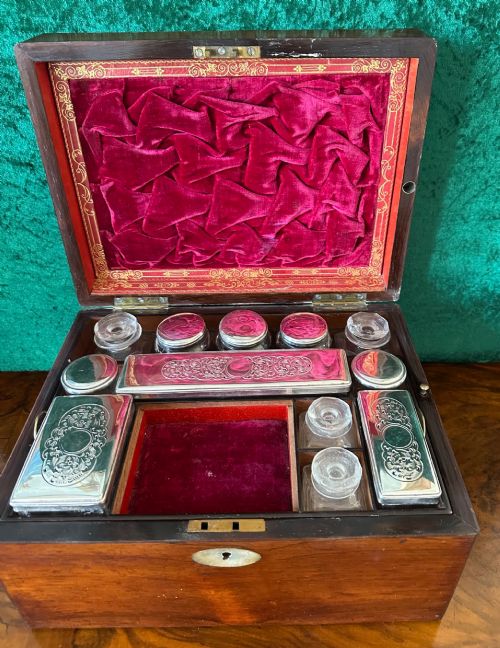
Forms range from individual perfume bottles and tall vanity jars to complete travelling vanity cases lined in velvet and constructed from timbers such as coromandel wood and burr walnut.
Materials and construction
Makers utilised heavy cut glass and crystal for the bodies of the bottles and jars, pairing them with solid sterling silver lids, collars and mounts.
Travel pieces and larger vanity cases feature wooden carcasing in coromandel and burr walnut, internally fitted with velvet linings, brass hardware and specialised compartments to secure the glass vessels.
Victorian travellers trusted heavy velvet-lined coromandel boxes to keep their delicate glass scent bottles intact on bumpy stagecoach rides.
Assessing quality and craftsmanship
Quality rests upon the depth and crispness of the glass cutting, the gauge of the sterling silver used for the tops, and the precision of any fitted wooden travelling case.
Examples bearing clear hallmarks, maker marks and integrated sets demonstrate higher workshop standards than unmarked single vessels.
Asprey
The Victorian Silver Toilet Bottle Glossary
- Sterling Silver
- An alloy of silver containing 92.5 percent pure silver and 7.5 percent other metals, typically copper. This standard alloy provides the durability required for hinged lids and screw caps on dressing table bottles.
- Cut Glass
- Glass shaped and patterned by abrasive wheels and polishing stones. Deep geometric cutting creates the light-refracting facets seen on nineteenth-century vanity jars and perfume bottles.
- Coromandel Wood
- A dense, heavy timber from Asia with distinctive dark brown and black grain patterns. It was frequently selected by makers for high-end Victorian travelling vanity cases.
- Hallmark
- An official stamp applied by an assay office to indicate the metal standard, the maker and the year of manufacture. British silver pieces carry these marks on the silver mounts and bottle lids.
Victorian Silver Toilet Bottle: Frequently Asked Questions
What is a victorian silver toilet bottle?
A victorian silver toilet bottle is a glass vessel fitted with a sterling silver cap or collar, designed for holding perfumes, colognes or cosmetics upon a dressing table.
Such items were frequently produced as matched pairs or integrated into larger portable dressing cases for nineteenth-century travel.
How do I date these silver bottles?
Dating relies upon reading the hallmarks stamped into the sterling silver mounts, which indicate the specific assay office and year of production.
Stylistic indicators such as the depth of the glass cutting and the choice of exterior case wood also help narrow the period.
Were these bottles meant for travel?
Many examples were housed securely inside fitted coromandel or burr walnut vanity cases lined with velvet for journeys.
Other taller jars and perfume bottles served static roles upon nineteenth-century dressing tables rather than travelling.
How should I clean the silver tops?
The sterling silver mounts require gentle cleaning with a specialist silver cloth to preserve the surrounding glass and interior linings.
Harsh chemical dips should be avoided to protect both the historic metal surface and any fabric components nearby.