


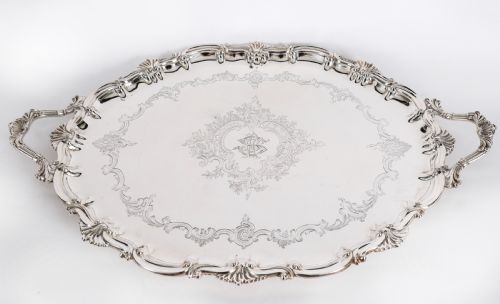

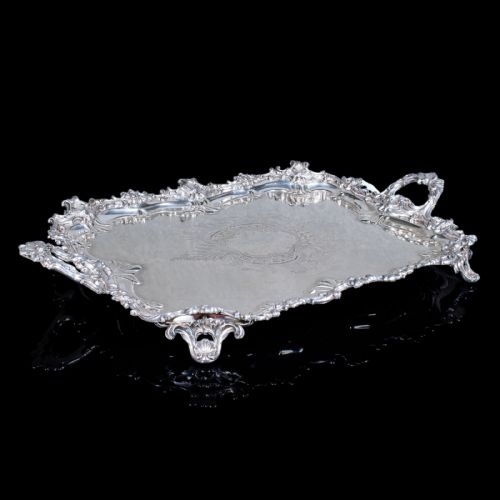


Victorian Silver Tea Tray
A victorian silver tea tray brings weight and ceremony to a room, whether rendered in solid sterling or substantial silver plate.
Victorian Silver Tea Tray
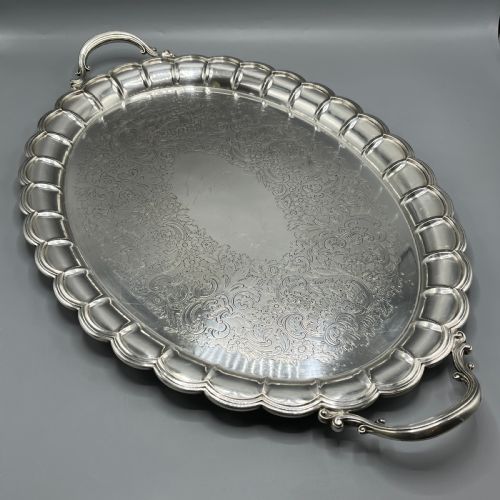
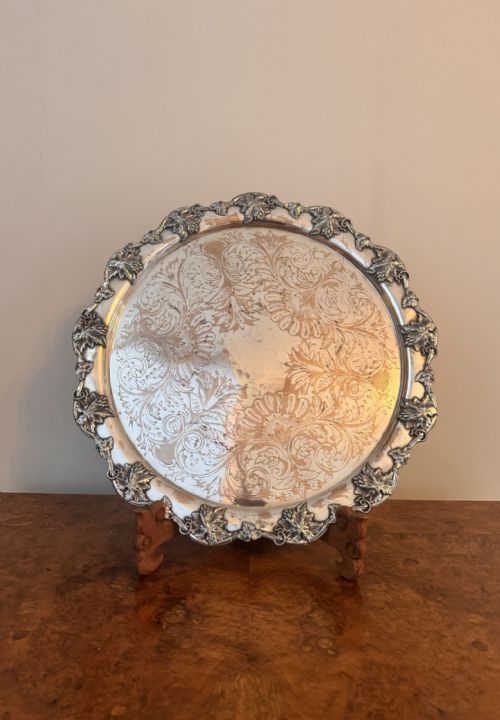
When you search for a victorian silver tea tray, you encounter pieces designed for formal afternoon service, ranging from circular salvers to massive twin-handled platters. The majority of what you meet on this page relies on silver plate, electroplated nickel silver, or base metal, alongside occasional examples in solid sterling silver.
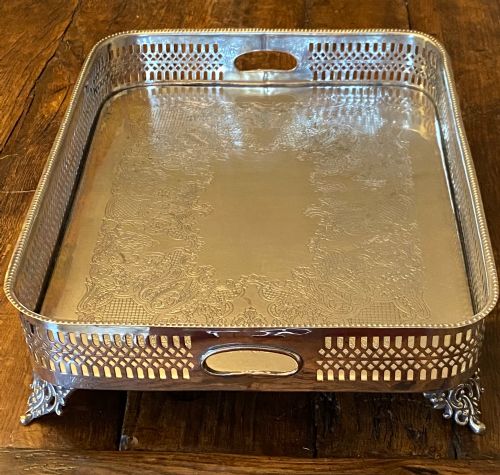
Beyond standard serving forms, the selection includes gallery trays featuring pierced or reticulated walls, alongside larger presentation pieces and occasional tables incorporating tray tops. These objects span the nineteenth century, drawing on periods from the Georgian era through to Edwardian revivals.
Materials and Technique
Makers utilised heavy base metals coated in silver through traditional plating techniques like Sheffield plating or later electroplating methods such as EPNS. Solid sterling silver pieces represent the upper tier of production, often marked with standard assay hallmarks indicating date and origin.
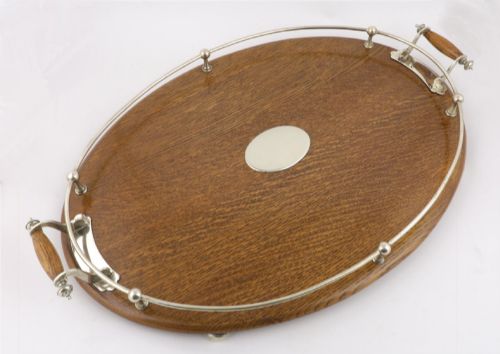
Many examples incorporate secondary materials including mahogany or walnut for wooden galleries and occasional table bases, while ebonised wood provides contrast on specific gallery edges. Decoration relies on hand-chased borders, engraved surfaces, and reticulated pierced metalwork.
Victorian Silver Tea Tray Retail Price Guide 2026
Typical asking prices for victorian silver tea tray among the pieces listed under this phrase on Sellingantiques today, from the lower quarter to the upper quarter. They describe what is for sale here now, not the wider market.
Judging Quality
The division between ordinary and exceptional pieces rests upon the crispness of chased decoration and the retention of the underlying silver layer across high-friction surfaces. Substantial weight and rigid construction separate superior presentation trays from lighter utilitarian wares.
Maker attribution also dictates standing, with established workshops demonstrating superior gauge metal, balanced proportions, and careful finishing of handles and feet.
Thomas Bradbury And Sons·John Harrison·Elkington And Co·J Dixon And Sons·Fenton Russel·Walker And Hall·Lee And Wigfull·Peters Hamburg
The Victorian Silver Tea Tray Glossary
- Silver Plate
- A thin layer of silver fused or electroplated onto a base metal such as copper, nickel silver, or brass. This technique allowed nineteenth-century makers to produce affordable domestic wares with the visual appeal of solid silver.
- Gallery Tray
- A serving tray fitted with a raised, often pierced or reticulated metal wall around its perimeter. This architectural rim prevented glassware and teapots from sliding during transit.
- Salver
- A flat serving vessel, typically raised on small feet, used traditionally for presenting letters, calling cards, or beverages. They appear frequently alongside larger tea trays in nineteenth-century dining rooms.
- EPNS
- Electroplated Nickel Silver, a common nineteenth-century manufacturing standard. The process applied an even coat of pure silver over a durable nickel alloy core.
- Reticulated
- Decorated with an openwork pattern of pierced geometric or floral shapes. This technique lightens the visual weight of large gallery trays while adding decorative complexity.
Victorian Silver Tea Tray: Frequently Asked Questions
How do I clean an antique silver tray?
Use a soft cloth and a dedicated silver cream designed for antiques, applying gentle pressure to avoid wearing through thin plate.
Rinse with warm water and dry immediately with a clean cotton cloth to preserve the polished finish.
What is the difference between plate and sterling?
Sterling silver denotes a solid precious metal standard containing high purity throughout the object.
Silver plate consists of a base metal core covered by a thin outer layer of pure silver.
Were these trays used only for tea?
Nineteenth-century households utilised these large vessels for serving afternoon refreshments, carrying decanters, or displaying presentation items.
Larger twin-handled versions also functioned as permanent surfaces on side tables and occasional furniture.