
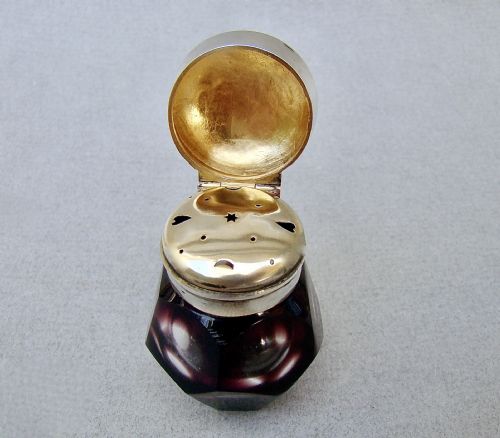

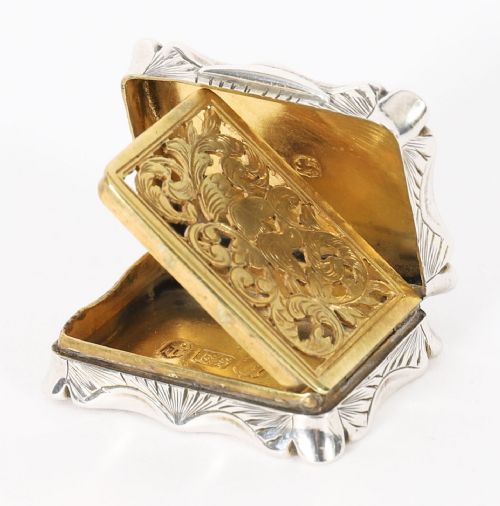


Victorian Silver Smelling Bottle
A victorian silver smelling bottle is a small personal accessory combining precious metalwork with coloured glass, designed to hold reviving salts.
Victorian Silver Smelling Bottle
A victorian silver smelling bottle serves as a portable container for aromatic vinegars or salts, intended to counter faintness in crowded rooms. These objects reflect the refined social habits of the nineteenth century, when personal scent was both a luxury and a practical necessity. The selection on this page centres primarily on Victorian and Edwardian examples, spanning decades from the middle of the nineteenth century into the early twentieth century.
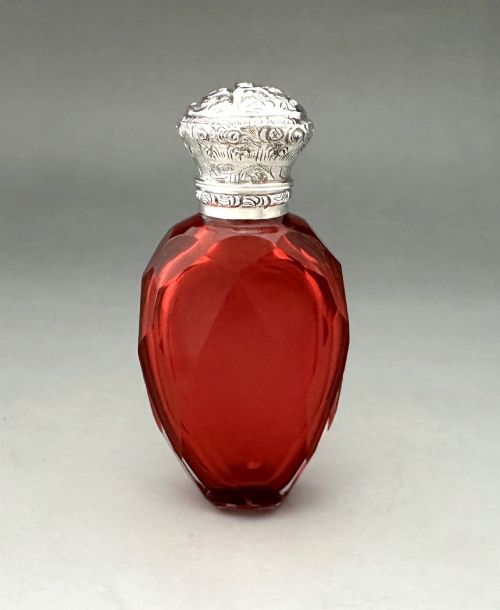
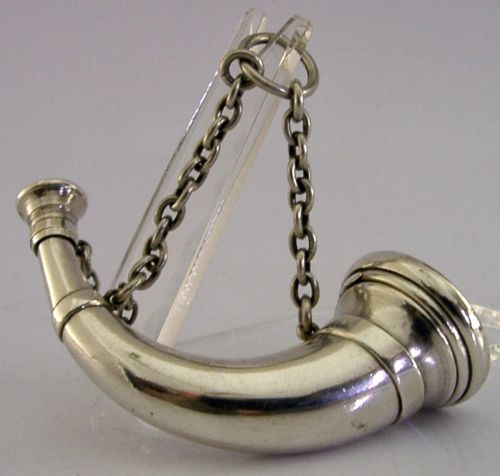
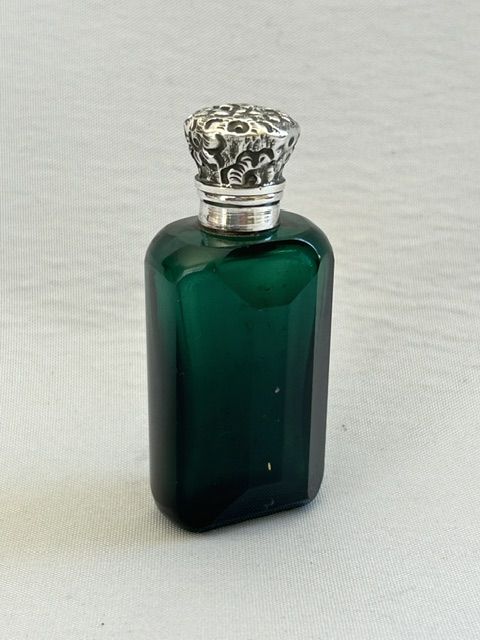
The forms vary from simple pocket flasks to combined scent bottles and vinaigrettes, alongside novelty shapes like hunting horns and speckled eggs. Materials combine sterling silver mounts and caps with bodies formed from cut, etched, or coloured glass such as ruby, amethyst, cranberry, and opaline. Most pieces originate from this core Victorian era, with occasional Edwardian items extending the tradition into the early twentieth century.
Aspects of quality
Quality rests upon the crispness of the silver engraving and the complexity of the glass body, such as deep hand-cutting or vibrant colour saturation. Finer examples display detailed chasing on the silver mounts and secure, well-fitted hinges that close firmly to preserve the contents.
Makers known for high standards, alongside pieces with complete and legible hallmarks, command greater interest among collectors. The integration of dual compartments or novelty forms, such as hunting horns, demonstrates superior craftsmanship compared to standard utilitarian flasks.
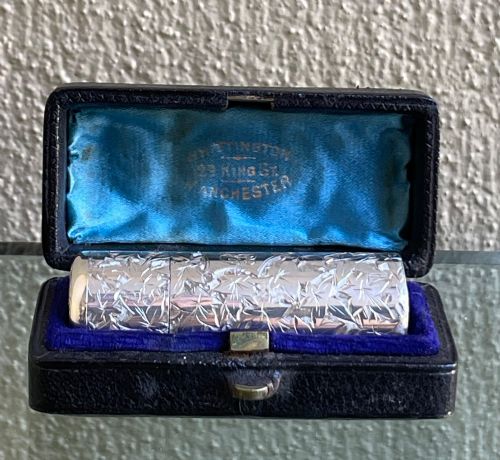
The selection includes functional double ended scent bottles, novelty hunting horn designs, and miniature spirit flasks mounted in silver.
Horton and Allday·Sampson Mordan·Edward Smith·S Morden and Co
The Victorian Silver Smelling Bottle Glossary
- Vinaigrette
- A small ornamental box or bottle containing a sponge soaked in aromatic vinegar, fitted with a pierced internal grille. This allowed the release of pungent odours without direct contact with the liquid.
- Sterling silver
- An alloy of silver containing 92.5 percent pure silver and 7.5 percent other metals, usually copper, chosen for durability in decorative mounts. Most British pieces carry hallmarks certifying this standard.
- Ruby glass
- A deep red glass created by adding gold chloride to the molten mixture, frequently utilised for Victorian scent bottles. It provided a rich contrast against bright silver mounts.
- Double ended scent bottle
- A vessel featuring compartments at both ends, allowing the owner to carry two different perfumes or a scent and smelling salts simultaneously. Each end typically uses a separate silver cap.
- Opaline glass
- An opaque or translucent glass with a milky appearance, produced in various pastel shades including blue and white. It offered a smooth, porcelain-like surface popular in nineteenth-century vanity items.
Victorian Silver Smelling Bottle: Frequently Asked Questions
What is a victorian silver smelling bottle?
A victorian silver smelling bottle is a small personal container used during the nineteenth century to hold reviving salts or aromatic vinegar. These items were carried in pockets or reticules by men and women alike.
The silver mounts protected the glass body and provided a secure closure, often featuring hinged caps and intricate decorative engraving or piercing.
How do you use a vinaigrette?
A vinaigrette holds a small sponge saturated with medicated vinegar or smelling salts rather than liquid perfume. Opening the outer silver lid reveals an internal pierced grille that diffuses the scent.
Users lifted the hinged grille to renew the vinegar-soaked sponge inside the compartment when the fragrance faded.
What is the difference between a scent bottle and a smelling bottle?
A scent bottle was designed to hold liquid perfume for personal fragrance throughout the day. A smelling bottle specifically contained pungent salts or vinegars intended to revive someone feeling faint.
Smelling bottles frequently incorporated internal stoppers or grilles to manage strong ammonia or vinegar vapours.
How do I date a victorian silver smelling bottle?
Dating relies heavily upon the silver hallmarks stamped onto the mounts, which indicate the assay office, the year letter, and the maker's mark. Style, glass colour, and manufacturing techniques also provide clues to the period of production.
Many pieces from this era bear marks from Birmingham or London silversmiths active during the nineteenth century.
How should I clean silver mounts on old glass?
Silver mounts require gentle cleaning with a soft cloth to avoid touching or staining the glass body. Polish should be kept away from glass surfaces and internal corks or sponges.
Harsh chemical dips must be avoided, as they can damage delicate glass colours and destroy aged patinas on the metal.