






Victorian Silver Plated Service
A victorian silver plated service brings the elegance of nineteenth-century dining tables into modern homes through beautifully crafted teaware, cutlery, and display pieces.
Victorian Silver Plated Service
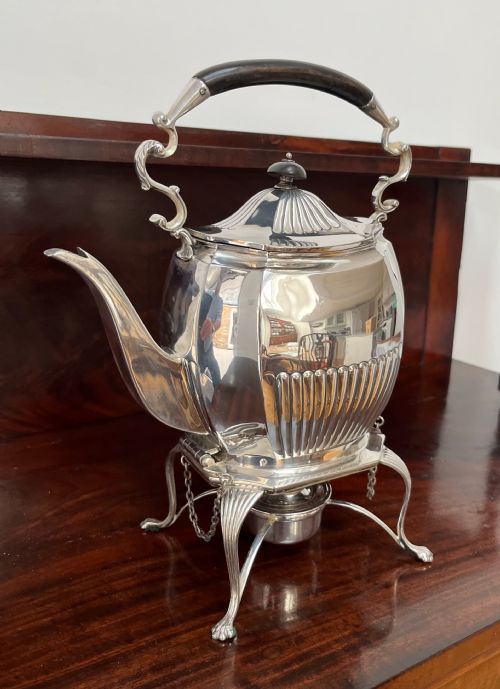
A victorian silver plated service encompasses a wide range of dining and entertaining vessels, from complete tea and coffee sets to specialised fruit and fish cutlery, cruet sets, and spirit kettles on stands. These functional objects reflect the elaborate dining rituals of the nineteenth and early twentieth centuries, spanning the Victorian and Edwardian periods.
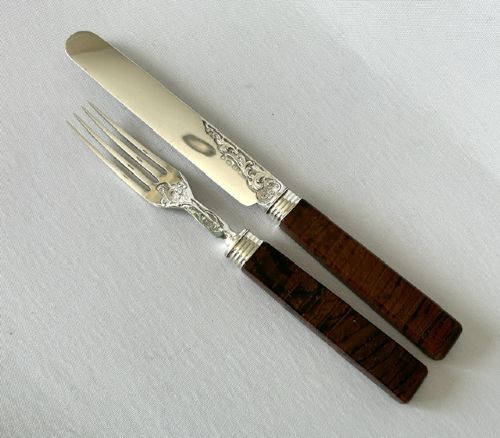
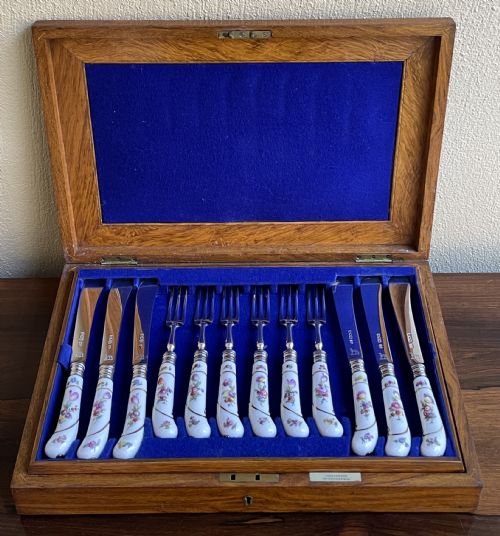
Buyers will most frequently encounter four-piece tea sets, multi-bottle cruet sets, and cased dessert or fruit cutlery sets alongside larger service items like meat covers and spirit kettles. The materials paired with the silver plate often include glass, porcelain, mother-of-pearl, bone, wood, and velvet, adding textural richness to the metalwork.
The selection ranges from early nineteenth-century Old Sheffield Plate through to later Victorian and Edwardian productions, showing styles that move from classical restraint to ornate Renaissance Revival and Victorian Revival designs.
Materials and Technique
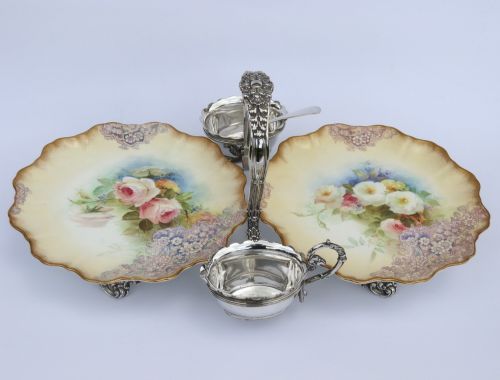
The foundation of these pieces relies primarily on base metals coated with a layer of silver, sometimes utilising the earlier Old Sheffield Plate technique of fusing silver to a copper core before electroplating became widespread in the mid-nineteenth century. This metalwork is frequently combined with organic and decorative elements such as carved bone, mother-of-pearl handles on cutlery, glass liners for butter dishes, and hand-painted porcelain plates.
Surface decoration was achieved through skilled hand engraving, chased details, and applied cast rims, creating ornate borders and textured surfaces on trays, salvers, and meat covers. Fitted wooden canteens and boxes, often lined with velvet, housed delicate sets of knives, forks, spoons, and nutcrackers.
A Victorian desk bell with an ornate brass base stands ready to summon tea service or staff from across the room.
Markers of Quality
Quality in a victorian silver plated service is revealed in the crispness of the chased and engraved ornament and the substantial weight of the metal base, which prevents bending and denting during use. Superior sets display balanced proportions, secure joints on handles and spouts, and careful integration of auxiliary materials like glass and porcelain.
Makers known for exceptional metalwork applied rigorous standards to both the plating thickness and the internal construction of holloware such as tea pots and spirit kettles. The presence of well-executed matching components within a service, rather than assembled replacements, elevates the integrity of the ensemble.
Walker and Hall·Carrington·Elkington Mason·Fenton Brothers·Frederik Ellis Tim and Co·Hukin and Heath·Elkington·Thomas Latham·Atkin Brothers
The Victorian Silver Plated Service Glossary
- Old Sheffield Plate
- A method of fusing a thin sheet of silver to a thicker copper ingot before rolling them into sheets. This technique predates modern electroplating and leaves a characteristic subtle copper seam.
- Cruet Set
- A matched collection of bottles or jars held in a metal frame for holding condiments, vinegar, oil, and spices at the table. These often feature cut glass bottles with silver plated mounts.
- Spirit Kettle
- A water kettle mounted upon a metal stand equipped with a small burner underneath to keep water hot at the tea table. They are frequently found in Edwardian and Victorian dining settings.
- Salver
- A flat metal tray, usually supported on small feet, used for serving drinks or presenting items. They typically feature engraved surfaces and raised, detailed rims.
Victorian Silver Plated Service: Frequently Asked Questions
Can I use these tea sets daily?
Many people enjoy using antique tea sets and tableware for special occasions or daily tea service. Care should be taken to wash them by hand rather than putting them in a modern dishwasher.
Hot liquids are generally fine for metal teapots and spirit kettles, but sudden extreme temperature changes should be avoided to protect glass liners and ceramic components.
What is Old Sheffield Plate?
Old Sheffield Plate is an early form of plating created by melting a sheet of silver onto a copper base before shaping the combined metal. This creates a distinct material structure different from later nineteenth-century electroplate.
Under magnification or along cut edges, a subtle line of copper may sometimes be visible on genuine pieces from this era.
How do I date a silver plated service?
Dating relies on observing stylistic clues, manufacturing techniques, and any maker's marks or registration numbers stamped into the base metal. Victorian pieces often display ornate revival styles, while Edwardian designs can be lighter or more formal.
Comparing the form of handles, spouts, and accompanying fitted boxes to documented examples helps narrow down the decade of production.