
Victorian Silver Plate Candlesticks
These nineteenth-century pieces bring polished elegance to a dining table through enduring Victorian silver plate candlesticks.
Victorian Silver Plate Candlesticks
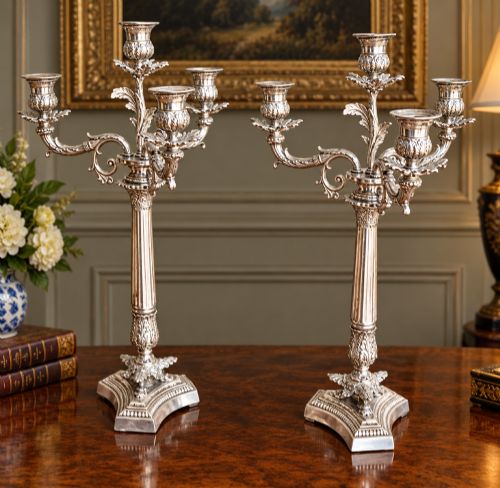
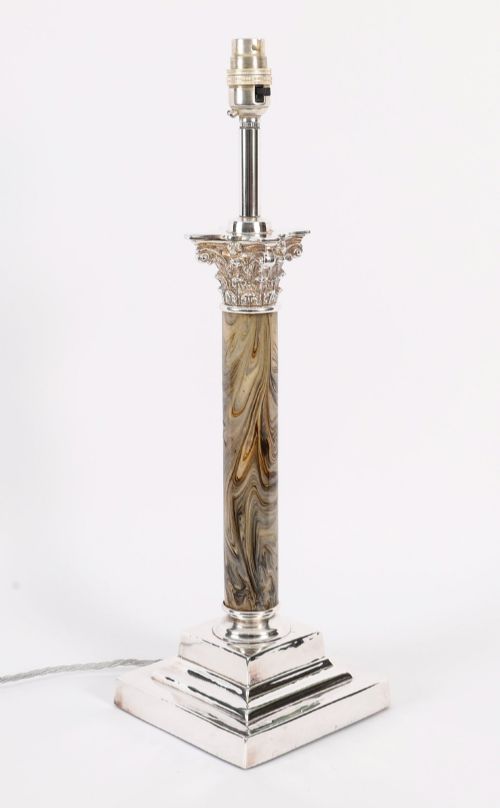
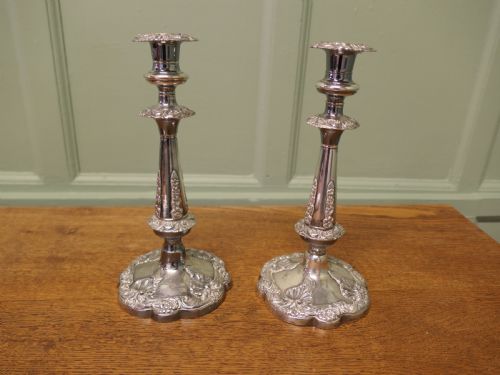
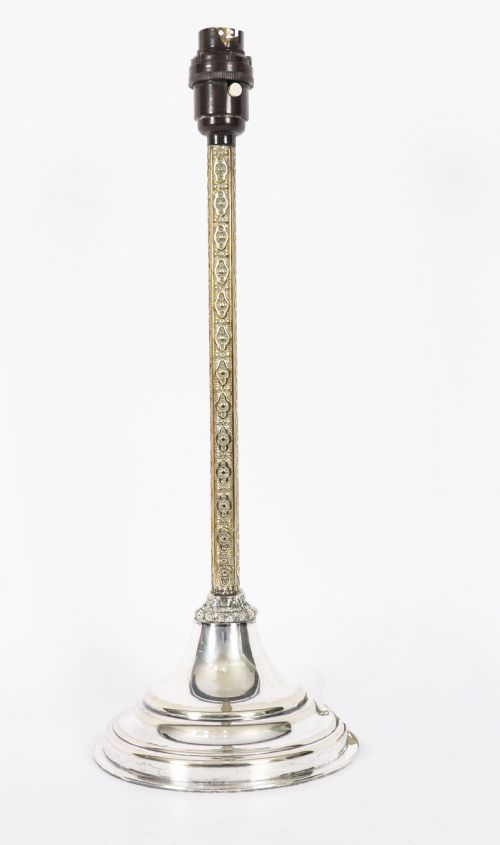
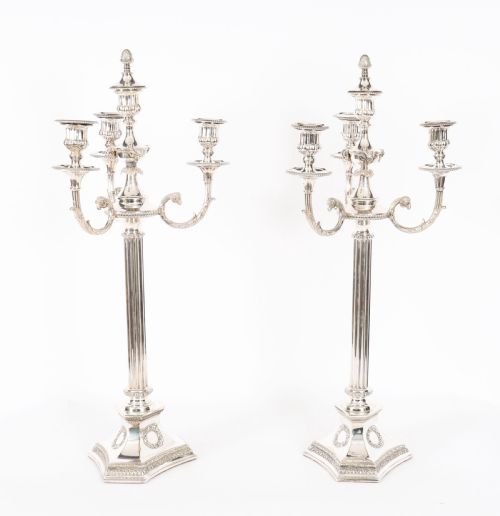
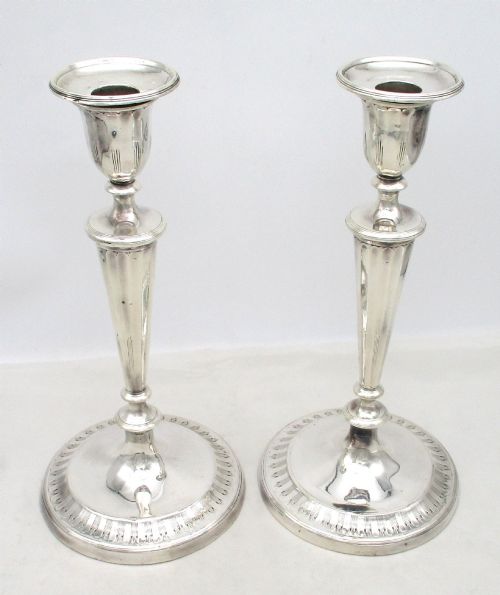
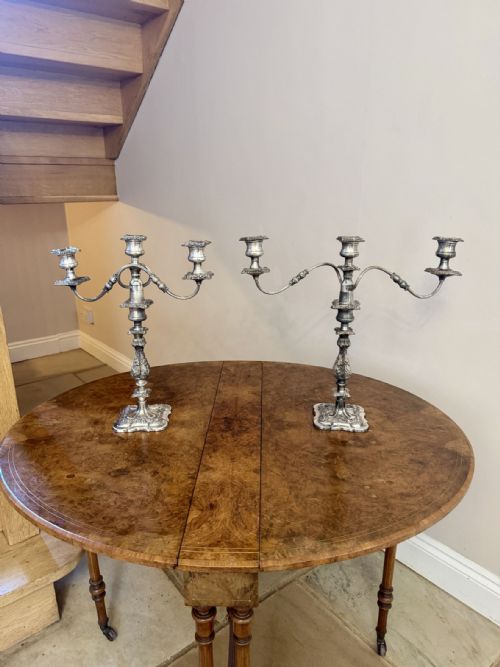
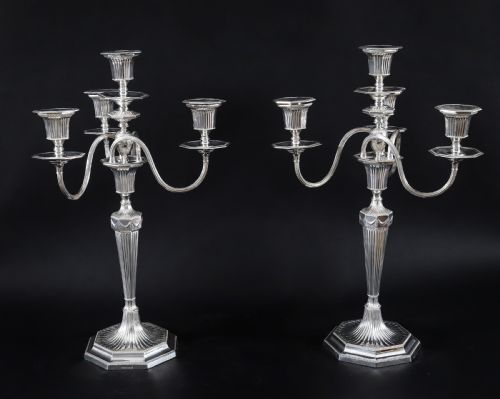
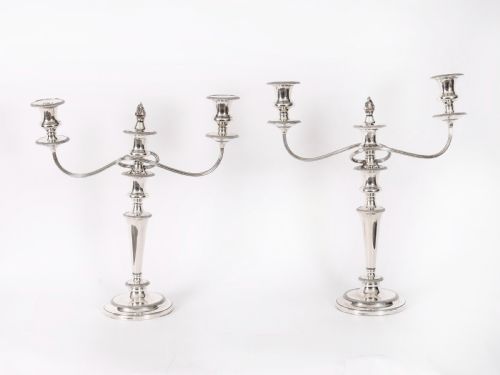
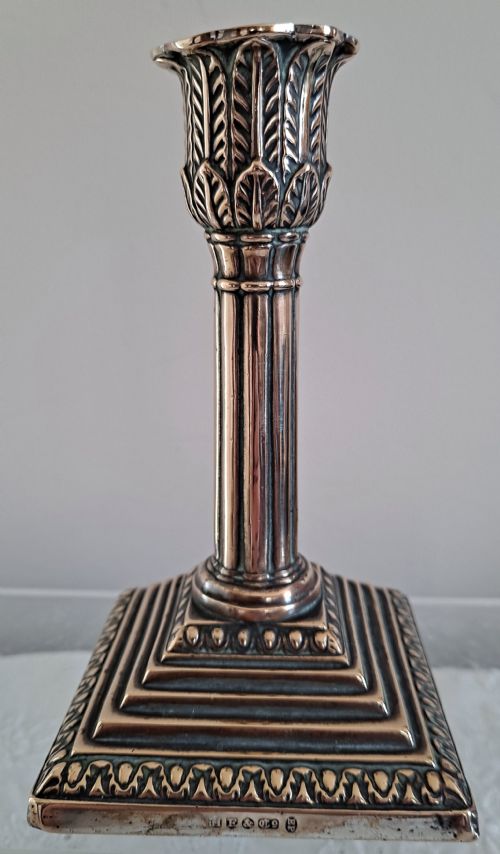
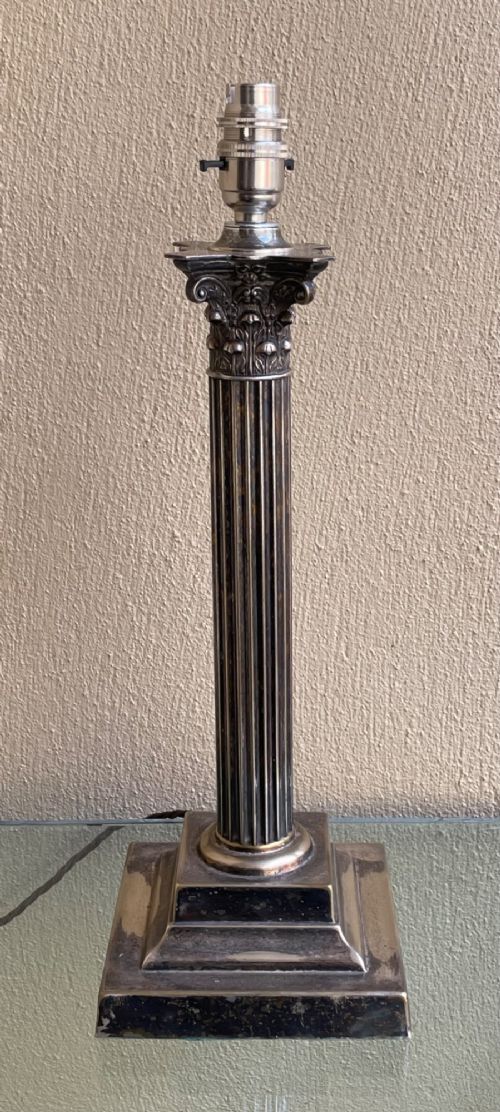
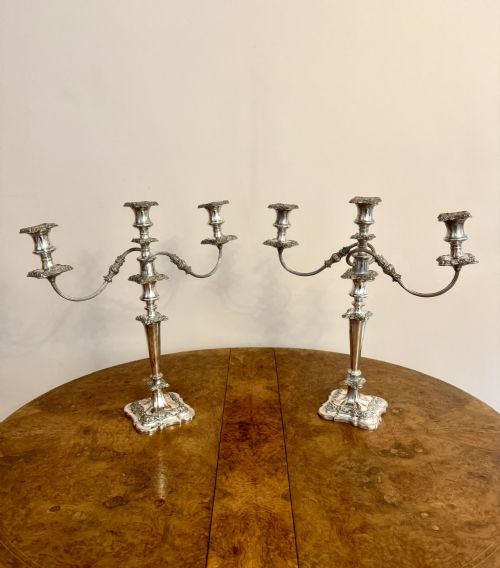
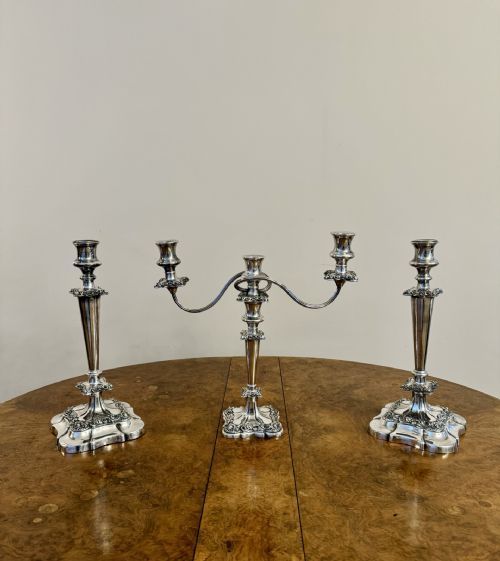
Victorian silver plate candlesticks span the nineteenth century, with pairs appearing most frequently alongside matched candelabras, chamber sticks and converted table lamps.
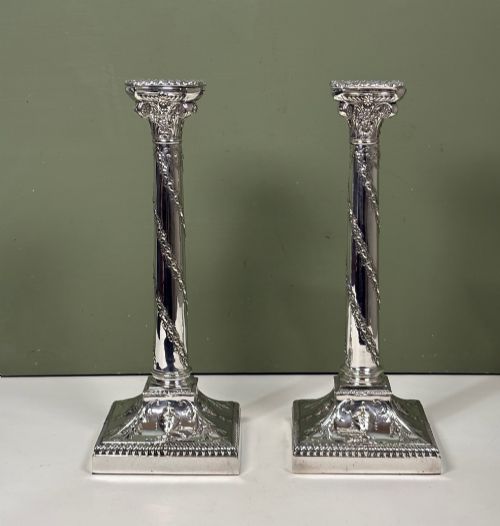
Makers produced these lighting accessories in standard column forms as well as ornate revival styles, drawing from neoclassical, rococo and classical design vocabularies.
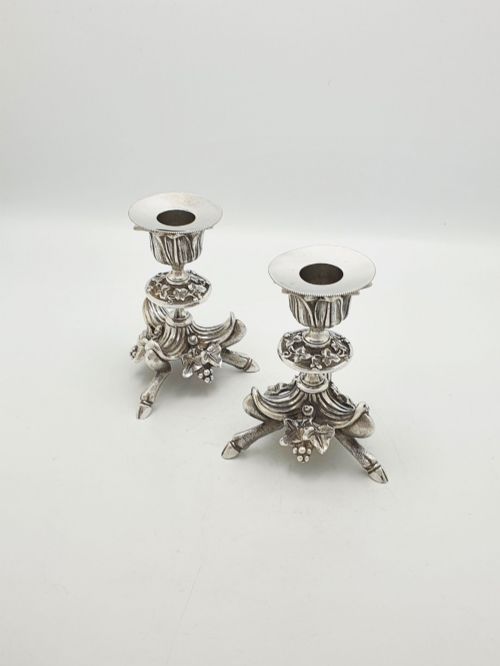
Buyers encounter everything from miniature desk accessories and travelling pocket pairs to tall dining table centrepieces supported by weighted bases.
How they were made
Manufacturers built these objects using base metals such as brass, copper, nickel silver and electroplated nickel silver beneath a layer of silver plate.
Many examples utilise electroplating techniques developed during the nineteenth century, while earlier pieces rely on older fusing methods over copper cores.
Artisans applied surface decoration through casting, chasing and parcel gilding, often adding glass components or weighted interiors for stability.
Certain travelling candlesticks carry monograms sized specifically for an earl or countess on the move.
What varies in quality
The standard of a piece rests upon the crispness of its cast ornamentation and the integrity of the underlying metal beneath the plating.
Richer examples display heavier gauge metals, balanced proportions, complete detachable sconces and intact makers' marks from renowned workshops.
Refined casting in revival styles separates mass production from superior items possessing depth of detail across acanthus leaves, fluting and figural elements.
Mappin & Webb·Hawksworth Eyre·Garrard & Co·Smith & Sissons·WMF·Harrison Brothers & Howson·Veritas Lamp Works·Elkington·William Hutton
The Victorian Silver Plate Candlesticks Glossary
- Electroplated nickel silver
- A base metal alloy coated with a layer of silver via an electrical current, widely adopted during the Victorian era.
- Sconce
- The detachable top pan designed to catch melted wax drips before it reaches the main body of the candlestick.
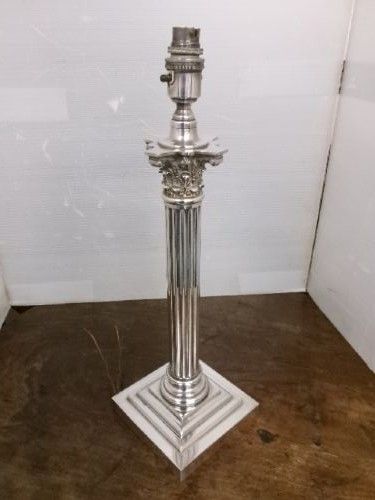
- Corinthian column
- A classical architectural column form featuring ornate acanthus leaves on the capital, favoured in nineteenth-century lighting design.
- Chamber candlestick
- A low-profile candle holder fitted with a handle and a small saucer base, historically used for lighting bedrooms.
- Parcel gilt
- A surface treatment where selected portions of the silver plate receive a thin application of gold wash for visual contrast.
Victorian Silver Plate Candlesticks: Frequently Asked Questions
How do I clean silver plated candlesticks?
Use a soft cloth and a gentle silver cleaning compound formulated to protect thin plated surfaces from abrasion. Avoid harsh dips that strip the historic finish.
Regular dusting with a dry microfibre cloth keeps tarnish at bay without requiring heavy polishing sessions that wear down raised details.
Were these always sold in pairs?
Many sets were produced and sold as balanced pairs or larger matched groups of four for symmetrical dining table arrangement.
Single examples and travelling sets also exist, reflecting individual domestic requirements rather than standard symmetrical pairing.
How can I tell the period?
Design motifs like neoclassical columns or rococo scrollwork often align with specific revival periods recorded across nineteenth-century manufacturing.
Maker marks, registration stamps and underlying construction methods such as electroplating versus older fusing techniques help narrow the date.