



Victorian Silver Novelty Spoon
These playful victorian silver novelty spoon designs and related figural tablewares bring eccentric British craftsmanship straight to the dining table.
Victorian Silver Novelty Spoon
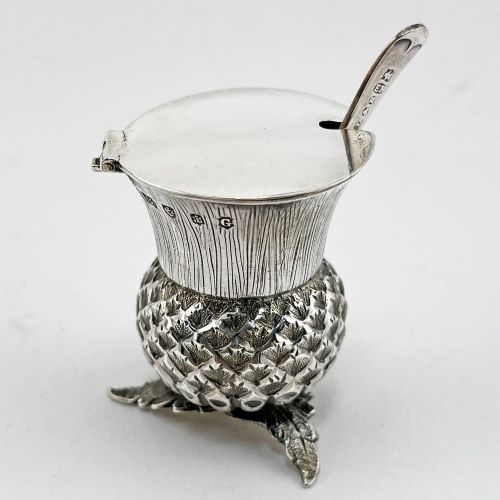
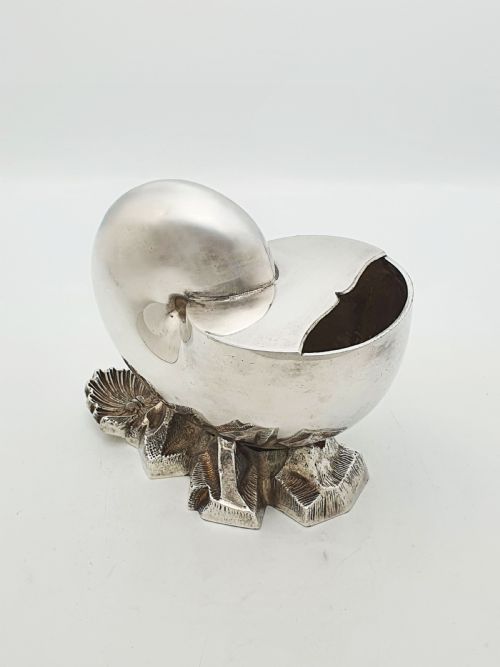
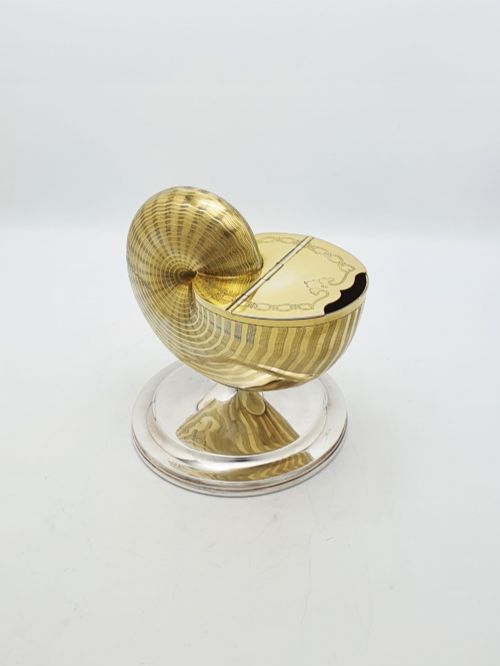
When you search for victorian silver novelty spoon pieces, you encounter inventive tablewares shaped like thistles, shells, shoes, and marine buoys from the nineteenth century. The selection leans heavily towards large shell-form spoon warmers alongside whimsical mustard pots, salt cellars, and tea caddy spoons.
Most items on this page date from the decades between eighteen sixty and nineteen twenty, representing the height of Victorian and subsequent novelty silver production. Makers drew inspiration from nature and everyday objects to transform standard dining accessories into conversational centrepieces.
What varies in quality
Quality depends upon the crispness of the casting and how convincingly the silversmith rendered the natural or manufactured subject, whether a jockey's cap or a double-headed swan. Superior examples maintain clear registration marks, intact gilding inside pots, and firm hinges on lidded mustard containers.
The weight of the silver plate and the structural integrity of complex multi-part items like cruet sets and tea infusers dictate lasting value. Pieces that retain their original matched spoons and show minimal wear to the underlying metal alloy stand out.
Victorian Silver Novelty Spoon Retail Price Guide 2026
Typical asking prices for victorian silver novelty spoon among the pieces listed under this phrase on Sellingantiques today, from the lower quarter to the upper quarter. They describe what is for sale here now, not the wider market.
Object forms span practical table accessories including spoon warmers, mustard pots, salt cellars, cruet sets, tea caddy spoons, and tea infusers.
Atkin Brothers
The Victorian Silver Novelty Spoon Glossary
- EPNS
- Electroplated Nickel Silver. This designates a base metal alloy coated with a layer of silver, common across nineteenth-century tablewares.
- Spoon Warmer
- A vessel designed to hold hot water for warming table spoons before serving soup or gravy. They frequently took organic shapes such as nautilus shells.
- Cruet Set
- A matched collection of condiment containers, such as mustard pots, salt cellars, and pepper castors, housed together for the dining table.
- Registration Mark
- A diamond-shaped stamp used by the British Patent Office between eighteen forty-two and eighteen eighty-three to record the exact date a design was registered.
- Gilt
- Gold applied to the surface of silver or base metal. Makers often used this technique on the interior of mustard pots to prevent corrosion from vinegar.
Victorian Silver Novelty Spoon: Frequently Asked Questions
What is a spoon warmer?
A spoon warmer is a Victorian tabletop vessel filled with hot water to keep silver spoons warm before serving broth or gravy. They were often styled as seashells or marine buoys.
Victorian diners expected courses to remain at precise temperatures, making these decorative containers both practical and amusing additions to formal dinners.
How do I clean antique silver plate?
Clean silver plate and electroplated nickel silver gently with a specialist microfibre cloth and mild silver polish. Avoid abrasive compounds that wear through the thin silver layer.
Regular, careful dusting preserves the original gilt highlights and prevents the build-up of tarnish within the intricate crevices of novelty pieces.
What does a registration mark mean?
A registration mark is a diamond-shaped British stamp indicating the exact day, month, and year a design was legally protected. Seeing one confirms the piece predates eighteen eighty-four.
These marks help historians date quirky tablewares precisely, even when individual maker's stamps are worn away or absent.