


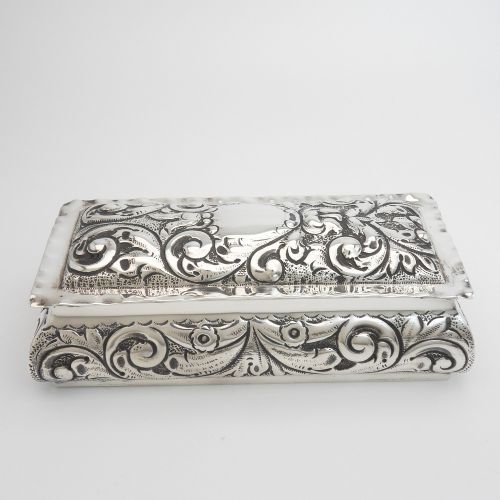


Victorian Silver Gilt Dish
These Victorian silver gilt dish selections bring heavy gold-washed luxury to the table, offering the ornate display pieces collectors prize for formal dining and cabinet display.
Victorian Silver Gilt Dish
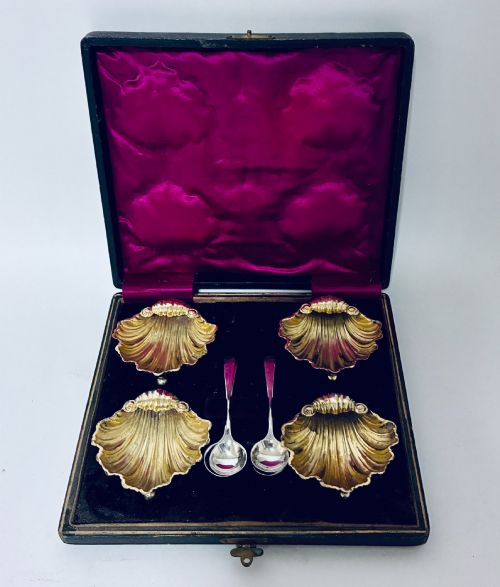
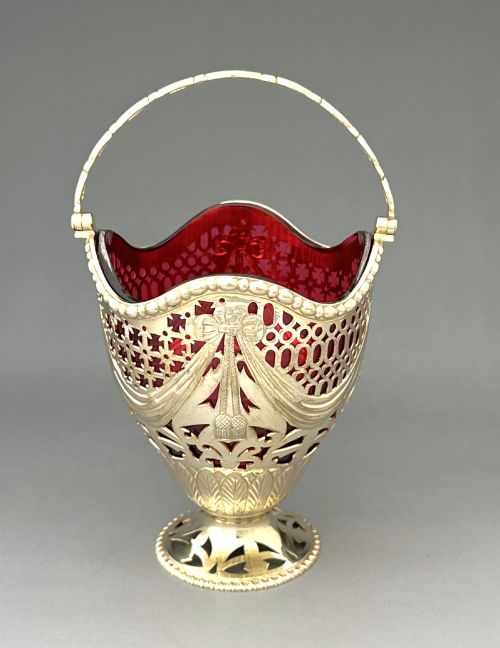
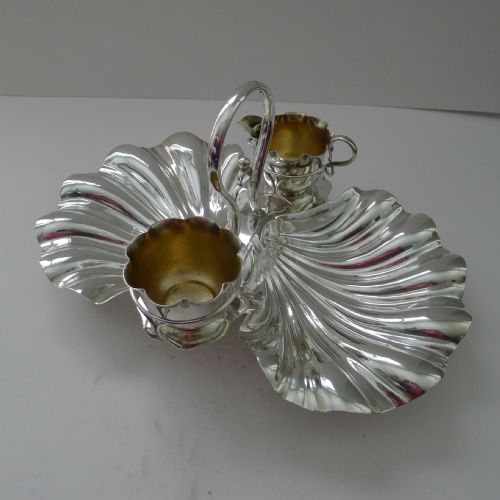
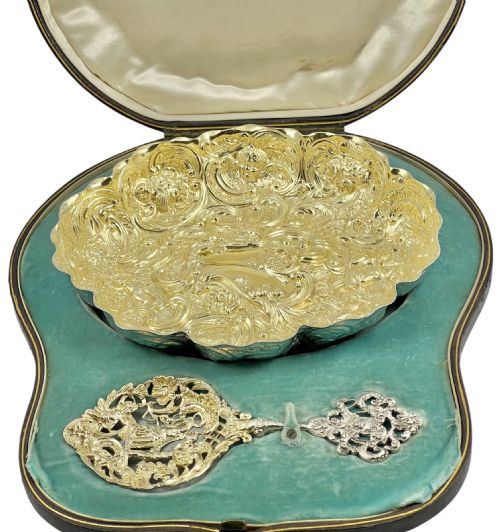
A Victorian silver gilt dish covers an array of forms ranging from large charger sideboard dishes and serving dishes to sugar baskets, decorative bowls, and salt cellars. These items often feature elaborate figural battle scenes, flower forms, or delicate pierced frameworks designed to hold glass liners.
The versions most commonly met on this page date from the nineteenth century, spanning decades from the eighteen-seventies through the nineteen-hundreds. They frequently originate from notable British assay offices and workshops.
Buyers encounter smaller trinket boxes and preserve dishes alongside substantial ceremonial pieces. Many pieces combine precious metals with contrasting coloured glass inserts or ceramic bodies.
Materials and technique
The core structure relies upon solid sterling silver or silver plate, which then undergoes a process of gilding to apply a gold wash over the metal surface. This technique produces the distinctive rich yellow metal sheen characteristic of silver gilt.
Makers integrate contrasting materials such as cranberry glass liners and ceramic elements like Doulton Burslem bodies into the metal frames. Artisans also employ electroplated nickel silver and standard silver plate for alternative production tiers.
Victorian Silver Gilt Dish Retail Price Guide 2026
Typical asking prices for victorian silver gilt dish among the pieces listed under this phrase on Sellingantiques today, from the lower quarter to the upper quarter. They describe what is for sale here now, not the wider market.
Listings feature items spanning the Victorian, Edwardian, and nineteenth-century periods, utilising sterling silver, cranberry glass, and ceramic materials.
What separates the top of the range
The standard of a piece depends on the depth and clarity of hand-chased ornamentation, particularly in complex figural battle scenes or intricate flower form mouldings. Heavy gauge solid silver construction commands higher regard than plated alternatives.
The presence of fully matching components, such as original cranberry glass inserts paired with fitted silver gilt baskets, elevates the integrity of an item. Maker attribution to distinguished silversmiths further defines the upper tier.
Daniel Arter·A & J Zimmerman Ltd·Thomas Smily·Garrard London·George Fox
The Victorian Silver Gilt Dish Glossary
- Silver gilt
- Sterling silver or another silver base covered with a thin layer of gold through a chemical or electrochemical process. This gives the silver a warm gold appearance while retaining a precious metal foundation.
- Cranberry glass
- A deep red transparent glass coloured with gold chloride, frequently blown into moulds and used for liners within openwork baskets and preserve dishes. It creates a striking visual contrast against gilded metal.
- Charger dish
- A large decorative plate placed beneath other courses or displayed upright on a sideboard. In silver gilt, these objects often display narrative battle scenes or repoussé borders.
- Sugar basket
- A small footed or handled vessel designed to hold sugar lumps or loose sugar on the tea table. They often incorporate swing handles and blue or cranberry glass inserts.
- Salt cellar
- A small open dish used for holding table salt before the invention of salt shakers. Victorian examples frequently appear in matched sets supported on small feet.
Victorian Silver Gilt Dish: Frequently Asked Questions
What is silver gilt?
Silver gilt is solid silver or silver plate that has been coated with a thin layer of gold. This treatment provides the visual warmth of gold while utilising a silver base.
The technique has been used for centuries to create high-status display items and tableware that combined the prestige of both precious metals.
How are these dishes dated?
Dating relies heavily on British hallmark stamps struck directly into the metal. These small symbols indicate the assay office, the year letter, and the standard of silver.
Associated maker marks and stylistic evidence from specific decades help narrow down the period when hallmark stamps are worn or absent.
Were these dishes used daily?
Most silver gilt items served specialised ceremonial or formal dining functions rather than everyday meals. Pieces like sugar baskets and charger dishes appeared primarily during important social gatherings and teas.
Their precious nature meant they were often displayed on sideboards or kept in cabinets when not in active use during formal events.