
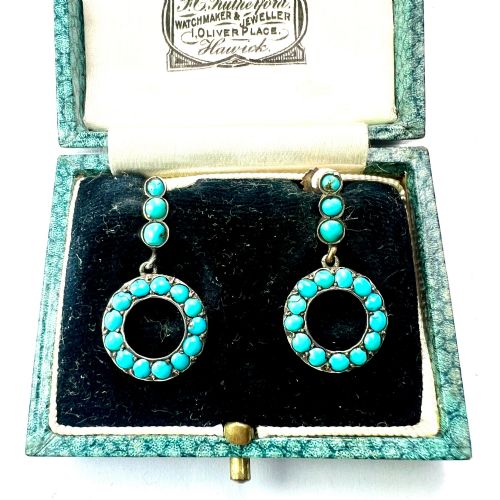


Victorian Silver Dangle Earrings
Victorian silver dangle earrings bring kinetic grace to the ear, catching the light with every turn through suspended paste glass, diamonds, and natural pearls.
Victorian Silver Dangle Earrings
When searching for victorian silver dangle earrings, buyers encounter pieces originating primarily from the Victorian and Edwardian eras, alongside related 19th-century examples. These jewels hang below the earlobe, taking forms such as drops, tassels, chandeliers, and swinging hoops.
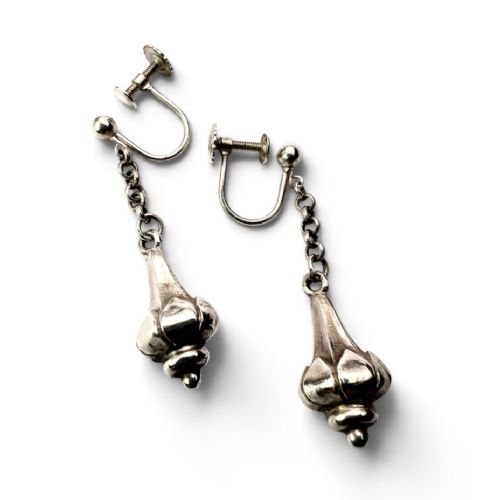
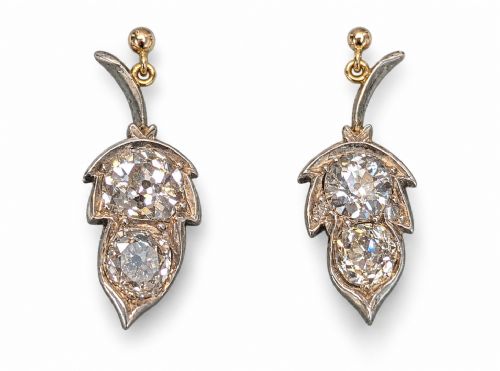
The pieces on this page lean heavily into Victorian aesthetic movement designs, incorporating motifs like swallows, fern leaves, acorns, and horseshoes. Most pairs combine silver with gold, often utilising silver mounts on gold backs to securely hold stones while maintaining a bright white metal face.
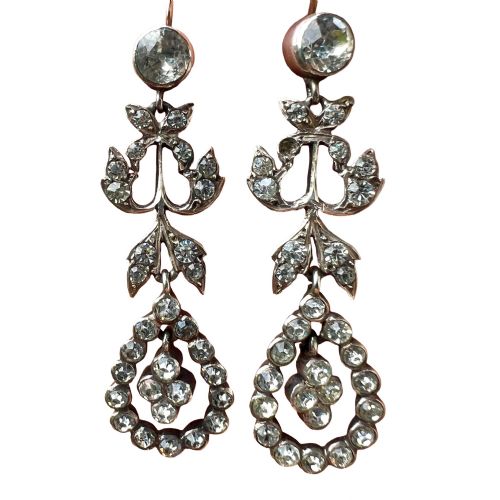
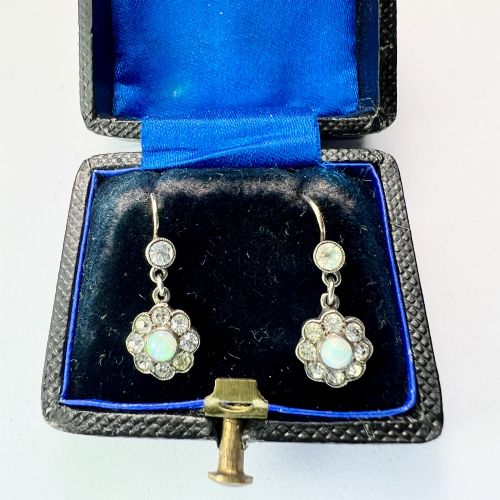
Earrings from this category range from simple paste glass drops to elaborate diamond and natural pearl clusters. The surviving items demonstrate a rich variety of regional and stylistic influences, spanning from the mid-nineteenth century into the early twentieth century.
Materials and construction methods
Makers combined sterling silver and gold, frequently employing silver-topped gold where a silver front held stones above a warmer gold backing. This technique offered the bright, reflective surface suited to diamonds and paste whilst utilising gold for structural strength.
Gemstones including old cut diamonds, natural pearls, turquoise, aquamarine, and citrine were set by hand into detailed metalwork. Enamel, rock crystal, and paste glass further enriched the designs, mounted in foliate, sunburst, and geometric configurations characteristic of the nineteenth century.
Listings feature silver combined with materials including diamond, natural pearl, paste glass, turquoise, citrine, aquamarine, and enamel.
Distinctions in craftsmanship
Superior pairs display meticulous stone-setting and refined metalwork, where silver mounts are shaped with sharp detail in motifs such as leaves or bows. Lesser examples show simpler execution in the prongs and less nuanced hand-carving of the underlying metal.
The choice of materials significantly shapes the grade of a pair, moving from moulded paste glass and silver gilt to certified natural pearls and old cut diamonds set in combination with higher-carat gold.
Knoll and Pregizer
The Victorian Silver Dangle Earrings Glossary
- Paste glass
- Hand-cut and polished glass utilised to imitate precious gemstones in antique jewellery. It sits securely in metal settings to provide brilliant colour and light reflection.
- Old cut diamond
- A diamond cut by hand before modern machinery, possessing a smaller table and larger culet. These stones catch candlelight and lower light sources with a distinct, gentle glow.
- Silver-topped gold
- A historical technique joining a silver sheet to a gold base. It allowed the jeweller to present a white metal surface to the stones while retaining gold's durability.
- Aesthetic movement
- A late nineteenth-century design style focusing on visual beauty rather than narrative. Pieces from this era often feature natural motifs like ferns, birds, and leaves.
- Screwback
- A mechanical earring fastening utilising a threaded post and nut to secure the piece without requiring a pierced earlobe. This fitting became common in the nineteenth and early twentieth centuries.
Victorian Silver Dangle Earrings: Frequently Asked Questions
Are these earrings for pierced ears?
Many Victorian and nineteenth-century examples utilise hook wires or lever backs designed for pierced lobes. However, several pieces from this period feature screwback mechanisms suited to non-pierced ears.
Buyers should examine the specific fastening type noted in each listing to ensure compatibility with how they intend to wear the jewellery.
How do I care for silver and paste earrings?
Silver components require gentle cleaning with a soft cloth to maintain their lustre without harming adjacent stones. Paste glass and softer organic gems like natural pearls demand particular care, avoiding harsh liquid dips and ultrasonic cleaners.
Stroking the metal gently preserves the delicate foliate mounts and keeps the historic finishes intact over decades of regular use.
What defines Aesthetic movement drop earrings?
Aesthetic movement pieces draw inspiration from nature and asymmetrical compositions, frequently displaying motifs like swallows, fern leaves, and acorns. These designs broke away from strict formal symmetry to celebrate organic forms.
The metalwork on these earrings often highlights textured silver leaves and delicate drop elements that move freely with the wearer.
How do I distinguish Victorian from Edwardian pieces?
Victorian earrings often feature robust silver-topped gold settings, substantial paste glass, and motifs tied to sentimentality or nature. Edwardian designs tend to favour lighter mounts, platinum-topped elements, and delicate diamond or pearl clusters.
Examining the underlying construction and the cut of the stones helps clarify the transition from nineteenth-century weightiness to early twentieth-century lightness.