



Victorian Silver Crystal Decanter
A victorian silver crystal decanter combines heavy cut glass with precious metal mounts to serve fine wine with nineteenth-century weight and shine.
Victorian Silver Crystal Decanter
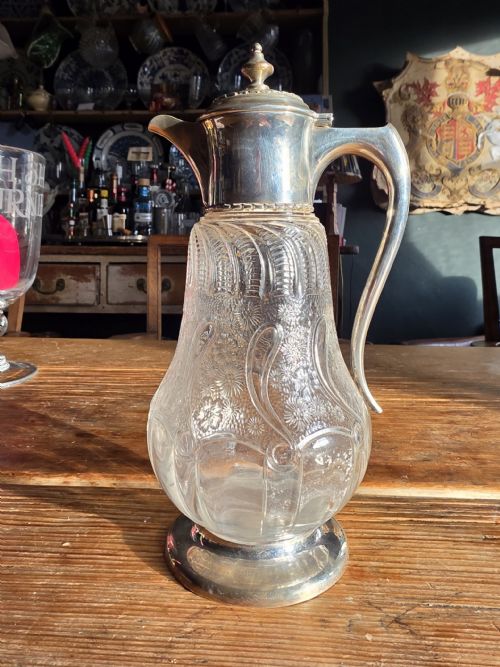
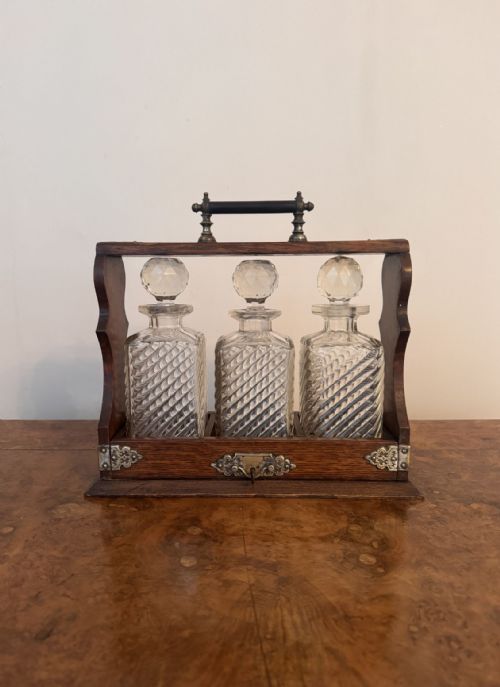
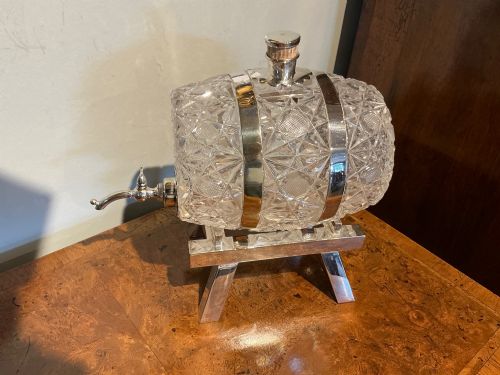
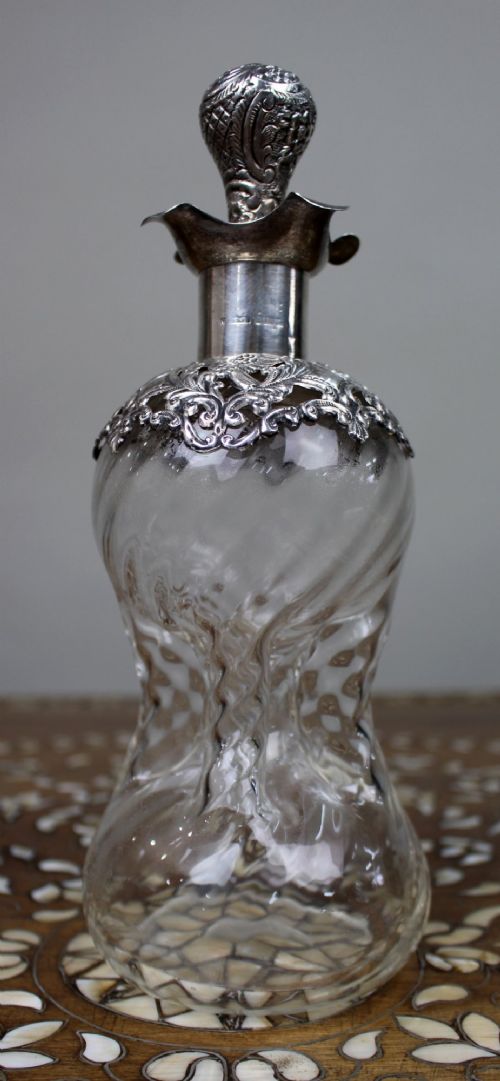
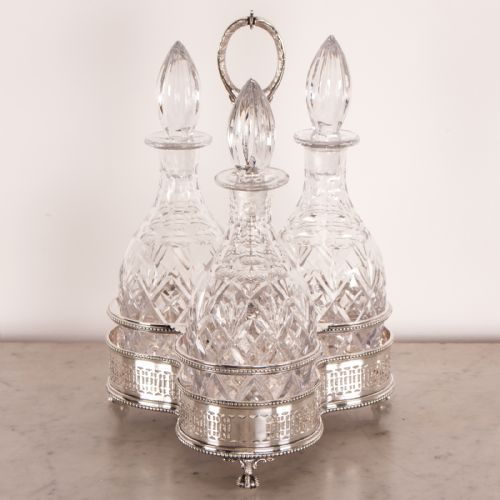
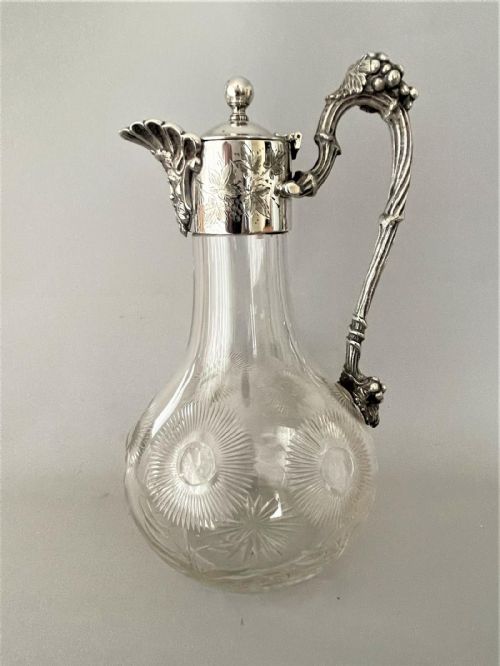
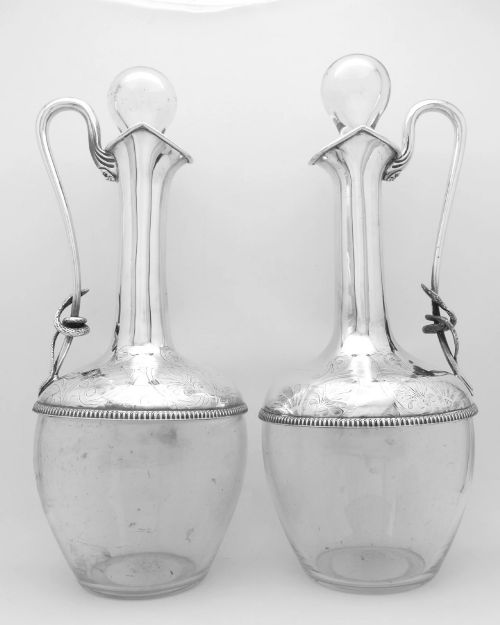
These pieces are drinking vessels and serving pieces made during the Victorian era and adjacent periods, taking the form of claret jugs, tantalus sets, spirit barrels, and standalone decanters. You will frequently meet heavy cut glass bodies fitted with silver plate or sterling silver collars, lips, and handles.
The selection ranges from single bottle claret jugs to framed three-bottle tantalus units housed in oak stands. Makers combined functional barware with decorative metalwork, creating items intended for formal dining rooms and after-dinner hospitality.
Materials and Technique
Craftsmen built these objects using lead glass or crystal, shaped by blowing and deep cutting to create faceted patterns that refract light. Metal components consisted of either solid sterling silver or base metals treated with silver plating, often cast in ornate revival styles.
Silversmiths secured mounts directly onto glass necks using plaster or specialised adhesives, finishing the joins with hinged lids, thumbpieces, and cast handles shaped as serpents or scrolling foliage.
Listings span the Victorian, Edwardian, and Georgian periods, utilising cut crystal, oak, and sterling silver.
Design and Execution
Quality rests in the crispness of the glass cutting and the weight of the metal mount rather than surface decoration alone. Superior examples display deep, sharp facets on the crystal and heavy gauge silver that resists flexing around the collar.
The integration between glass and metal dictates overall merit, where tight fits and well-balanced handles distinguish workshop pieces from standard commercial production.
Asprey and Co. Ltd·Walker and Hall·Elkington·Hukin and Heath·Betjemann Brothers
The Victorian Silver Crystal Decanter Glossary
- Tantalus
- A locking wooden frame that holds decanters securely to prevent unauthorized access to the spirits inside. The mechanism locks the stoppers in place until a key is turned.
- Claret Jug
- A specialised pouring vessel designed for red wine, typically featuring a glass body with a hinged metal lid and handle. They date extensively to the nineteenth century.
- Silver Plate
- A base metal, such as copper or Britannia metal, coated with a thin layer of pure silver through electroplating or older fusion methods.
- Sterling Silver
- An alloy consisting of pure silver and other metals, usually copper, standardised at a fineness of ninety-two point five percent.
- Cut Crystal
- Glass containing lead oxide, which increases brilliance and weight, decorated by cutting geometric or floral designs into the surface with rotating wheels.
Victorian Silver Crystal Decanter: Frequently Asked Questions
What is a tantalus?
A tantalus is a locking cabinet frame designed to hold decanters securely while keeping the contents visible yet inaccessible without a key.
Victorian households used them in studies and dining rooms to restrict access to expensive spirits.
How do I clean an old decanter?
Remove stubborn staining inside glass vessels using warm water, mild detergent, and specialised cleaning beads rather than harsh abrasives.
Take care to protect silver collars and mounts from prolonged exposure to water and cleaning agents.
Are these pieces safe for daily use?
Many examples remain entirely functional for serving wine and spirits during modern dinner parties and gatherings.
Check that silver-plated mounts and glass interiors are clean and free from old sediment before filling.
How do I identify a Victorian piece?
Look for hallmarks on the silver components indicating assay offices, makers, and date letters corresponding to the nineteenth century.
Style indicators like deep hobnail cutting and heavy cast mounts also point directly to the Victorian period.