


Victorian Silver Corinthian Candlesticks
Victorian silver corinthian candlesticks bring classical architectural columns to the dining table in sterling silver or silver plate.
Victorian Silver Corinthian Candlesticks
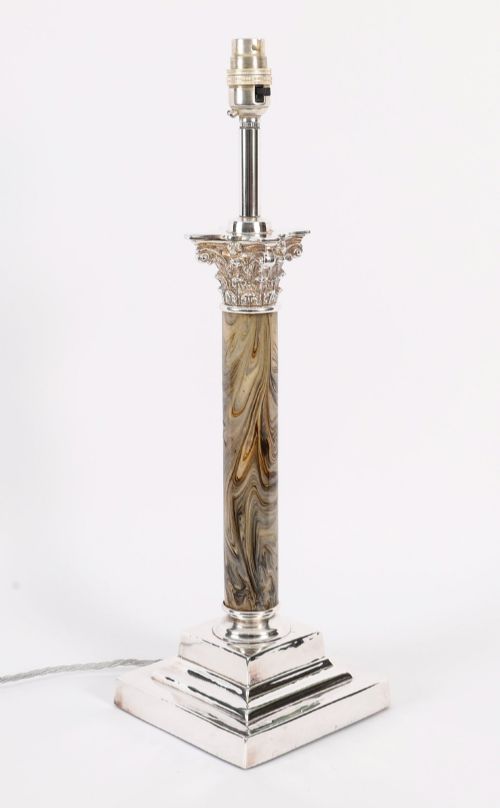
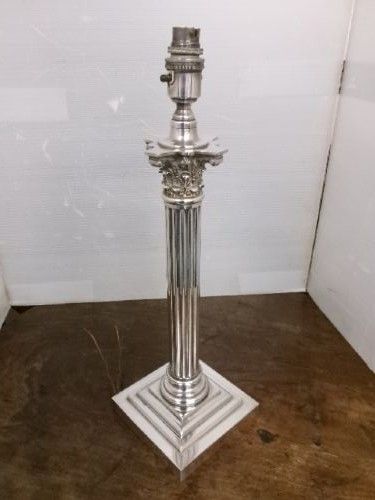
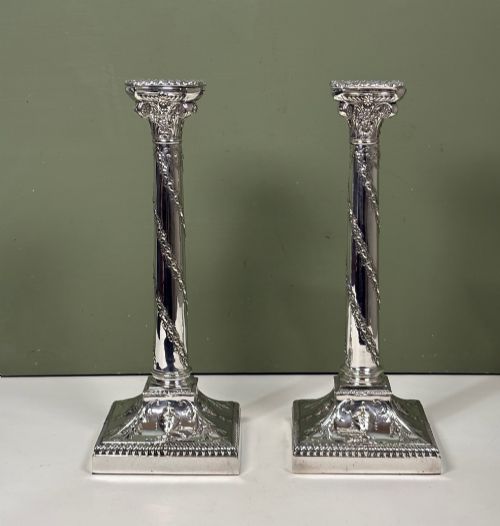
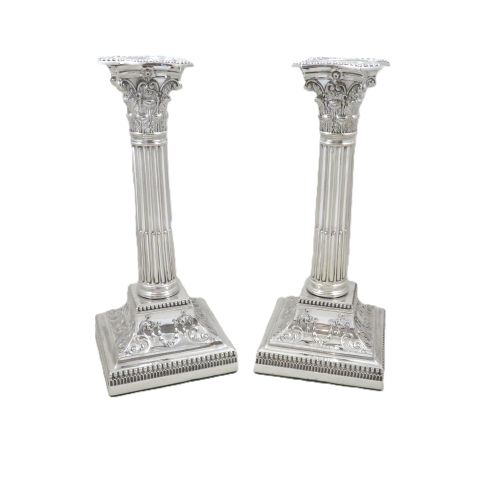
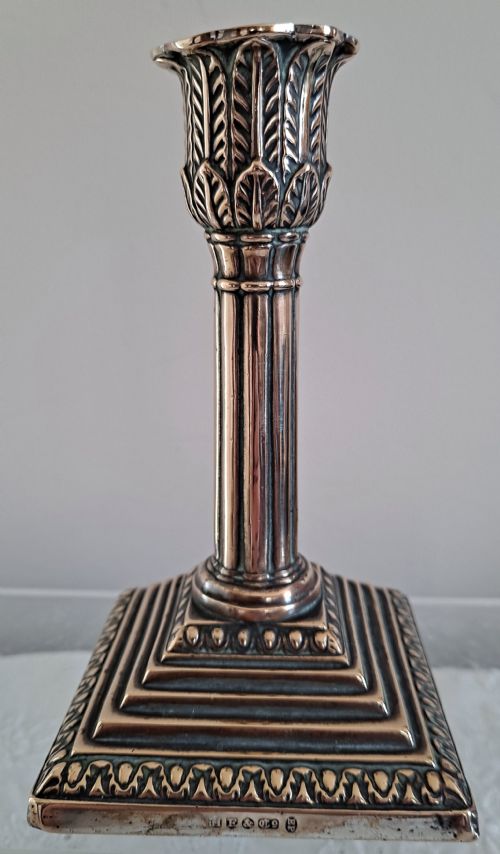
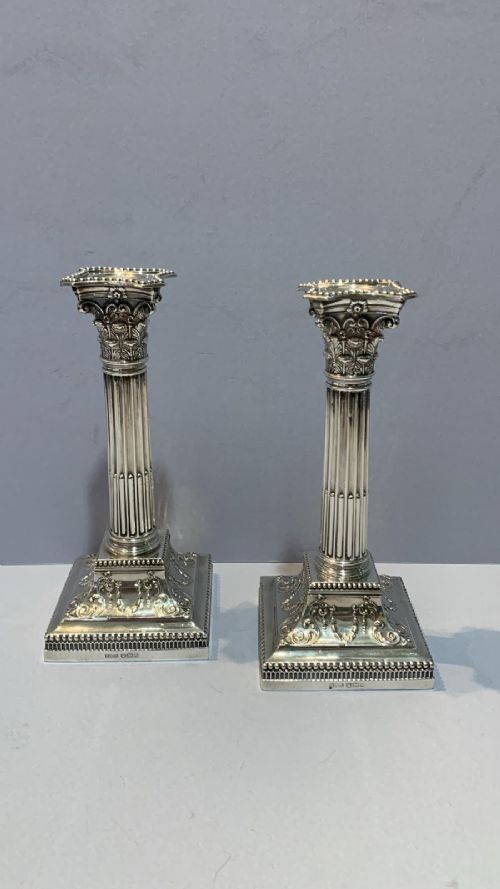
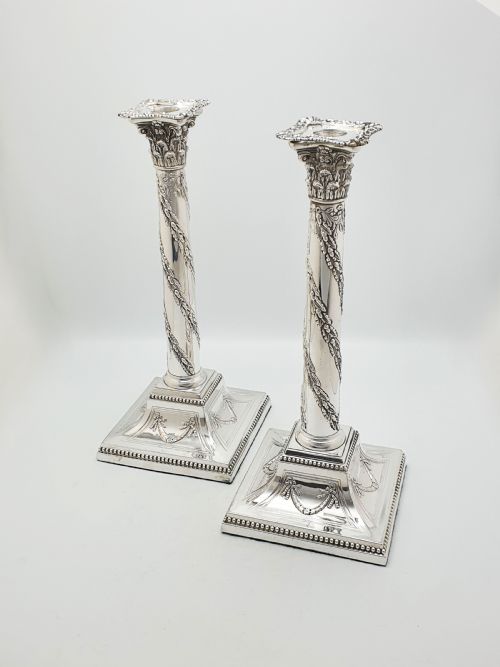
When searching for victorian silver corinthian candlesticks, buyers encounter tall column forms rooted in neoclassical design. The selection includes paired examples designed for mantelpieces, dining tables and sideboards.
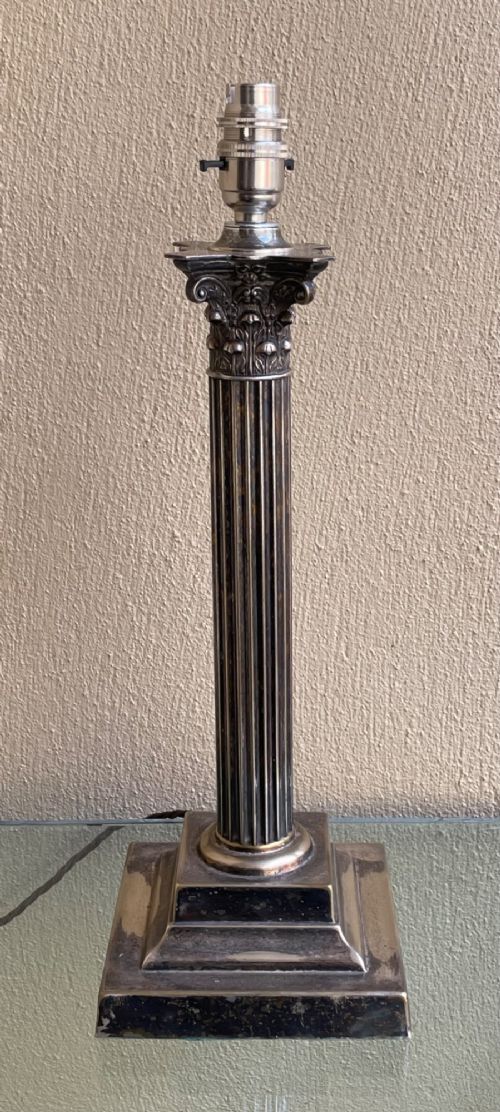
Most entries span the nineteenth century into the twentieth century, combining traditional column shafts with stepped square bases. Forms range from standard single-light candle holders to converted table lamps and multi-light candelabras.
Makers utilised sterling silver and silver plate over base metals. Some examples incorporate supplementary materials such as glass, brass and onyx within the column structure or footed bases.
Materials and construction methods
Makers produced these pieces using sterling silver or silver plate applied over metal cores, occasionally adding weighted bases for stability. Silversmiths formed the detailed acanthus leaf capitals and fluted column shafts through stamping, casting and soldering.
Sheffield and Birmingham assay offices hallmarked solid silver items with date letters, maker marks and lion passant symbols. Silver plated versions relied on heavy plate layers over copper or base metal alloys to achieve a bright metallic finish.
Certain column candlesticks feature tiny lion paw feet beneath their stepped bases, marching across the dining table.
Factors determining quality
The crispness of detail in the acanthus leaf capitals and stepped plinth bases separates standard production from finer work. Deeply struck hallmarks and solid sterling silver construction indicate higher workshop standards than light silver plate over base metal.
Proportion and structural integrity define the overall desirability of a pair. Straight columns without distortion, matching heights and crisp fluting distinguish superior examples from heavily polished or misaligned pieces.
Martin Hall·Goldsmiths·Palmer and Co
The Victorian Silver Corinthian Candlesticks Glossary
- Corinthian capital
- The ornate top section of a column decorated with carved acanthus leaves and scrolls. This architectural motif defines the classic appearance of these candlesticks.
- Sterling silver
- An alloy containing ninety-two point five percent silver by mass, with the remainder copper or other metals. British items carry official assay office hallmarks.
- Silver plate
- A thin layer of silver fused or electroplated onto a base metal core such as copper or brass. This technique offered a bright finish at a lower cost than solid silver.
- Hallmark
- A series of official marks stamped onto precious metal items in Britain. These marks indicate the maker, assay office, standard of purity and year of manufacture.
- Candelabra
- A multi-branched lighting device holding several candles on a single base. Some examples include removable branch attachments to function as standard single candlesticks.
Victorian Silver Corinthian Candlesticks: Frequently Asked Questions
Are these candlesticks solid silver?
Examples found here include both solid sterling silver and silver plate over base metal. Hallmarks on the base or nozzle identify solid sterling pieces.
Silver plated versions offer the same neoclassical appearance without the precious metal weight. Inspection of the hallmarks or worn edges reveals the underlying metal.
How do I date these candlesticks?
Solid silver pieces carry British hallmarks containing date letters and assay office symbols that pinpoint the exact year of manufacture. Stylistic shifts and maker marks help narrow down the production period.
Silver plated items rely on design characteristics, registry marks and maker stamps rather than official date hallmarks. Comparing column proportions and base weights provides further clues to the decade of creation.
Can I use modern candles in them?
Most antique sockets accommodate standard dinner candles, though slight variations in nineteenth-century sizing occur. Using appropriate candle widths prevents tilting and wax overflow onto the silver.
Some pieces feature removable sconces or inserts designed to catch dripping wax. Careful sizing protects the intricate acanthus leaf capitals from heat and residue damage.
Why are some candlesticks filled?
Makers weighted the interior bases with resin, pitch or plaster to provide stability for the tall column structure. This weighting prevents the top-heavy candlesticks from tipping over during use.
English sterling silver standards required a solid base foundation beneath the thin metal shell. The original weighting material remains inside untouched examples from the period.