




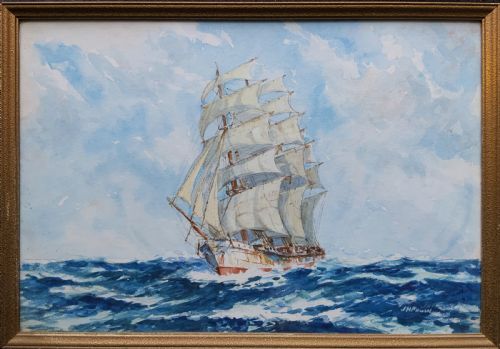


Victorian Shipping Vessel Painting
A victorian shipping vessel painting captures the ocean-going trade and naval power of the nineteenth century through detailed portrayals of barques, clippers, and steamships.
Victorian Shipping Vessel Painting
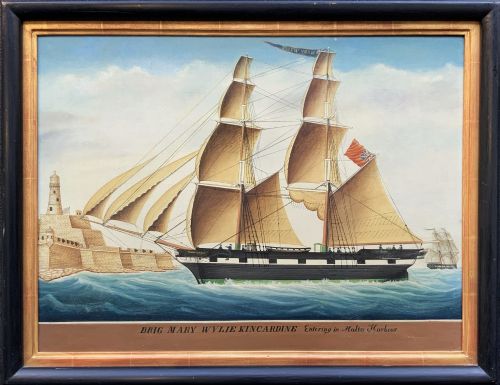
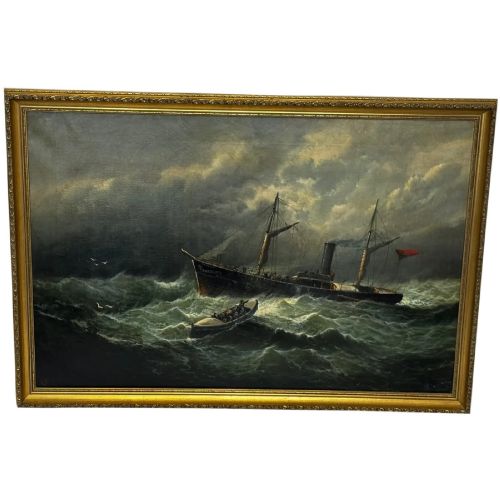
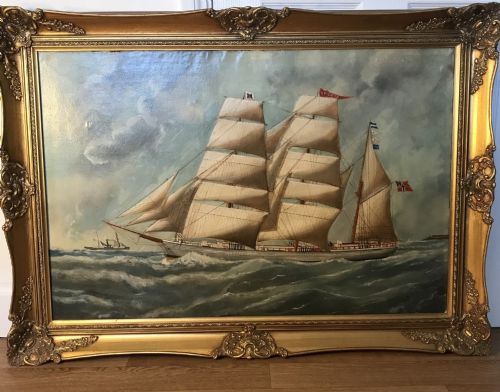
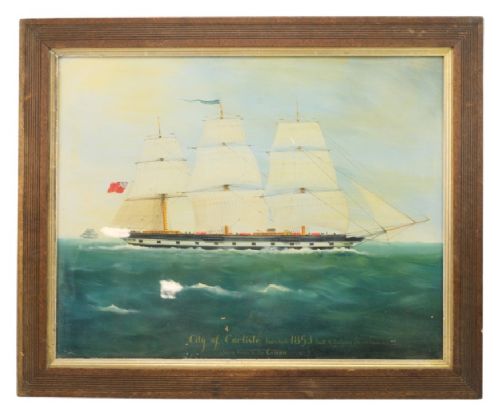
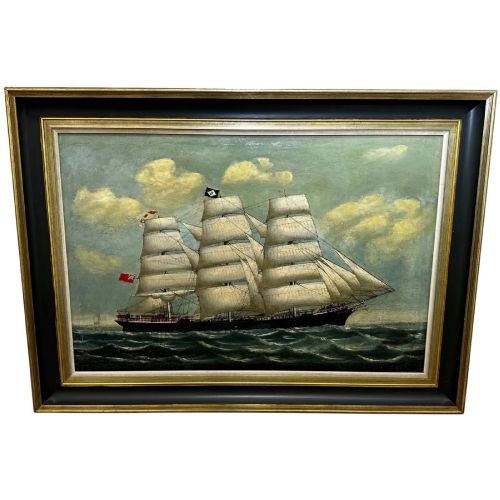
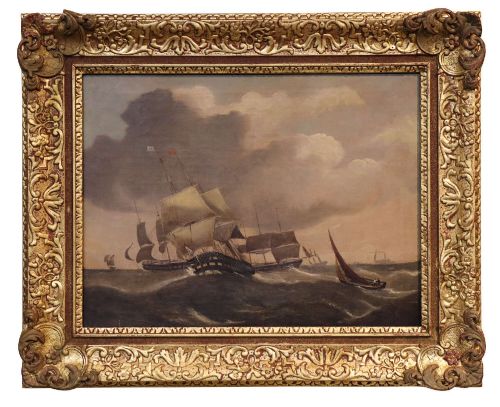
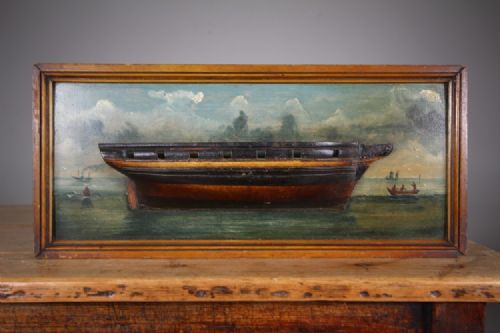
A victorian shipping vessel painting typically depicts named merchant ships, naval frigates, or local pilot boats navigating coastal waters, open seas, or busy ports. These artworks record specific vessels like the City of Carlisle or the clipper Thermopylae, often set against recognisable lighthouses or dramatic shorelines.
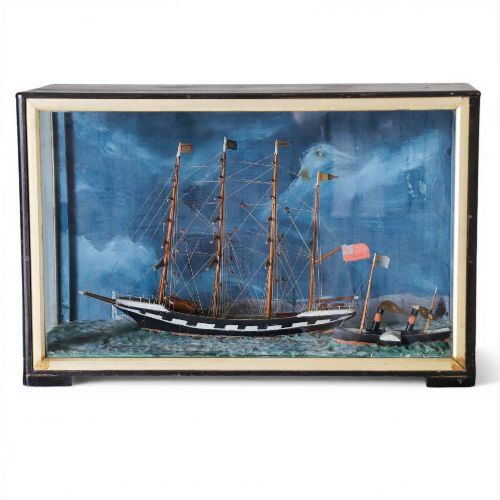
Buyers will encounter two distinct formats on this page: flat two-dimensional works on canvas or paper, and three-dimensional shadow box dioramas constructed with carved wooden hulls and painted backgrounds. The painted works rely on oil or watercolour, while the dioramas incorporate layered elements behind glass to create realistic depth.
The majority of these maritime pieces originate from the nineteenth century, reflecting an era when Britain dominated global shipping and marine art flourished across domestic and commercial interiors.
How they were made
Artists painted primarily with oil paint on stretched canvas or applied watercolour to paper, occasionally framing the finished works in giltwood or oak. The structural elements of the shadow box dioramas combined carved wood, paper, and glass to simulate the motion of waves and the rigging of sailing ships.
Many maritime creators paid close attention to technical accuracy, rendering the correct number of masts, sails, and structural rigging for specific vessel types like three-masted schooners and four-masted barques.
Victorian Shipping Vessel Painting Retail Price Guide 2026
Typical asking prices for victorian shipping vessel painting among the pieces listed under this phrase on Sellingantiques today, from the lower quarter to the upper quarter. They describe what is for sale here now, not the wider market.
Several artists captured vessels with names like Slieve Roe and Mary Wylie, preserving forgotten merchant ships on canvas.
What varies in quality
The degree of artistic skill in rendering water movement and atmospheric conditions separates standard commercial ship portraits from works by accomplished marine painters. Finer examples capture the specific weight of heavy seas, moonlight reflections, or stormy skies with confident brushwork and accurate tonal gradation.
The precision in depicting naval architecture and rigging also dictates the merit of a piece, as professional marine artists understood the exact mechanical proportions of merchant clippers and warships.
John Rose Miles·William Broome·Bernard Benedict Hemy·Lai Fong·Charles William Adderton·William Frederick Settle·Daniel Sherrin·George Gregory·Marie-Edouard Adam·Ebeneezer Colls·Joseph Heard·John Davison Liddell·WF Mitchell·V Dybdal·J Wilson·Hubert Thornley·Samuel John Milton Brown·Richard Ball Spencer·George Stainton·Francis Moltino
The Victorian Shipping Vessel Painting Glossary
- Barque
- A sailing vessel with three or more masts having the fore- and mainmasts square-rigged and the mizzenmast fore-and-aft rigged. This rig provided a balance of speed and manageable crew numbers.
- Clipper
- A very fast nineteenth-century sailing ship with multiple masts and a square rig, designed for the tea and wool trades. These vessels are frequently celebrated in marine paintings for their sleek hulls.
- Diorama
- A three-dimensional scene enclosed in a glass-fronted case, combining carved wooden ship models with painted backdrops. Maritime examples often used layered materials to depict vessels riding choppy waves.
- Oil on Canvas
- A painting medium using pigments suspended in drying oils applied to a woven fabric support. This combination allowed artists to build rich textures and deep maritime colour palettes.
Victorian Shipping Vessel Painting: Frequently Asked Questions
How do I identify the ship in a painting?
Many marine paintings feature titled mounts, inscriptions on the canvas reverse, or specific flag signals flying from the masts. Researching the named vessel often reveals historical voyage records or port registries from the nineteenth century.
Artists also frequently recorded the home port or specific coastal landmarks like lighthouses to give context to the ship's journey.
What is a maritime diorama?
A maritime diorama is a cased three-dimensional picture containing a carved wooden ship model set against a painted background. The arrangement creates an illusion of depth, often showing vessels racing or weathering rough seas behind glass.
These pieces were popular among sailors and shipping companies who wanted tangible representations of specific vessels.
Where should I hang a marine painting?
Marine paintings suit rooms with traditional decor, particularly studies, libraries, or living spaces with neutral or dark wall colours. Direct sunlight should be avoided to protect both watercolours on paper and traditional oil canvases from fading.
Ensuring stable room humidity protects the wooden frames and the structural integrity of cased dioramas.
How do watercolours differ from oil paintings here?
Watercolour paintings on paper offer a lighter, more translucent depiction of sea and sky, whereas oil paintings on canvas deliver deep, rich textures and heavier impasto waves. Both mediums were widely used by nineteenth-century marine artists to capture different atmospheric moods.
Watercolours generally require protective glass framing, while oil canvases are stretched on wooden bars.