


Victorian Sewing Table Tripod
A victorian sewing table tripod offers a clever combination of a stable three-legged base and a fitted top designed for needlework and small crafts.
Victorian Sewing Table Tripod
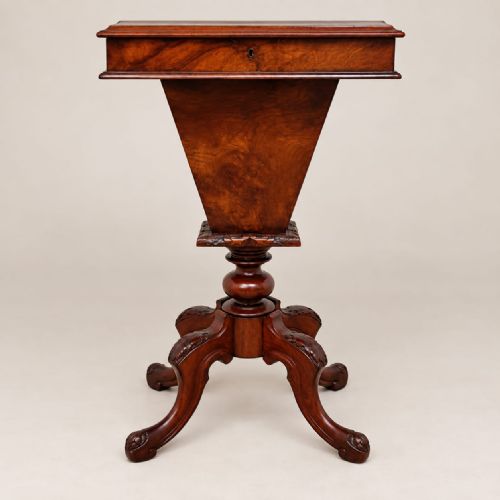
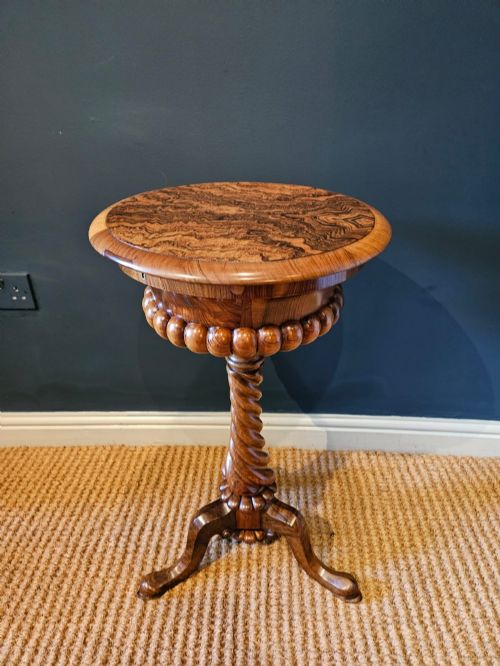
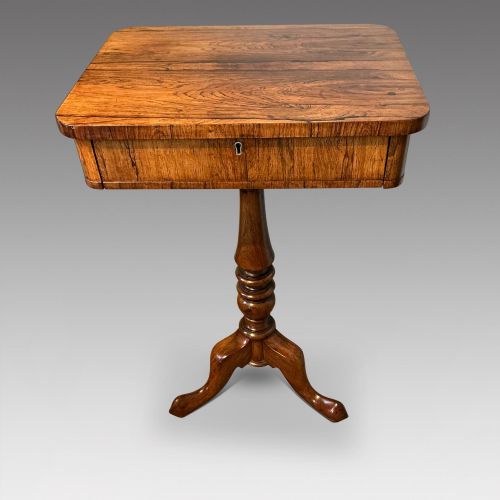
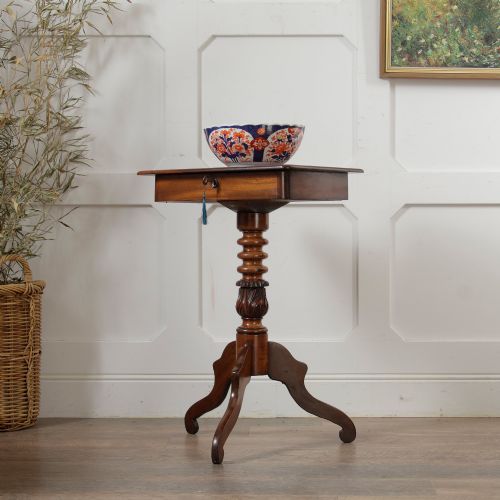
When you search for a victorian sewing table tripod, you encounter pieces designed to hold threads, needles, and small projects while sitting beside a chair. The form typically stands on a slender column supported by three scrolling or carved legs that lift the compartment off the floor.
The most common examples on this page date from the mid-nineteenth century, spanning decades such as the eighteen-fifties and eighteen-sixties. These tables often feature circular or octagonal tops that lift to reveal internal compartments and fitted storage trays.
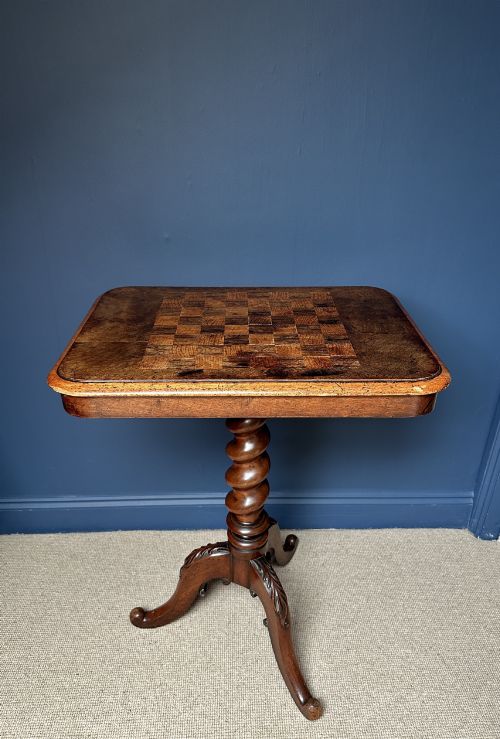
Cabinetmakers constructed these pieces as functional furniture for ladies to utilise during evening leisure hours in the parlour. Alongside sewing, many double as lamp tables, occasional tables, or compact games surfaces featuring inlaid chess boards.
Materials and Construction
Cabinetmakers utilised rich timber veneers such as burr walnut, rosewood, and mahogany over solid wood carcases to achieve decorative surfaces. Delicate boxwood stringing, marquetry, and wood inlay often ornament the lids and borders.
The characteristic tripod base relies on solid turned timber columns, sometimes featuring bobbin turnings, mounted to three shaped feet. Internal workboxes frequently utilise fabric linings and segmented wooden trays to organise sewing tools.
Period examples span the nineteenth century, with specific dates recorded from eighteen-fifty through to eighteen-ninety.
Judging Quality
The distinction between standard examples and finer pieces lies in the choice of timber and the precision of the surface decoration. Burr walnut with rich natural grain patterns and crisp marquetry inlay signal superior craftsmanship.
The complexity of the interior fittings and the structural stability of the tripod base also influence the overall standard. Well-balanced proportions and intact internal compartments separate refined examples from simpler utility pieces.
The Victorian Sewing Table Tripod Glossary
- Trumpet work table
- A sewing table featuring an octagonal or flared body that widens toward the base, resembling the bell of a musical instrument. This shape became popular during the Victorian period.
- Marquetry
- The art of applying pieces of veneer to a structure to form decorative patterns and pictures. Craftsmen utilise different coloured woods to create floral or geometric motifs.
- Tripod base
- A support structure consisting of three legs radiating from a central pillar. This design provides stability on uneven nineteenth-century floorboards.
- Tea poy
- A small cabinet or table designed for storing tea canisters. Examples often share similar pedestal forms and internal compartments with sewing tables.
Victorian Sewing Table Tripod: Frequently Asked Questions
What is a tripod sewing table?
A tripod sewing table is a nineteenth-century small table supported by three legs, featuring a lidded compartment for needlework and crafting supplies.
These pieces combine decorative appeal with practical storage, often placed beside seating areas in Victorian drawing rooms.
How were these tables used?
Victorian ladies utilised these tables to hold threads, needles, fabrics, and unfinished sewing projects inside the fitted internal compartments.
When closed, the flat top served as a convenient surface for a lamp, small books, or decorative objects during evening gatherings.
What woods were commonly used?
Cabinetmakers primarily constructed these tables from rich hardwoods including rosewood, walnut, burr walnut, and mahogany. Finer examples incorporated decorative boxwood inlay and marquetry.
Solid timbers formed the structural columns and tripod bases, while veneers provided the striking grain patterns on the lids.
How do I date a Victorian sewing table?
Dating relies on observing stylistic details, timber choices, and construction methods characteristic of the nineteenth century. Decades such as the eighteen-fifties and eighteen-sixties saw distinct preferences for burr walnut and trumpet forms.
Earlier influences like Regency design or Anglo-Indian craftsmanship also appear in specific decorative treatments across the listings.