


Victorian Serpent Ring
A victorian serpent ring is a coiled band of precious metal set with gemstones, prized as a lasting symbol of eternal love.
Victorian Serpent Ring
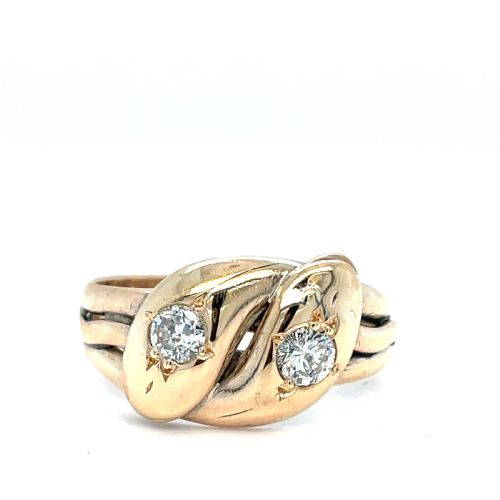
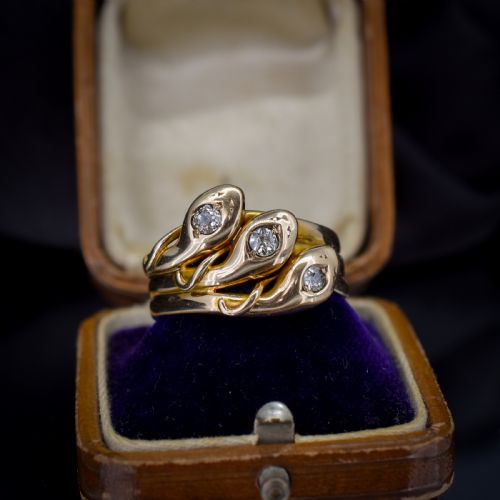
A victorian serpent ring is a coiled band of precious metal that wraps around the finger, frequently incorporating twin serpents or single coiling forms. These pieces often feature diamond or sapphire eyes, capturing the detailed symbolism popular during the nineteenth century and the early Edwardian period. Buyers searching for a victorian serpent ring will encounter examples fashioned as single bands, double coils, and triple serpent designs.
The materials span 9ct gold, 18ct gold, 15ct gold, and silver, paired with old cut diamonds and sapphires. Hallmark dates from assay offices in Chester, London, and Birmingham appear across the pieces, providing clear chronological anchors from the late nineteenth and early twentieth centuries. Most items follow the victorian or Edwardian style, representing the serpent motif as a token of devotion.
Materials and construction
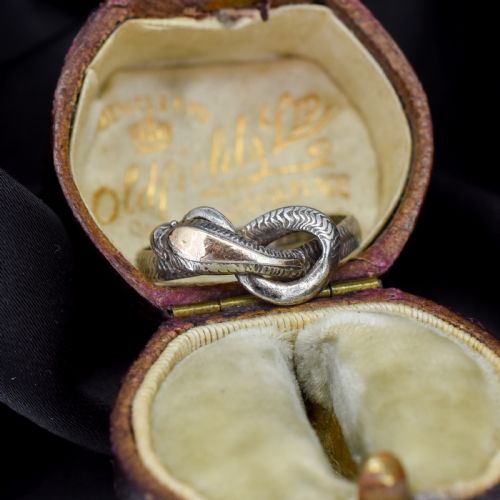
Goldsmiths utilised 9ct, 15ct, and 18ct yellow gold to form the flexible or cast coiled bodies of the serpents, sometimes combining silver settings for the diamond eyes. The metalwork relies on hand-chased scales and engraved details that give texture to the winding reptile bodies.
Gemstones including old cut diamonds, rose-cut diamonds, and sapphires were flush-set or star-set into the heads to catch the light. Assay offices marked the precious metal with Chester, London, or Birmingham hallmarks, verifying the gold purity and year of creation.
Several serpents peer out with tiny rose-cut diamond eyes, forever locked in a gleaming stare.
Assessing quality in serpent rings
Quality rests upon the crispness of the chased scale work and the proportion of the coiled serpent body. Finer examples display deep, deliberate engraving that maintains its definition along the entire band rather than appearing worn or shallow.
The selection and setting of the stones dictate the upper tier of these pieces, particularly where matched old cut diamonds or deep blue sapphires form the eyes. Substantial gold weight and clear regional hallmarks further distinguish the superior pieces from lighter, simpler bands.
The Victorian Serpent Ring Glossary
- Old cut diamond
- A hand-faceted diamond cut with a smaller table, higher crown, and open culet, typical of nineteenth-century jewellery. These stones scatter candlelight differently from modern brilliant cuts.
- Hallmark
- An official stamp applied by an assay office to indicate the metal purity and year of manufacture. British marks often include town marks and date letters.
- Rose-cut diamond
- A gemstone cut with a flat base and a domed crown featuring triangular facets arranged in a symmetrical pattern. This cut resembles an unopened rosebud.
- Coiled serpent
- A decorative form where the reptile wraps around the finger one or more times. It served as a sentimental Victorian love token.
- Assay office
- An official body charged with testing the purity of precious metals and stamping them with official marks. Chester, London, and Birmingham are prominent examples.
Victorian Serpent Ring: Frequently Asked Questions
What do snake rings mean?
A victorian serpent ring symbolised eternal love and wisdom, popularised across the nineteenth century after Queen Victoria received a snake engagement ring.
The winding reptile motif represented commitment without end, making these bands traditional tokens of deep affection.
How do I date a snake ring?
Dating relies upon legible hallmarks stamped inside the band, which denote the specific assay office and year of testing.
Stylistic shifts, such as the transition from heavy Victorian gold work to lighter Edwardian diamond settings, also help establish the era.
Were these rings worn daily?
Victorian wearers often used these gold bands as daily tokens of betrothal or remembrance, wearing them alongside other finger rings.
The durable nature of solid 18ct gold ensured the coiled metal withstood regular daily use.
What stones are in these rings?
Makers frequently set old cut diamonds, rose-cut diamonds, and sapphires into the heads of the serpents to represent glittering eyes.
Ruby examples also appear occasionally, contrasting with the warm tones of yellow gold.