
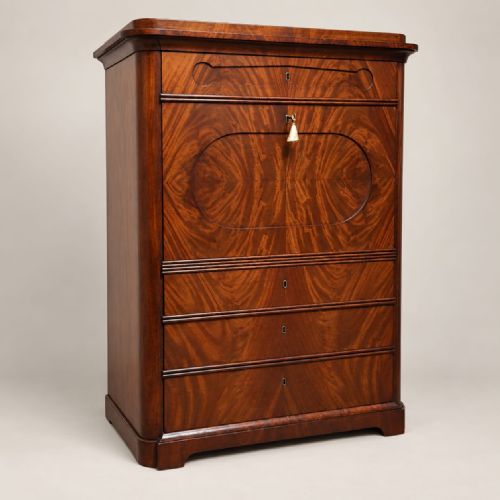
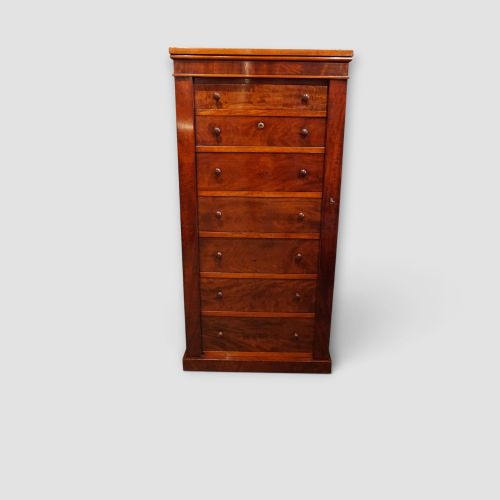


Victorian Secretary Chest
A victorian secretary chest combines the practicality of a tall drawer unit with a hidden writing desk for daily correspondence.
Victorian Secretary Chest
When you search for a victorian secretary chest, you encounter sturdy case furniture designed for storage and writing. The pieces on this page span the nineteenth century, with mahogany and pine as the principal timbers.
You meet various forms ranging from compact Wellington chests with locking flaps to large glazed bookcases and fall-front bureaux. Victorian examples dominate the selection, alongside a few pieces from the Georgian era and the early twentieth century.
The regional styles vary from formal mahogany bureau designs to rustic farmhouse pine and Biedermeier variations. Each object integrates drawers with a designated writing surface, whether via a drop-down flap or an internal slide.
How they were made
Cabinet makers utilised solid mahogany, walnut, and pine as foundational woods, often applying flame mahogany veneer or burr walnut to the primary surfaces for visual depth. Satinwood appears for internal detailing, providing contrast within the writing compartments.
Functional hardware relied on brass for handles, hinges, and locking mechanisms, securing the drawers and drop-down writing flaps. Secondary woods such as pine lined the drawer interiors, while baize provided a durable surface for the writing slopes.
Several pieces include secret compartments hidden behind miniature drawers, designed for stashing private letters and small valuables.
What varies in quality
The refinement of the timber selection dictates the visual standing of the piece, with matched flame mahogany and burr walnut veneers representing the higher end of cabinet work. Simpler pine constructions offer a utilitarian character rather than formal display.
The complexity of the internal fittings, such as pigeonholes, small drawers, and specialised locking flaps, separates standard chests from sophisticated escritoires and Secretaire bookcases. Superior examples maintain integrated locking mechanisms that secure multiple drawers simultaneously.
Druce & Co.
The Victorian Secretary Chest Glossary
- Secretaire
- A piece of furniture containing a built-in writing drawer or fold-down writing flap. This term is often used interchangeably with bureau in historical descriptions.
- Wellington chest
- A tall, narrow chest of drawers secured by a hinged vertical locking bar on one side. This design originated in the nineteenth century for efficient storage.
- Baize
- A coarse woolen material resembling felt, traditionally used to line writing slopes and game tables. It provides a flat, protective surface for pen work.
- Veneer
- A thin layer of figured wood applied over a secondary timber base to create decorative grain patterns. Flame mahogany and burr walnut are common examples.
- Escritoire
- A small writing cabinet or desk. The term denotes pieces built specifically for correspondence and paper storage.
Victorian Secretary Chest: Frequently Asked Questions
What is a secretary chest?
A secretary chest is a hybrid piece of furniture that combines standard storage drawers with a dedicated writing surface. The writing area typically conceals behind a drop-down flap or a pull-out drawer front.
Inside, these pieces feature small drawers and pigeonholes designed for stationery and letters. They offer a compact workspace that closes away when not in use.
How do I use a bureau daily?
You lower the fall-front flap to create a sturdy writing desk for laptop use or correspondence. The internal compartments keep stationery and small items organised.
When finished, simply fold the writing surface back up and secure it with the lock. This conceals your paperwork and restores a tidy appearance to the room.
Where should I place a secretary chest?
These chests suit home offices, living rooms, and bedrooms due to their vertical storage footprint. Their narrow profile allows them to fit well against walls in smaller spaces.
Keep the wood away from direct sunlight and heat sources to protect the veneers and polished finishes. Proper placement prevents the timber from drying out or warping.