
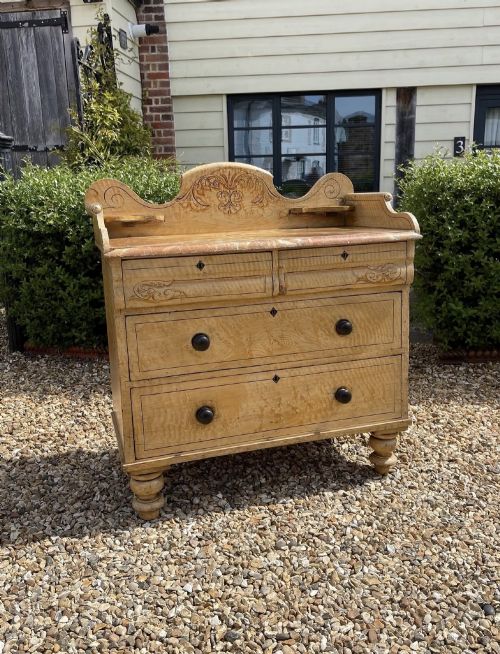
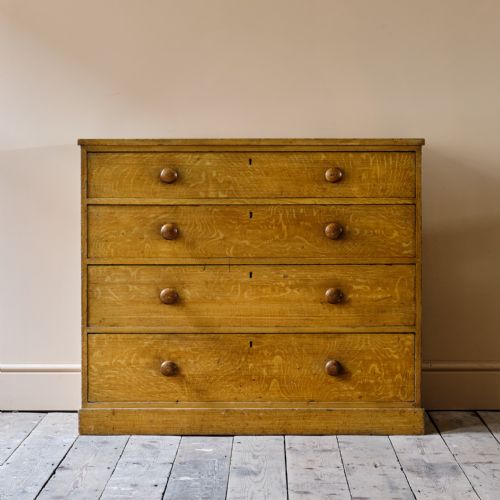


Victorian Scumbled Chest
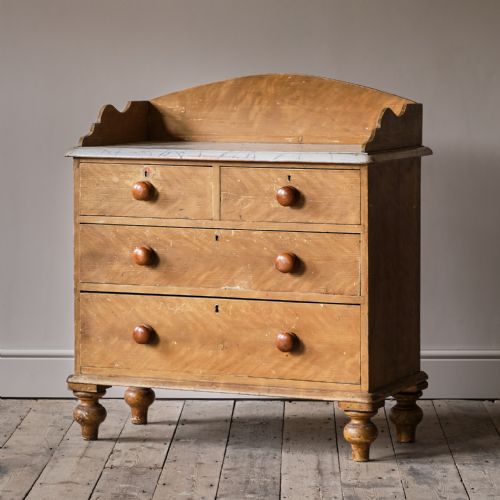
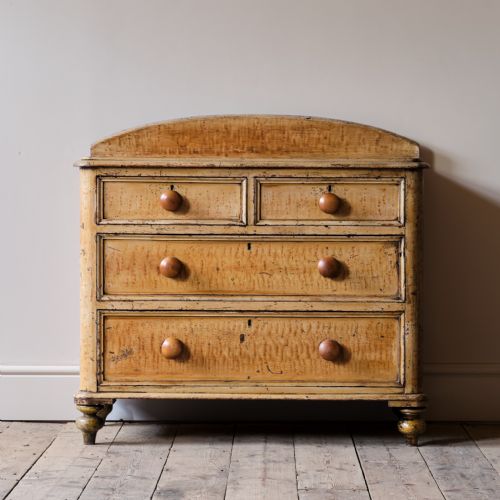
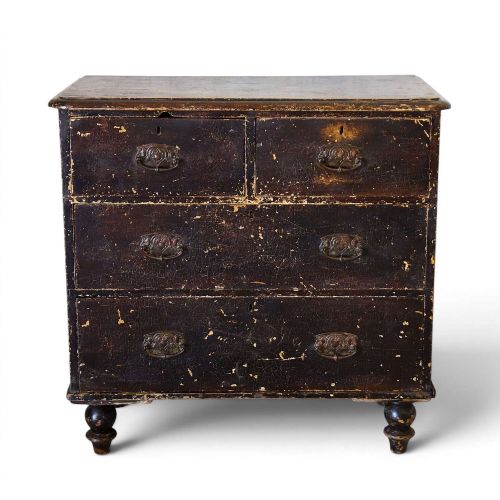
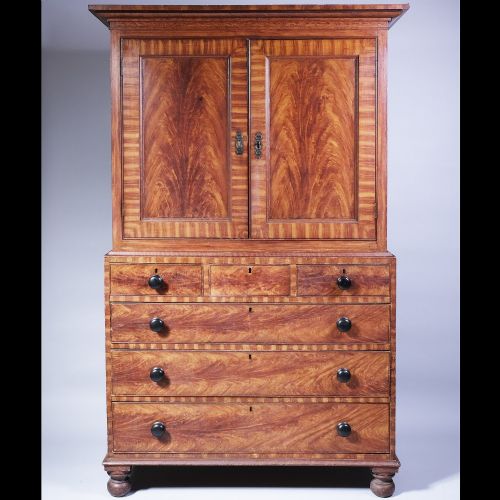
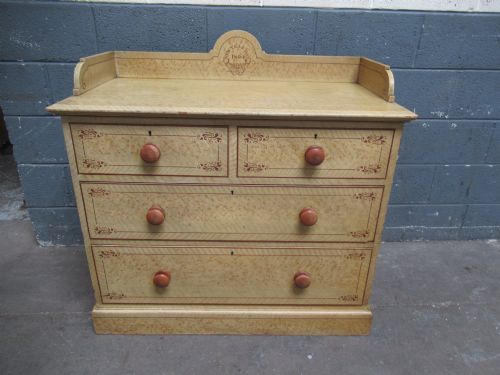
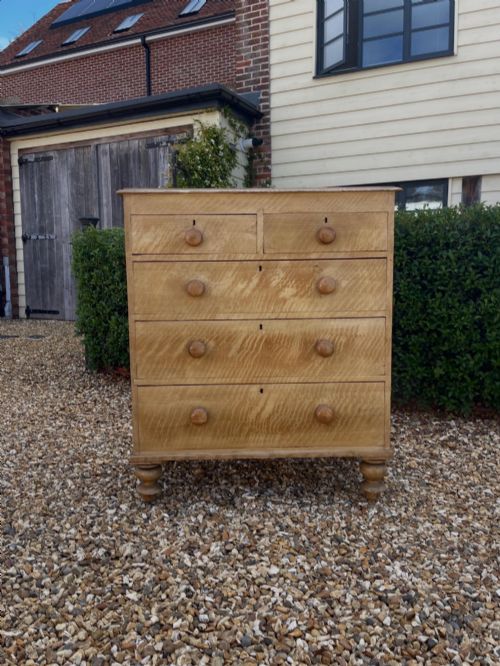
A victorian scumbled chest brings genuine texture and folk character into a room through its simulated wood grain.

Victorian Scumbled Chest
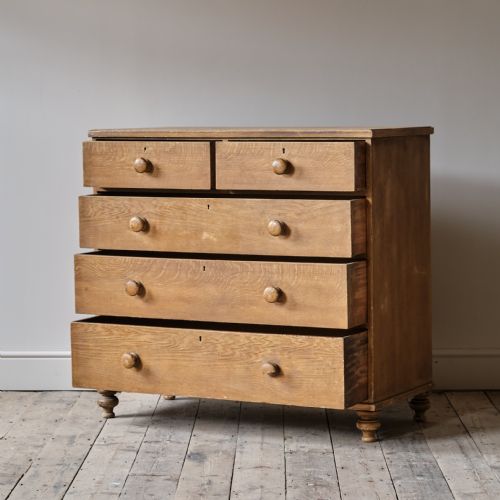
A victorian scumbled chest is primarily found in the form of pine chests of drawers, alongside blanket boxes, trunks, and dressing chests dating from the nineteenth century. These pieces were built for utility in country houses, farmhouses, and domestic settings, serving everyday storage needs.
The surviving examples range from standard drawer configurations to larger Scottish chests, mule chests, and housekeepers cupboards. Buyers encounter finishes that mimic finer timbers through decorative paint work applied over a soft wood base.
Materials and Technique
Makers constructed these storage pieces mainly from solid pine, utilising iron and brass for hardware such as handles and drawer pulls. Ceramic and glass elements occasionally appear on dressing chests and washstands.
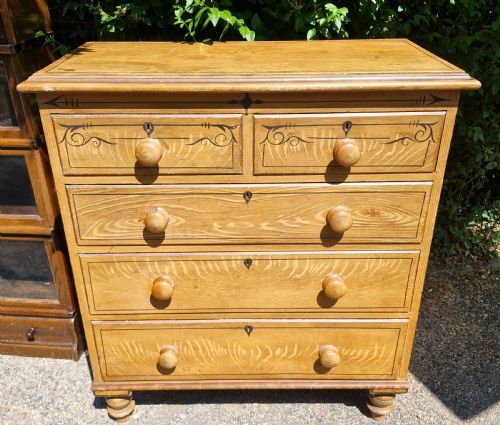
The distinctive finish relies on scumbled paint, a technique where a translucent top layer of brown or green glaze is manipulated over a lighter ground to imitate the grain of oak, mahogany, or walnut. Artisans used combs, sponges, and brushes while the paint was wet to create these simulated patterns.
Object forms span standard chests of drawers, mule chests, blanket boxes, Wellington chests, and housekeepers cupboards.
Evaluating Quality
Quality rests heavily on the preservation and skill of the original surface paint, with finer pieces exhibiting deliberate, convincing grain patterns rather than flat application. The complexity of the scumble work and the integrity of the underlying pine structure distinguish standard utility items from superior examples.
Proportion and intact period hardware, such as brass or iron pulls, elevate a piece. Evidence of age through honest wear on the painted surfaces and solid drawer construction marks the better survivals.
The Victorian Scumbled Chest Glossary
- Scumble paint
- A translucent decorative glaze manipulated over a base coat to imitate the appearance of finer wood grain. It was widely used on utilitarian pine furniture during the nineteenth century.
- Mule chest
- A storage chest fitted with one or more drawers at the base beneath the main compartment. This form bridges the traditional blanket box and the chest of drawers.
- Housekeepers cupboard
- A large storage piece with internal shelving and cupboards designed for household linen and provisions. These functional units often received decorative paint finishes.
- Wellington chest
- A tall, narrow chest of drawers secured by a hinged vertical locking side bar. It is typically fitted with multiple shallow drawers.
- Washstand
- A low table or small chest designed to hold washing basins and pitchers. Surviving pieces often incorporate pine framework and original painted surfaces.
Victorian Scumbled Chest: Frequently Asked Questions
What is a scumbled chest?
A scumbled chest is a nineteenth-century storage piece, usually made of pine, finished with a decorative translucent paint glaze that simulates expensive wood grain. This technique allowed owners to achieve a polished look using accessible domestic timber.
These pieces were produced across the Victorian period for everyday use in bedrooms and utility spaces. Today they are prized for their folk art appeal and textured surface finishes.
How do I clean scumbled paint?
Cleaning requires a soft, dry cloth or a slightly damp microfibre cloth without harsh chemical detergents. Moisture should be kept to a minimum to protect the historic paint layers.
Strong cleaners will strip or dissolve the traditional glaze. Gentle dusting preserves the integrity of the original nineteenth-century finish.
Where were these chests used?
These chests originated in country houses, farmhouses, and modest domestic interiors for storing garments, linen, and personal possessions. Their robust pine construction suited hardworking household environments.
They function well in modern bedrooms and hallways as practical storage solutions. Their decorative painted surfaces add warmth and historic character to contemporary interiors.
How do I date a Victorian chest?
Dating relies on examining construction methods, timber thickness, and drawer joints such as hand-cut dovetails. Original handles, locks, and surface wear also offer clear chronological clues.
Victorian pieces span the nineteenth century, with specific decades indicated by hardware styles and paint formulations. Comparing the build to documented examples helps narrow the manufacturing period.