



Victorian Scrub Top Table
These Victorian scrub top table examples offer honest utility and hard-wearing charm for everyday dining and food preparation.
Victorian Scrub Top Table
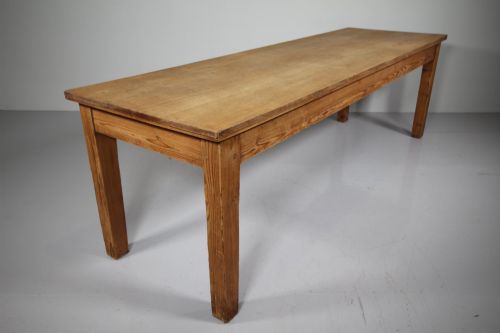
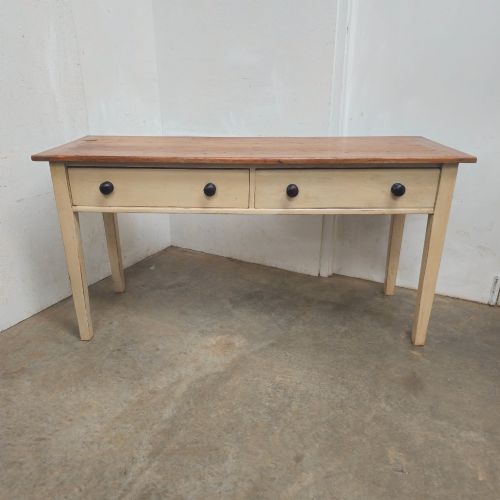
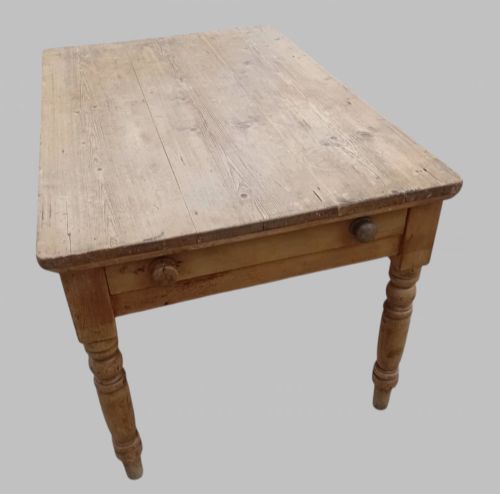
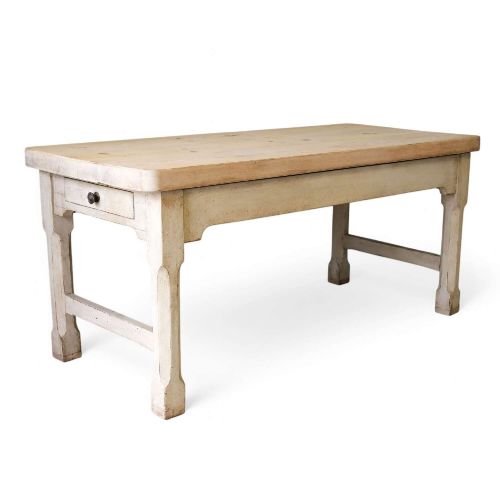
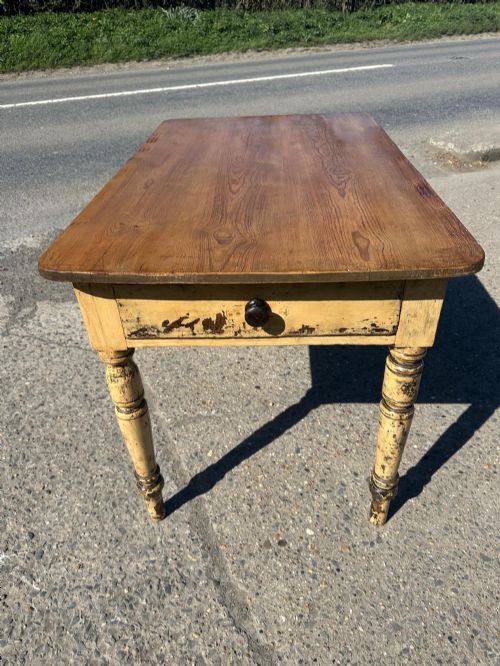
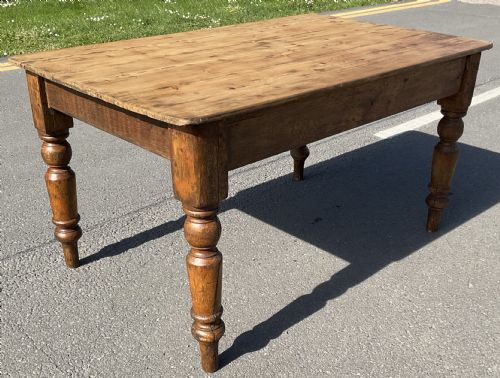
A victorian scrub top table is a utilitarian workhorse designed originally for demanding domestic tasks like food preparation and dairy work in country houses, farmhouses, and taverns. The version a buyer meets most often on this page is constructed with a solid pine top left unvarnished for frequent scrubbing alongside a timber base that sometimes retains remnants of old paint or stain.
The evidence spans the nineteenth century up to nineteen thirty, including forms described as kitchen tables, prep tables, refectory tables, and drop-leaf pembroke tables. Regional variations appear alongside styles labelled as rustic farmhouse, vernacular country, and English or Scottish country, pointing to practical origins across domestic interiors.
Materials and construction
Makers relied primarily on solid pine and timber, occasionally incorporating sycamore or mahogany for specific surfaces alongside brass and metal on fittings such as castors and drawers. Tops were scrubbed repeatedly with water and sand or stone to keep the soft wood clean, creating a pale, weathered texture distinct from the darker, finished bases.
Bases demonstrate functional carpentry ranging from turned and tapering legs to X-frames and refectory supports, frequently incorporating single or double drawers. Surfaces often show layers of old paint, original stain, or later paint applications that record the ongoing history of each piece.
Victorian Scrub Top Table Retail Price Guide 2026
Typical asking prices for victorian scrub top table among the pieces listed under this phrase on Sellingantiques today, from the lower quarter to the upper quarter. They describe what is for sale here now, not the wider market.
Listings feature pine and mahogany timbers across nineteenth-century dining, kitchen, prep, and drop-leaf pembroke forms.
Assessing quality
Quality rests in the integrity of the timber and the honesty of the surface wear accumulated through decades of hard use. Tables retaining original base finishes like early red paint or untouched stain stand apart from those stripped down indiscriminately.
Structural proportion and timber selection also divide pieces, with well-proportioned two-plank tops and sturdy joints on turned or tapering legs representing superior vernacular craftsmanship compared to altered or heavily patched examples.
The Victorian Scrub Top Table Glossary
- Scrub top
- A wooden table top left unfinished without polish or varnish so it could be scrubbed clean with water and sand. This process wears away the softer summer growth rings, leaving a raised, textured grain.
- Refectory table
- A long dining or communal table originally built for monastic dining halls. In later vernacular contexts, the term describes long, narrow formats suited to farmhouse kitchens.
- Pembroke table
- A table featuring hinged drop leaves on two opposing sides supported by folding brackets or swing legs. It offers a compact footprint that expands when extra surface area is needed.
- Vernacular country
- Furniture designed and built by local tradesmen for everyday use rather than high-style metropolitan consumption. It prioritises regional materials and sturdy construction over fashionable ornament.
- Dairy table
- A specialised work table used in farm dairies for cheese making and milk processing. These surfaces often feature scrubbed pine or sycamore resistant to moisture.
Victorian Scrub Top Table: Frequently Asked Questions
What is a scrub top?
A scrub top is a bare wooden surface, typically pine, that was washed vigorously with water and abrasives to maintain hygiene in kitchens and dairies. This repeated cleaning gives the timber its characteristic pale, weathered appearance and textured grain.
Over decades of use, the softer rings of the wood wear down below the harder grain, creating a tactile surface that defines the character of these tables.
How were these tables used originally?
These tables served as heavy-duty work surfaces for food preparation, baking, and scullery tasks in nineteenth-century homes and farmhouses. Their robust construction allowed them to handle kneading, chopping, and the daily demands of rural domestic life.
Many examples include drawers for storing kitchen utensils, while larger refectory and prep formats accommodated communal meals and dairy work.
How do I care for a scrub top?
Maintaining a scrub top involves keeping the bare wood clean with gentle wiping and avoiding harsh chemical sealants that alter the historic texture. Regular light oiling or waxing can protect the timber from staining while preserving its dry, matte appearance.
Spills should be attended to promptly since the unsealed pine absorbs moisture easily, which helps retain the honest patina valued by collectors.
How can I tell the period?
Dating relies on construction methods, timber choice, and signs of wear such as hand-cut joints, original paint layers, and hardware like brass castors. Nineteenth-century pieces often feature thick pine planks and hand-turned legs that reflect regional vernacular styles.
Comparing the base finish and structural joinery to dated examples helps narrow down whether a piece originates from the early nineteenth century or later periods around nineteen hundred.