

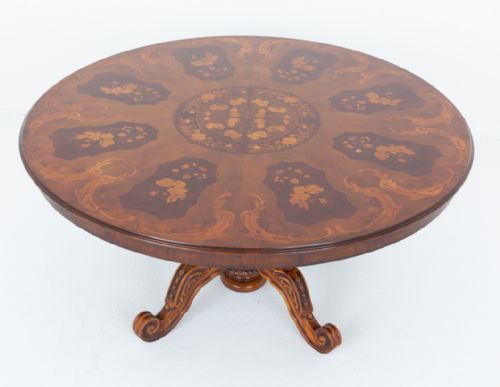


Victorian Scroll Foot Table
A victorian scroll foot table brings architectural weight to a room, offering sturdy support through carved wooden feet.
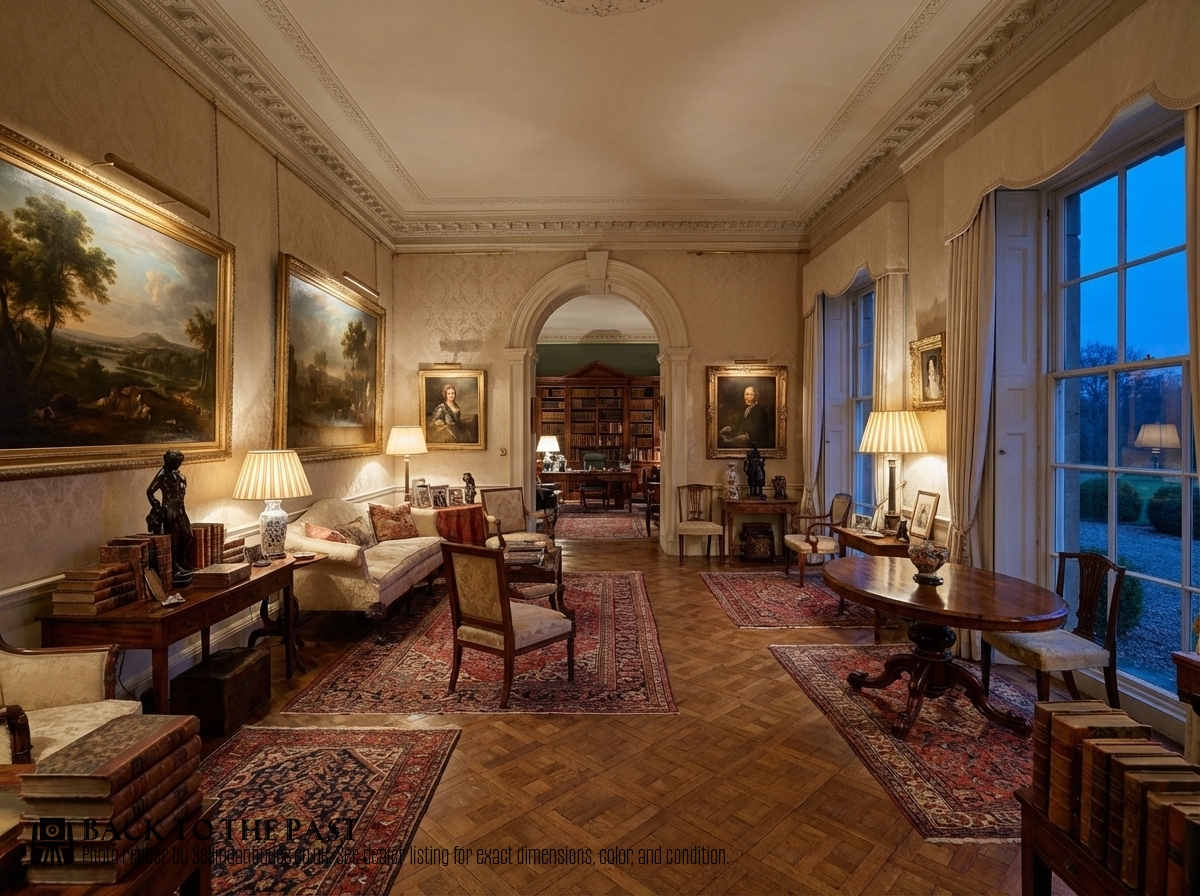
Victorian Scroll Foot Table
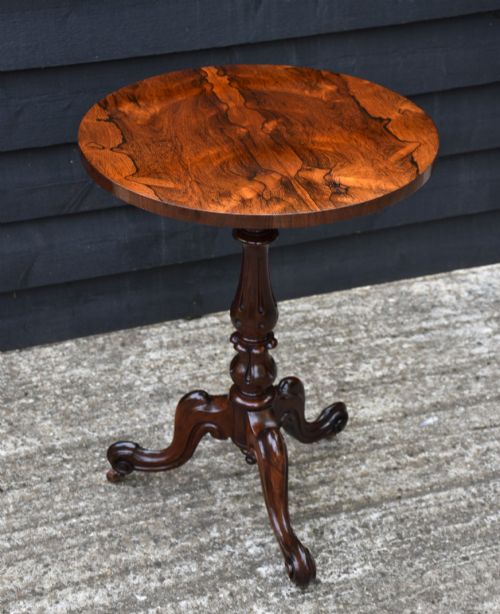
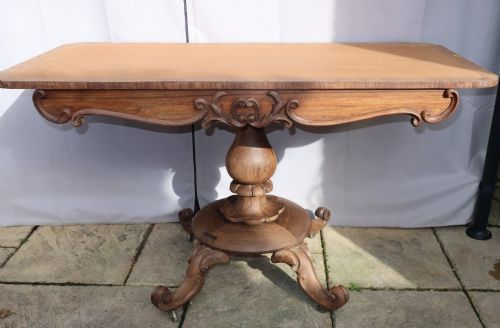
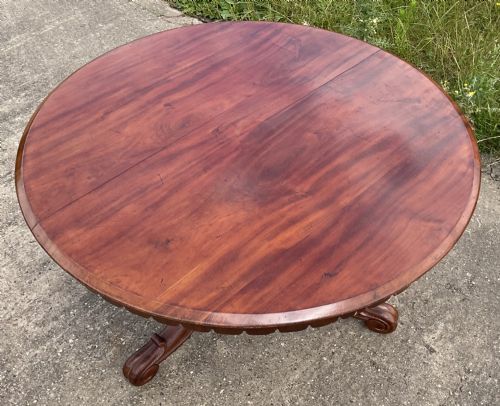
A victorian scroll foot table represents a period of substantial domestic furniture built for varied social uses in the nineteenth century. These items appear across multiple forms, including centre tables, dining tables, side tables, and tea tables, designed to anchor a room or serve a specific functional need.
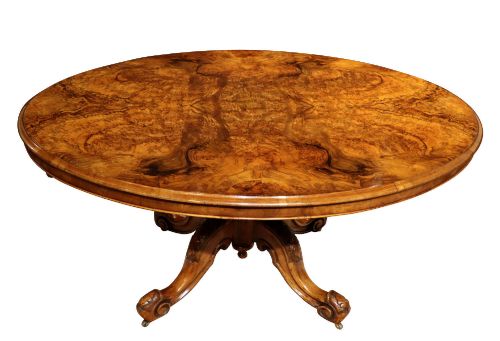
The selection on this page draws heavily from nineteenth-century origins, spanning decades from the 1850s through to later revival pieces from the 1920s. Buyers will encounter circular tops, oval breakfast tables, and fold-over designs that demonstrate the adaptability of nineteenth-century cabinet making.
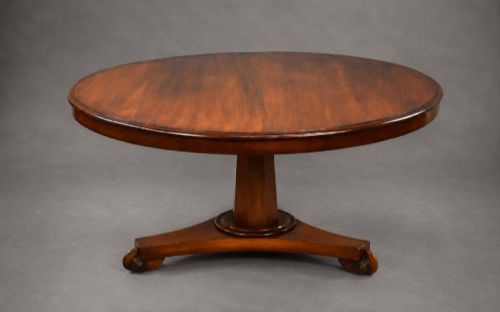
While the literal search phrase specifies a scroll foot, the inventory reflects related pedestal and support structures fashioned from mahogany, rosewood, and walnut. These tables served as centrepieces for formal reception rooms, tea service, or bedside utility, shaped by the prevailing tastes of the Victorian era and earlier Regency influences.
Materials and construction
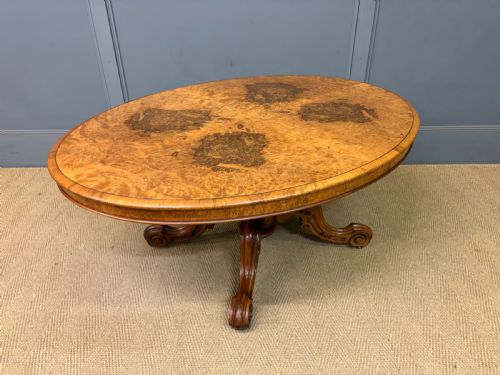
Cabinet makers relied primarily on dense hardwoods such as mahogany, rosewood, and burr walnut to construct these tables, often applying flame veneers to visible surfaces. These materials provided the structural integrity required for heavy pedestal bases and intricate carved details.
Surfaces frequently incorporated decorative techniques including mixed wood inlay, marquetry, and radial veneering to create visual depth on table tops. Structural elements like tilt-top mechanisms, quadrapod bases, and carved scroll feet demanded precise joinery and turning.
Listings feature pieces spanning the 1850s to the 1920s, constructed in mahogany, rosewood, walnut, and mixed wood veneers.
Distinctions in quality
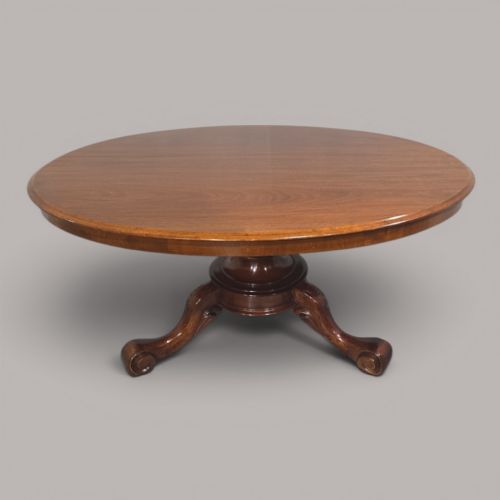
The standard of a piece is determined by the selection of timbers, such as figured burr walnut or Brazilian mahogany, and the depth of hand-carving on the base and feet. Superior examples display crisp detailing in the scroll work and well-matched veneer grains across the top.
Construction methods also divide standard production from finer workshop output, particularly in the stability of pedestal mountings and the seamless operation of tilt-top or fold-over mechanisms. The integration of secondary woods and the precision of inlaid marquetry indicate the maker's investment of time and skill.
The Victorian Scroll Foot Table Glossary
- Centre table
- A freestanding table designed to be viewed from all sides, commonly placed in the middle of a room rather than against a wall.
- Tilt-top
- A hinged table top that can be rotated to a vertical position when not in use, allowing the furniture to be stored against a wall.
- Quadrapod base
- A four-way branching pedestal support, frequently terminating in carved feet that provide stability to circular or oval tables.
- Marquetry
- The art of applying decorative pieces of veneer to a structure to form intricate patterns and picture designs.
- Gonçalo Alves
- A dense exotic hardwood sometimes utilised in nineteenth-century cabinet making for its rich colouring and distinct grain.
Victorian Scroll Foot Table: Frequently Asked Questions
What is a Victorian centre table?
A centre table is a freestanding piece designed to sit in the middle of a room rather than against a perimeter wall. These tables served various functions from displaying decorative objects to holding lamps.
They often feature a central pedestal base with carved feet, making them accessible from all sides during social gatherings.
How do I identify a tilt-top table?
A tilt-top table includes a mechanism beneath the surface allowing the wooden top to pivot vertically. This functional design saved valuable floor space when the furniture was not actively in use.
Cabinet makers concealed the hinge mechanism within the central column block, maintaining a clean aesthetic.
What woods were commonly used?
Nineteenth-century makers relied heavily on rich dark timbers including mahogany, rosewood, and walnut. Burr walnut and flame mahogany veneers added distinct figured patterns to table tops.
Secondary woods like pine or oak appear internally within drawer linings and framing structures.
How do I care for rosewood tables?
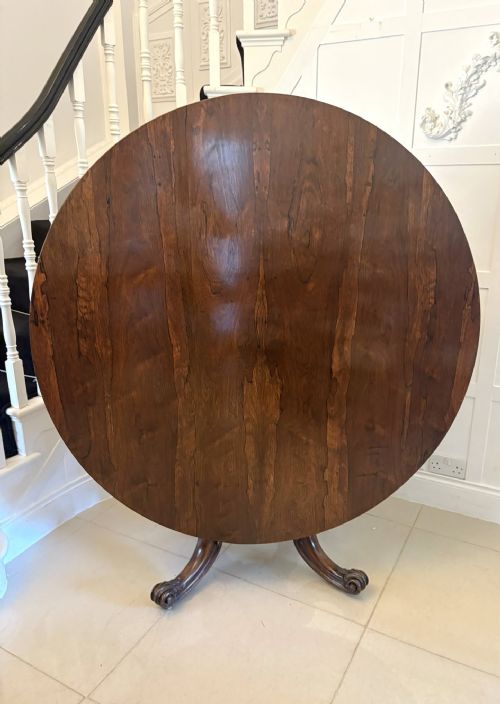
Rosewood surfaces benefit from minimal moisture and protection from direct sunlight to prevent fading of the natural grain. Regular dusting with a soft, dry cloth preserves the polished finish.
Avoiding placement near heat sources prevents timber shrinkage and subsequent splitting of the veneers.