






Victorian Screen Divider
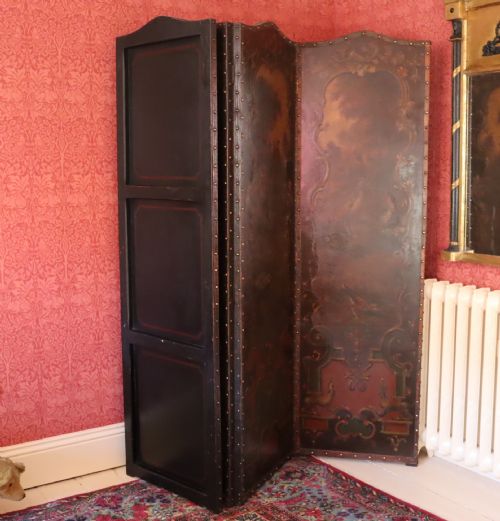
A victorian screen divider partitions a room with mahogany, leather or painted canvas, bringing flexible privacy and decorative depth to large interiors.
Victorian Screen Divider
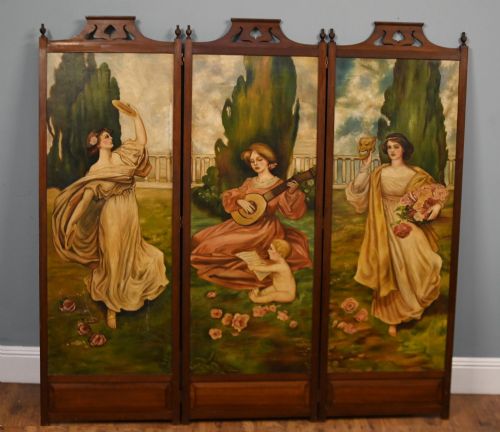
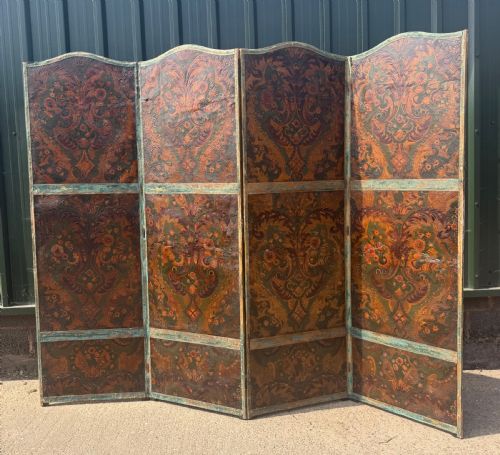
When you search for a victorian screen divider, you encounter multi-fold panels spanning mahogany, brass, paper, glass and painted canvas. The selections on this page range from nineteenth century folding nursery screens and dressing screens to large four-fold country house partitions.
The dominant forms are three and four-fold screens designed for privacy, draught exclusion or room division. You will also find specific variations like fire screens, photographic props and needlepoint privacy screens reflecting Regency, Rococo Revival, Pre-Raphaelite and Chinese Chippendale styles.
Materials and construction
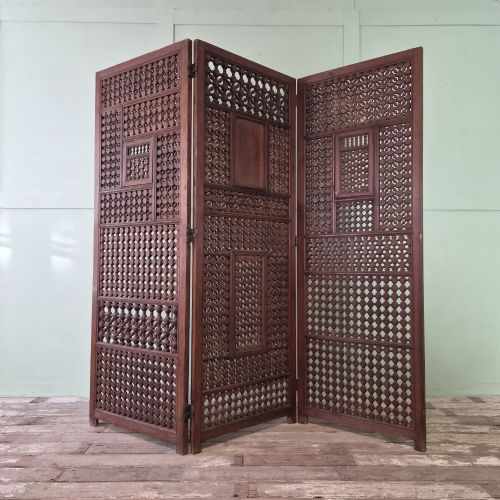
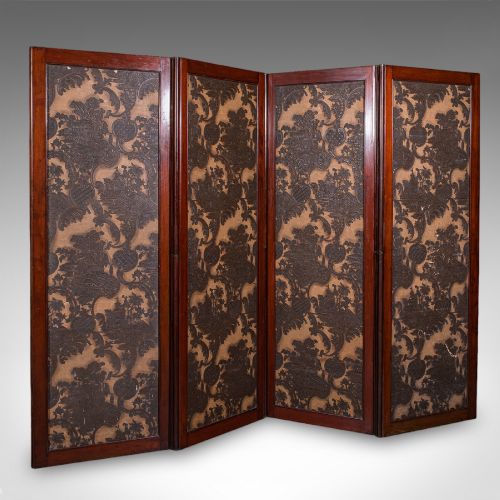
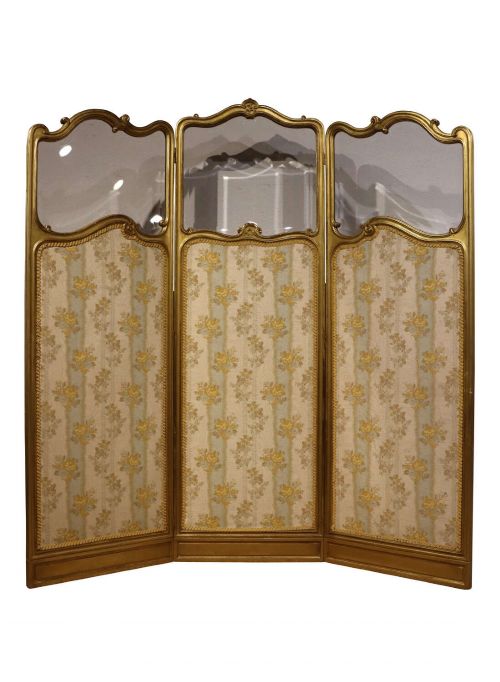
Frames rely principally on mahogany, walnut, giltwood and brass, joined to support multiple hinged panels. These skeletons hold surfaces of canvas, leather, silk, paper and glass.
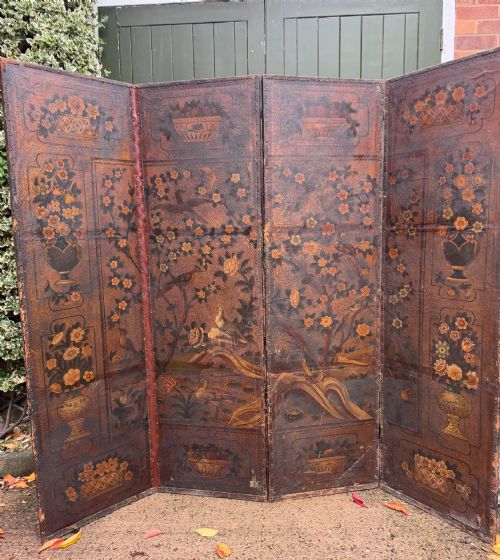
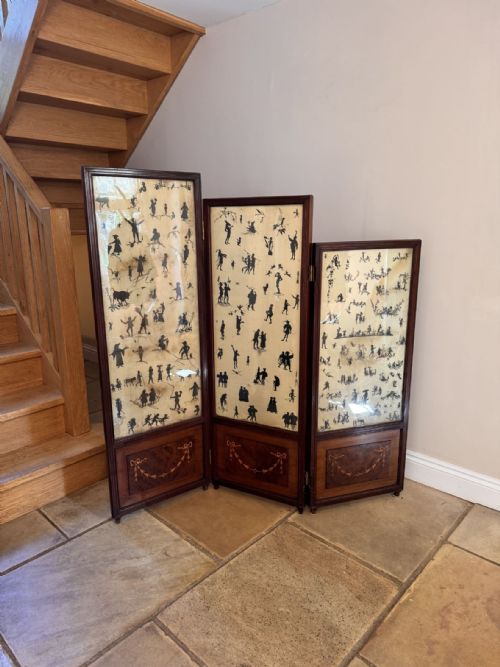
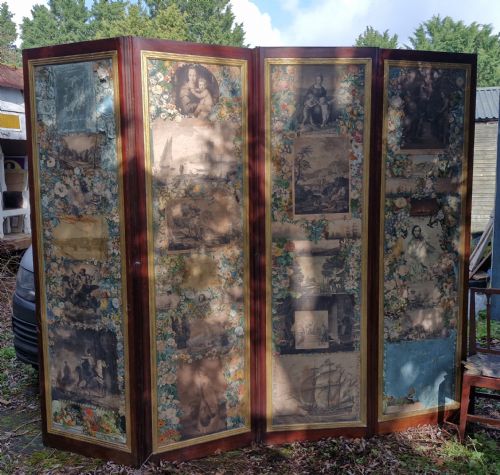
Decoration involves oil paint, polychrome schemes, hand-painted leather, needlepoint, decoupage and scrap work. Panels utilise bevelling on glass inserts and intricate inlay on timber frames.
Victorian Screen Divider Retail Price Guide 2026
Typical asking prices for victorian screen divider among the pieces listed under this phrase on Sellingantiques today, from the lower quarter to the upper quarter. They describe what is for sale here now, not the wider market.
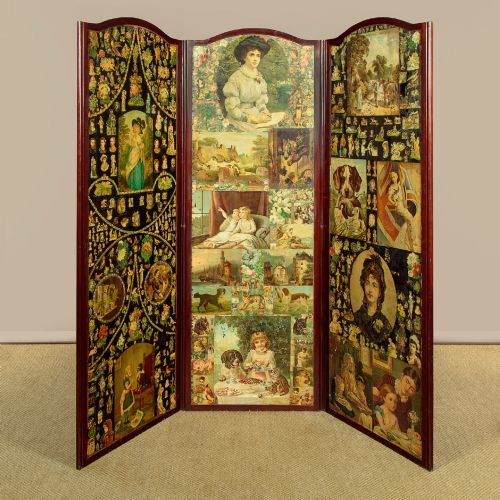
Scrap work panels preserve layers of Victorian paper ephemera, turning household folding screens into sprawling visual scrapbooks.
Assessing the work
Quality rests in the execution of the surface decoration, whether hand-painted leather, detailed needlepoint or refined scrap work. Timber frames show distinction through mahogany grain, fine inlay and sturdy hinge placement.
The integration of materials dictates the standard of the piece, from bevelled glass panes within giltwood frames to fully reversible multi-fold timber structures.
The Victorian Screen Divider Glossary
- Chinoiserie
- European interpretation of Chinese decorative motifs, frequently seen in black lacquer and gilt on nineteenth century screens.
- Giltwood
- Timber treated with gold leaf or gilt finish, prominent in French and Victorian decorative frames.
- Decoupage
- The art of decorating a surface with paper cutouts, appearing on Victorian country house screens.
- Scrap work
- A technique using pasted paper scraps and prints to cover panels, creating dense collage surfaces.
- Coromandel
- A dense imported timber used for dark, richly grained furniture and screen panels.
Victorian Screen Divider: Frequently Asked Questions
How were folding screens used in Victorian homes?
These partitions created temporary private spaces, blocked draughts from doors and windows, and divided large drawing rooms into intimate seating areas.
They also served as decorative backgrounds for photography or to conceal less formal parts of a room.
What materials make up these panels?
Frames are constructed from mahogany, walnut, giltwood and brass to provide structural support for the folding leaves.
Surfaces utilise painted canvas, hand-worked leather, needlepoint, silk, glass and paper collages.
How do I tell different styles apart?
Regency and Chinese Chippendale influences appear in specific timber framing and classical proportions, whereas Victorian examples lean towards heavy needlepoint, scrap work and Chinoiserie lacquer.
French pieces often introduce giltwood, walnut and bevelled glass panels.
Can these dividers stand independently?
Most designs employ three, four or five folding panels connected by hinges that allow the screen to stand in a zig-zag configuration.
Some variations are fully reversible to accommodate different room layouts.