




Victorian Satinwood Vanity
These victorian satinwood vanity pieces bring shimmering timber and refined craftsmanship to the bedroom.
Victorian Satinwood Vanity
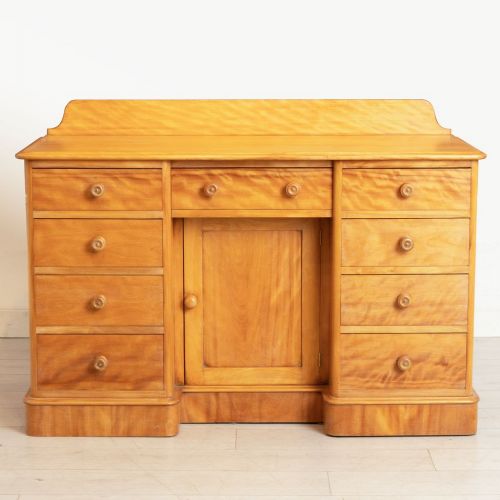
A victorian satinwood vanity encompasses dressing tables, washstands, desks, and mirrors originating from the nineteenth century. The examples met on this page showcase the golden, reflective grain of satinwood and satinbirch, often styled with Sheraton Revival or Aesthetic Movement influences.
Makers and workshops of the period produced these dressing furniture items to serve domestic routines with elegance. Pieces range from grand Scottish dressing tables to compact mirrors and washstands fitted with marble tops and ceramic basins.
The selection reflects both classical revival designs and painted decoration characteristic of late nineteenth century rooms. Buyers encounter varied forms spanning simple dressing chests to intricate kidney desks associated with prominent cabinet makers.
How they were made
Cabinet makers utilised satinwood and satinbirch veneers laid over secondary timbers, accentuating the natural chatoyancy of the wood. Surfaces frequently received delicate marquetry inlay, stencilled details, or hand-painted ornamentation.
Functional elements incorporated brass hardware, mirror glass, and heavy marble tops for washstands. Joinery techniques of the era ensured sturdy construction for items subjected to daily use.
Victorian Satinwood Vanity Retail Price Guide 2026
Typical asking prices for victorian satinwood vanity among the pieces listed under this phrase on Sellingantiques today, from the lower quarter to the upper quarter. They describe what is for sale here now, not the wider market.
Object forms span dressing tables, washstands, desks, cheval mirrors, and matching bedroom stools.
What varies in quality
The refinement of the timber selection and the complexity of the inlay separate standard production from exceptional pieces. Finely figured grain patterns combined with crisp marquetry or painted decoration indicate superior workshop output.
Attribution to documented makers or retailers elevates the standing of an item within the historical record. Structural integrity, original mirror plates, and intact brass mountings further distinguish the finer examples.
Edwards and Roberts·Gillows·Collinson and Lock·John Taylor of Edinburgh
The Victorian Satinwood Vanity Glossary
- Satinwood
- A dense tropical timber prized for its lustrous, light golden appearance and reflective grain. It was frequently used for fine veneering on nineteenth century bedroom furniture.
- Satinbirch
- A pale birch timber possessing a similar visual sheen to satinwood. Cabinet makers often utilised this wood as an alternative for dressing tables and washstands.
- Marquetry
- The art of applying pieces of veneer to a structure to form decorative patterns. This technique appears on many tables and desks from the period.
- Aesthetic Movement
- A late Victorian design style prioritising visual beauty over narrative function. Pieces from this movement often display simplified forms and artistic painted details.
Victorian Satinwood Vanity: Frequently Asked Questions
How do I care for a satinwood vanity surface?
Keep wooden surfaces away from direct sunlight and excessive moisture to protect the delicate veneer and finish. Regular dusting with a soft cloth maintains the natural sheen without chemical polishes.
Marble tops on washstands benefit from prompt wiping after contact with water to prevent staining. Avoid placing hot items directly onto the antique timber.
Where were these pieces originally placed in a home?
Dressing tables and washstands belonged primarily in bedrooms and dressing rooms of Victorian houses. They provided dedicated spaces for morning grooming and personal hygiene.
Desks and writing tables often occupied studies, drawing rooms, or private chambers. Smaller mirrors rested atop chests of drawers or dedicated dressing tables.
How do I distinguish Sheraton Revival from Aesthetic Movement pieces?
Sheraton Revival items lean towards classical symmetry, delicate stringing, and restrained neoclassical motifs. They reflect an eighteenth century revival popular in the late nineteenth century.
Aesthetic Movement pieces embrace simpler architectural lines often paired with painted decoration or artistic ornamentation. They prioritise visual harmony and artisanal craftsmanship.
What is the difference between a dressing table and a washstand?
Dressing tables feature drawers, compartments, and frequently attached mirrors designed for personal grooming. Their primary surfaces are finished in wood veneer suitable for cosmetics and brushes.
Washstands incorporate marble tops designed to resist water, alongside spaces for ceramic wash jugs and basins. Some examples include enclosed cabinets or towel rails underneath.