

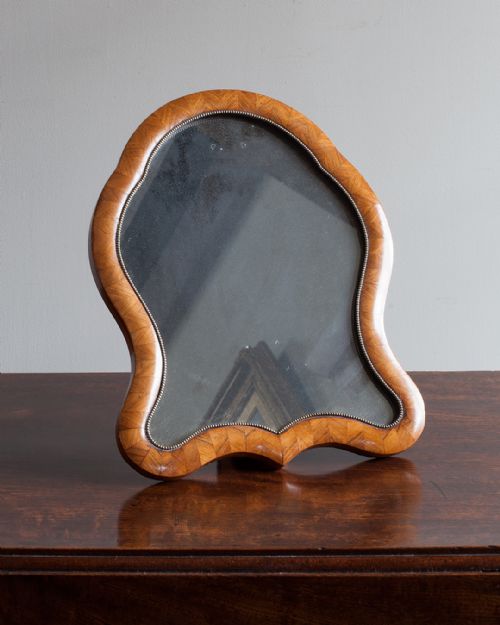


Marquetry Toilet Table
These marquetry toilet table pieces are decorative mirrors and small dressing stands built for the bedroom, offering fine inlays and practical glass.
Marquetry Toilet Table
When you search for a marquetry toilet table, you are looking at tabletop dressing mirrors and low vanity pieces designed to sit upon chests or larger stands. They date primarily across the Georgian, Victorian, and nineteenth-century periods, capturing an era of meticulous personal grooming.
The versions you are most likely to meet on this page take the form of swing mirrors supported by upright arms above small box bases. These forms frequently feature elaborate floral or geometric inlays in the manner of Dutch marquetry or Sheraton revival styles.
Materials span from rich mahogany and walnut to lighter satinwood, kingwood, and harewood, often ornamented with boxwood and brass. Their origins range from English cabinet makers to continental workshops working in French rococo revival and neo-classical traditions.
How they were made
Cabinet makers constructed the frames and mirror surrounds using dense timbers like mahogany, walnut, and satinwood, applying intricate veneers across the surfaces. Fine boxwood inlay and contrasting woods create elaborate floral patterns and pictorial scenes, particularly on Dutch examples.
The pivoting glass plates are typically held by shaped upright arms, allowing the mirror to tilt to the user's preference. Brass fittings, including decorative knobs and candle sconces on select pieces, provide functional contrast to the warm timber tones.
Marquetry Toilet Table Retail Price Guide 2026
Typical asking prices for marquetry toilet table among the pieces listed under this phrase on Sellingantiques today, from the lower quarter to the upper quarter. They describe what is for sale here now, not the wider market.
Dutch marquetry and French rococo revival styles dominate the decorative vocabulary across these nineteenth-century dressing mirrors.
What varies in quality
The precision and complexity of the wood inlay set apart the finer pieces from simpler work. Crisp cutting of contrasting timbers and intricate floral details reveal the hand of a skilled marquetry artisan.
Proportion and timber selection dictate the overall elegance of the mirror stand. Richly figured grains in kingwood, satinwood, and harewood elevate the presence of the piece, whilst balanced framing ensures the swing mirror functions with grace.
Gillows
The Marquetry Toilet Table Glossary
- Marquetry
- A decorative technique where small pieces of veneer are fitted together to form pictorial or geometric patterns on a wooden surface. This method creates elaborate floral and architectural designs across the panels.
- Toilet mirror
- A small mirror designed to stand on a dressing table or chest of drawers for grooming. These pieces typically incorporate small storage drawers within their base.
- Swing mirror
- A looking glass mounted on vertical pivots that allows the plate to tilt back and forth. The frame is supported by upright arms attached to a stable base.
- Satinwood
- A durable, yellowish timber prized for its smooth sheen and reflective grain. Cabinet makers utilised this wood extensively in revival styles.
- Kingwood
- A dense, richly coloured timber featuring dark violet-brown tones with lighter stripes. It was favoured for high-status veneered furniture.
Marquetry Toilet Table: Frequently Asked Questions
What is a marquetry toilet table used for?
These pieces served as dedicated dressing mirrors for personal grooming and hair styling in private chambers. The small drawers in the base held cosmetics, jewellery, and small accessories.
Today, they function well on top of modern chests of drawers or sideboards, adding warmth and practical mirror glass to a room.
How do I date a toilet mirror?
Dating relies on observing the timber choices, construction methods, and prevailing decorative styles. Georgian and early nineteenth-century pieces often display understated elegance and dense timbers like mahogany or walnut.
Later Victorian and revival pieces frequently incorporate lighter woods such as satinwood and elaborate floral marquetry patterns inspired by earlier Dutch cabinet work.
What is Dutch marquetry?
Dutch marquetry is a decorative woodworking style known for dense, elaborate floral, bird, and urn inlays across contrasting veneers. Cabinet makers used various stained woods and boxwood to create rich pictorial surfaces.
Pieces featuring this style often present a dramatic visual impact with botanical motifs covering every available surface of the mirror frame and base.
Are these mirrors fixed in place?
The glass plates are mounted on adjustable pivots held by vertical wooden arms, allowing the user to tilt the angle of reflection. This moveable mechanism was essential for practical daily use.
Despite the pivoting action of the glass, the supporting box base remains heavy and stable to prevent tipping during adjustment.
How do I care for antique marquetry?
Keep these wooden pieces away from direct sunlight and rapid temperature fluctuations to protect the delicate veneer and timber. Gentle dusting with a dry, soft cloth maintains the polished surface without harsh chemicals.
Waxing occasionally helps preserve the sheen of the wood and nourishes the historical finish applied by the original cabinet maker.