


Victorian Salt Pepper Set
A victorian salt pepper set brings functional nineteenth-century silver and plate to the dining table with clever novelty forms and classic cruet frames.
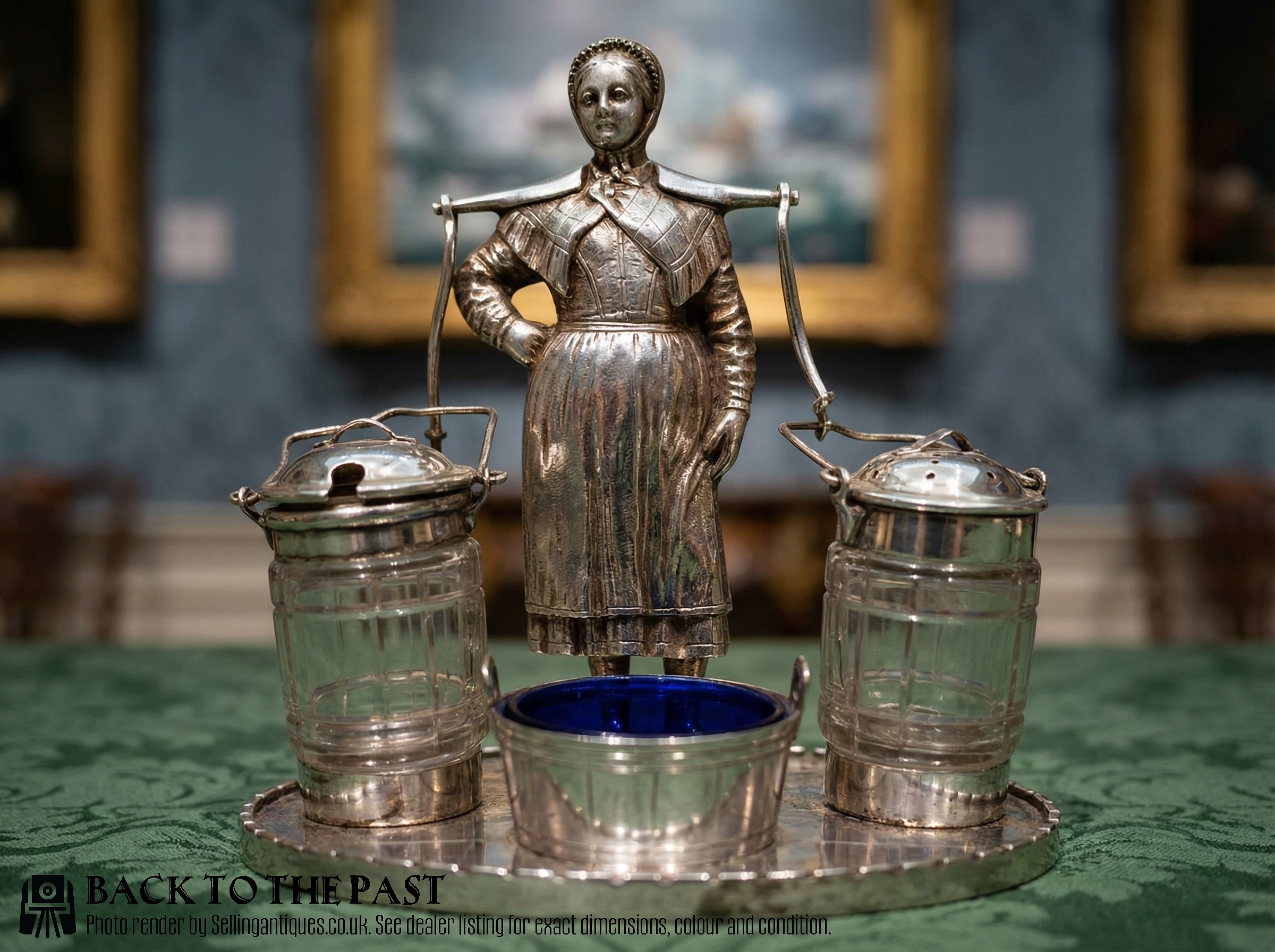
Victorian Salt Pepper Set
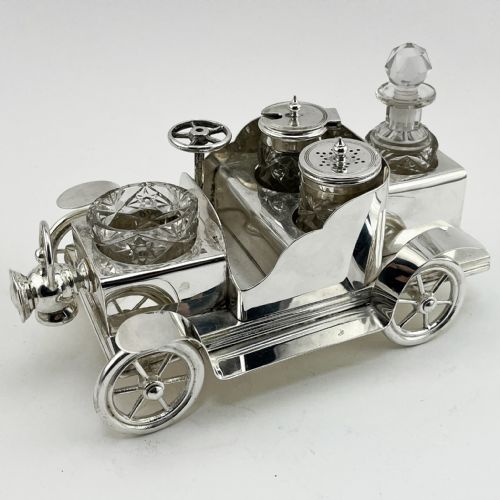
When you search for a victorian salt pepper set, you encounter everything from multi-bottle table frames to single novelty pepperettes shaped as animals, vehicles, and everyday objects. These pieces span standard Victorian production alongside Edwardian and Georgian examples, reflecting varied dining habits across the nineteenth and early twentieth centuries.
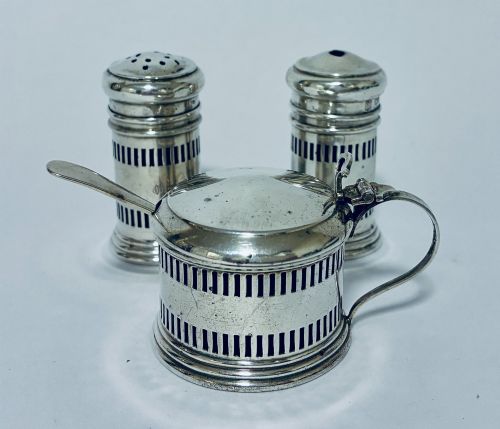
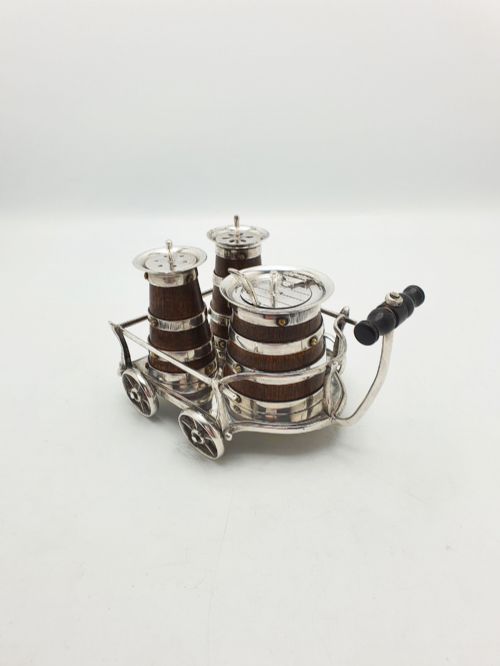
The selections on this page range from fitted boxed three-piece condiment sets in sterling silver to silver-plated oak barrels and elaborate farmyard or equestrian novelties. You are most likely to meet matched pairs of pepperettes or complete cruet frames holding glass bottles alongside dedicated salt cellars.
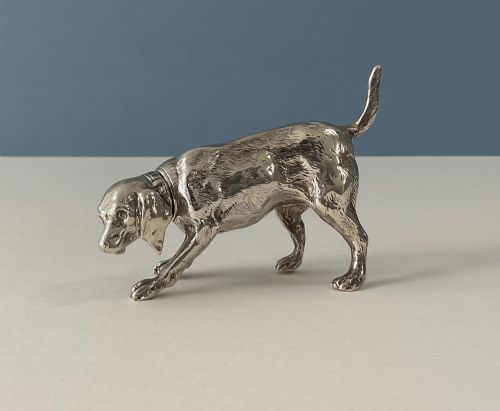
Makers utilised diverse materials to create functional tableware that also served as a talking point for dinner guests. From cut glass containers mounted in silver plate to solid silver chicks and cockatoos, these sets combine utility with playful sculptural design.
Materials and construction methods
Silversmiths formed the structured frames and figural pepperettes using sterling silver or silver plate over a base metal, frequently incorporating cut glass bottles and oak mounts. Many novelty pieces demonstrate detailed casting and chasing to render feathers, fur, and mechanical elements like carriages or violins.
Markings and registration numbers stamped into the metal indicate the period of manufacture and design protection, helping to distinguish Victorian and Edwardian items. Glass inserts feature polished rims and cut bases designed to fit securely within fitted metal frames or butler tray bases.
Listings feature items spanning the Georgian, Victorian, and Edwardian periods, utilising sterling silver, silver plate, oak, and cut glass.
Markers of fine execution
Quality in these sets rests upon the crispness of the casting in novelty items and the integrity of the fitted frames. Finer pieces retain distinct feather or facial details on animal figures and secure hinges on opening sections.
Condition of the glass inserts and the preservation of the original silver plating or sterling hallmarks distinguish superior examples. Matching sets where every bottle and shaker belongs to the original configuration command greater interest from collectors.
Walker & Hall·Sampson Mordan
The Victorian Salt Pepper Set Glossary
- Cruet set
- A fitted stand holding multiple bottles, jars, or castors for condiments at the dining table. These frames often include handles and specific retaining rings for salt, pepper, and mustard.
- Pepperette
- A small shaker designed specifically for dispensing ground pepper, usually featuring a pierced dome top and a bulbous or figural body.
- Novelty pepper
- A shaker fashioned into a recognizable shape such as a bird, dog, vehicle, or musical instrument rather than a standard cylindrical form.
- Silver plate
- A layer of silver fused to a base metal core, widely utilised in nineteenth-century tableware to achieve the appearance of solid silver at a lower cost.
- Sterling silver
- An alloy containing a high proportion of pure silver combined with other metals to ensure durability in domestic items and tableware.
Victorian Salt Pepper Set: Frequently Asked Questions
What is included in a typical condiment set?
A standard set generally contains matching vessels for salt, pepper, and sometimes mustard, arranged together in a metal frame or housed in a presentation box.
Many configurations pair glass bottles with silver or silver-plated tops, while others rely entirely on solid silver or plated figural containers.
How do novelty pepperettes work?
Novelty shakers are formed as animals or objects where the head or base removes to allow refilling of the interior chamber through a cork or screw fitting. Tiny pierced holes on the top surface distribute the pepper when shaken.
These functional pieces doubled as decorative table ornaments during Victorian dinner parties.
What materials are most common in these pieces?
Sterling silver and silver plate dominate the metal components, frequently combined with clear cut glass for the condiment bottles and oak for wooden tray bases.
Gilt accents and specialised glass liners appear in more elaborate configurations designed for formal dining.
How can I tell a Victorian set from an Edwardian one?
Hallmarks and registration dates stamped on the metal provide the most reliable guide to the exact period of production, distinguishing Victorian items from Edwardian or Georgian pieces.
Stylistic shifts also offer clues, as late nineteenth-century designs often lean towards heavily ornamented frames while later pieces show refined proportions.