


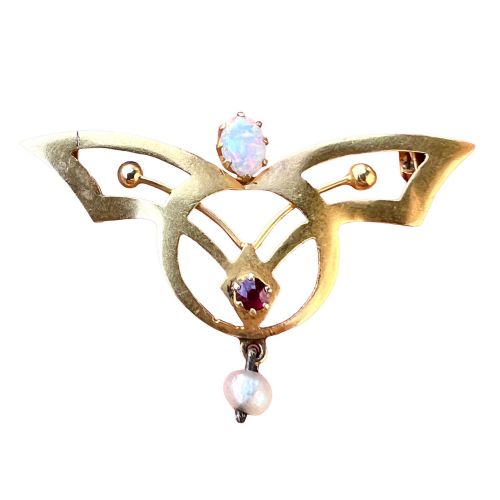


Victorian Ruby Pin
A victorian ruby pin brings together rich crimson stones and period goldwork to create a wearable piece of history.
Victorian Ruby Pin
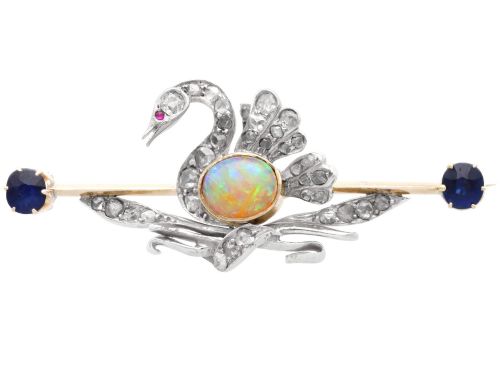
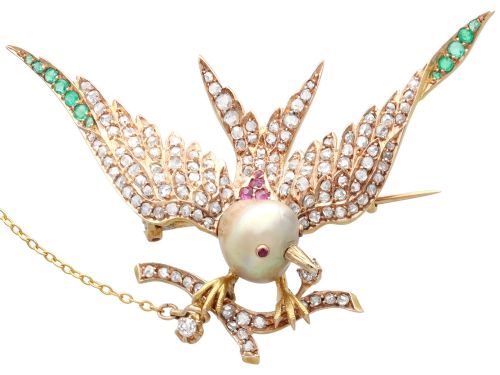
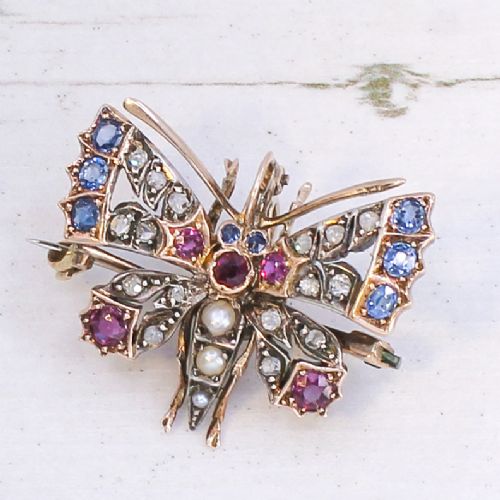
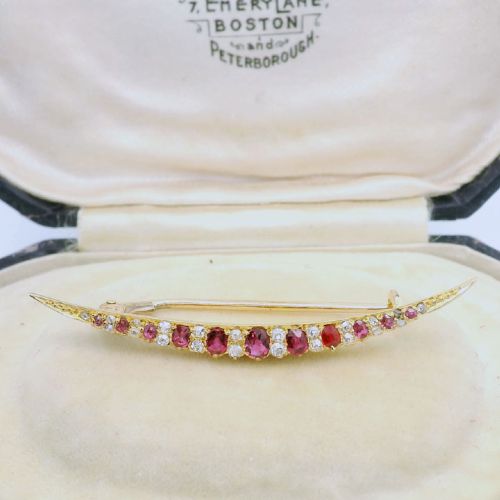
A victorian ruby pin spans multiple forms, most frequently appearing as crescent brooches, floral clusters, and whimsical animal designs set with rubies alongside diamonds and pearls.
The objects originate from the nineteenth century and the early twentieth century, encompassing periods labelled Victorian, Edwardian, and Art Nouveau.
Makers utilised various yellow gold carat weights, silver, and platinum alongside natural rubies to produce versatile brooches that also function as pendants.
Materials and construction
Goldsmiths worked with 9ct, 15ct, and 18ct yellow gold, as well as silver and gold combinations, to mount rubies, diamonds, opals, and pearls.
Gemstones were secured in claw settings or flush settings within intricate bar, crescent, and figurative frameworks.
Victorian Ruby Pin Retail Price Guide 2026
Typical asking prices for victorian ruby pin among the pieces listed under this phrase on Sellingantiques today, from the lower quarter to the upper quarter. They describe what is for sale here now, not the wider market.
Listings feature yellow gold ranging from 8ct to 21ct alongside silver, platinum, rubies, diamonds, opals, and pearls across Victorian and Edwardian periods.
Evaluating quality
The standard of a victorian ruby pin rests on the origin and treatment of the rubies, the presence of accompanying diamonds, and the complexity of the gold or silver mount.
Pieces featuring natural untreated rubies or substantial carat weights command attention, as do intricate figurative designs depicting birds, insects, and floral sprays.
The Victorian Ruby Pin Glossary
- Crescent brooch
- A curved piece shaped like a moon, frequently adorned with graduated rubies and diamonds. This motif proved exceptionally popular during the late nineteenth century.
- Bar brooch
- A slender horizontal metal rod with a central gemstone cluster or decorative motif. These pieces fasten securely to garments with a pin and catch.
- Pendant brooch
- A convertible jewel equipped with both a pin fitting and a hidden loop. This allows the wearer to display the item on a chain or pin it to clothing.
- Natural ruby
- A corundum gemstone formed in the earth without human intervention to alter its appearance. Gem reports often accompany these stones to confirm their origin.
Victorian Ruby Pin: Frequently Asked Questions
How were these pins worn?
Victorian ladies pinned these jewels to the collars, lapels, and bodices of their garments. Many versions also included loops to suspend them from necklaces.
This dual functionality made them versatile accessories for day and evening attire.
How do I care for antique jewellery?
Antique pins require gentle handling due to their age and delicate settings. Store them in individual boxes to prevent metal and gemstone abrasion.
Avoid chemical cleaning solutions, opting instead for professional inspection of the pin stems and stone settings.
How can I tell the period?
Dating relies on stylistic clues, metal purity marks, and construction techniques. Crescent and floral motifs with natural rubies frequently point towards the late Victorian and Edwardian eras.
Examining the reverse side reveals pin mechanisms and fastener types characteristic of specific decades.