


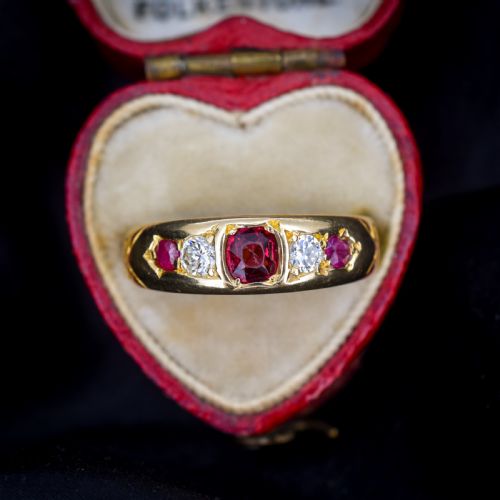


Victorian Ruby Band
A victorian ruby band brings together deep red stones and rich gold in a ring designed to sit low on the hand.
Victorian Ruby Band
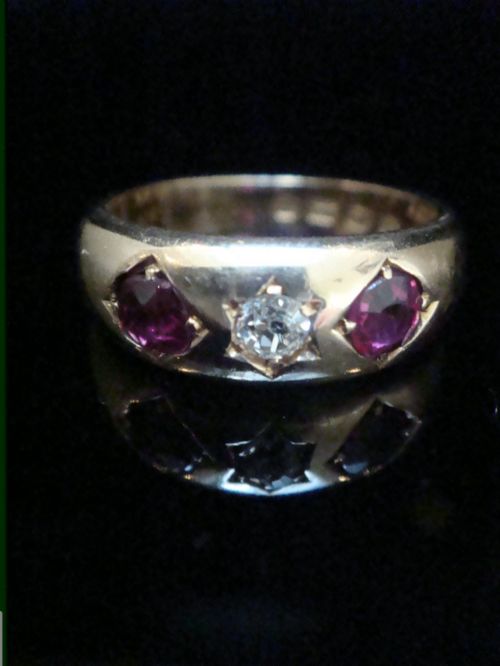
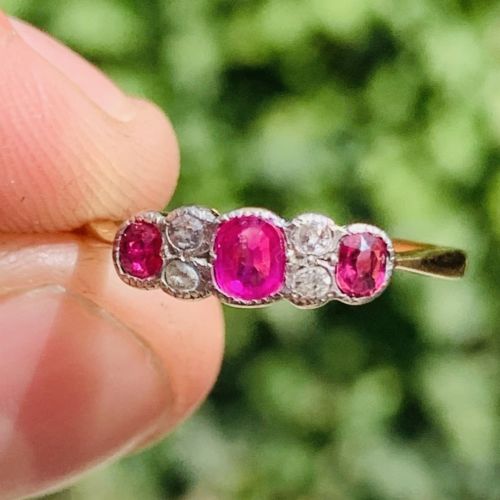
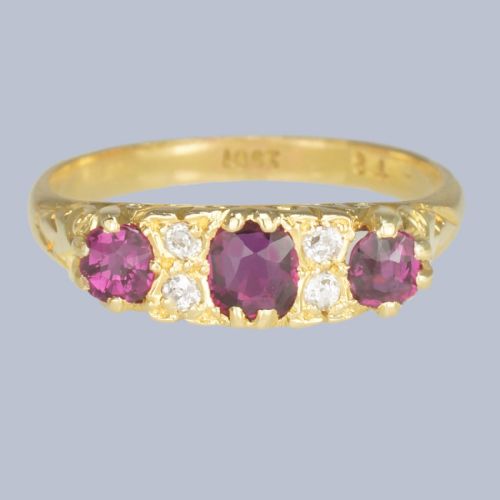
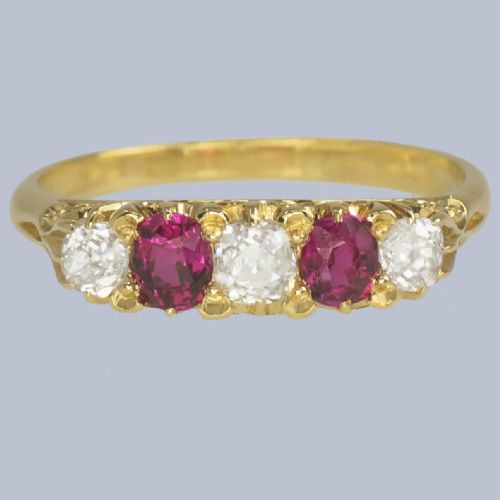
When you search for a victorian ruby band, you are looking at rings created primarily during the nineteenth and early twentieth centuries, featuring natural rubies set into durable gold hoops. The most common examples on this page are low-profile band rings, gypsy settings, and multi-stone arrangements that incorporate diamonds alongside the central red stones.
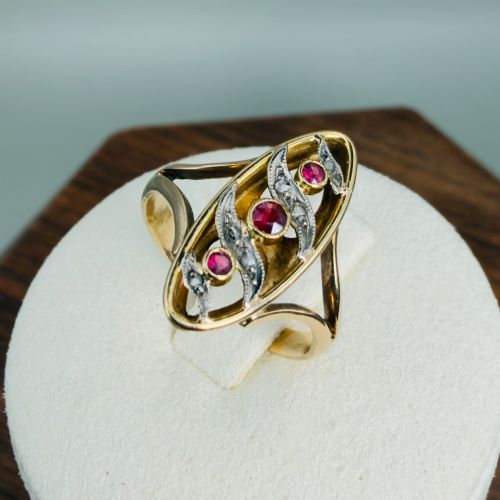
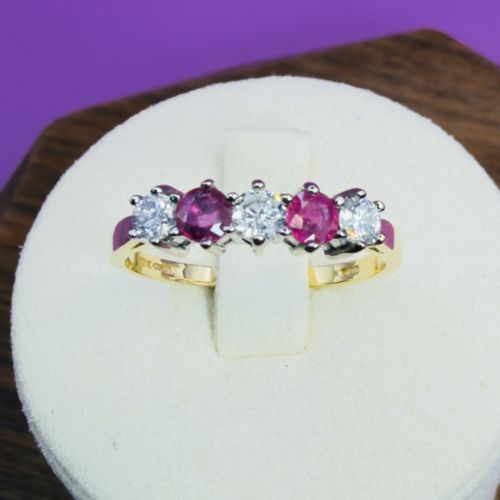
The materials span different purities of gold, most frequently eighteen carat and fifteen carat yellow gold, occasionally paired with platinum or rose gold. Alongside traditional rubies, pieces incorporate supporting old cut diamonds, pearls, and garnets within starburst, trilogy, and five-stone layouts.
Originating largely from British workshops and bearing provincial hallmarks from towns such as Chester and Birmingham, these rings reflect the diverse aesthetic shifts from high Victorian ornamentation through Edwardian grace.
Materials and Construction
Goldsmiths utilised solid fifteen carat and eighteen carat yellow gold to form the structural hoops, often employing heavy gauge metal that allowed for flush gypsy settings and hand-carved shoulders. Stones were secured by hand, pushing the surrounding gold over the girdle of the ruby in starburst or flush mounts to create a smooth surface.
Diamonds incorporated into these designs are predominantly old mine cut or old European cut stones, hand-faceted with small tables and open culets that catch candle and gas light differently than modern brilliants.
Listings feature yellow gold, rose gold, and platinum across Victorian, Edwardian, and Art Deco periods, centred around ruby and diamond combinations.
Distinguishing Quality
Quality rests in the saturation and origin of the rubies, with unheated Burmese stones and well-matched natural colour distributions holding greater distinction than treated alternatives. The crispness of the hand-engraved starburst motifs and the structural integrity of the heavy gold bands also define the upper tier.
Fine examples retain clear hallmarks indicating regional assay offices and precise dates, alongside minimal wear to the grain of the gold surrounding the flush-set stones.
The Victorian Ruby Band Glossary
- Gypsy ring
- A style of ring where the stones are flush-set directly into the thick, tapered gold band so the surface remains relatively smooth. This setting gained immense popularity during the late nineteenth century for daily wear.
- Old cut diamond
- A hand-faceted diamond cut before modern machinery standardised proportions. These stones typically feature smaller tables, higher crowns, and deep pavilions.
- Trilogy ring
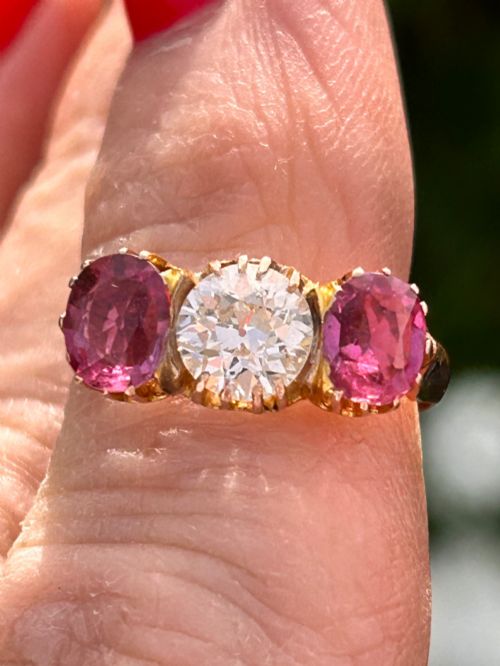
- A ring featuring three principal stones set in a row, often symbolising the past, present, and future. In these listings, they frequently pair a central ruby with flanking diamonds.
- Navette
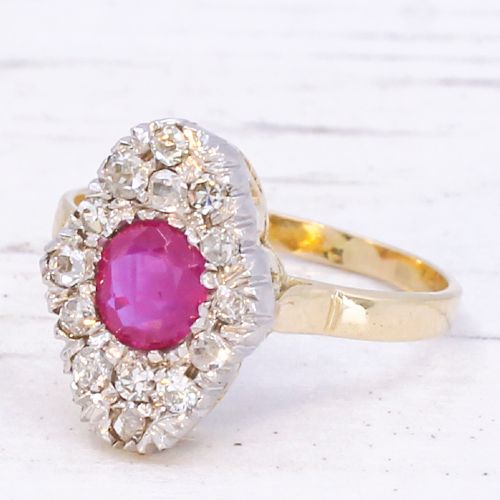
- A boat-shaped or marquise setting style that elongates horizontally along the finger. It allows for clustered arrangements of rubies and diamonds within an ornate outline.
- Hallmark
- An official stamp applied to precious metals indicating purity, the assay office of origin, and the year of testing. British pieces often display city marks alongside date letters.
Victorian Ruby Band: Frequently Asked Questions
Can I wear a antique band every day?
These rings were built for daily wear with sturdy gold shanks and flush settings that protect the stone edges. However, taking them off during heavy manual work ensures the gold and softer gems remain protected.
Regular checks by a jeweller will confirm the security of the claws and flush mounts, preserving the integrity of the original craftsmanship.
What do Chester hallmarks tell me?
Chester hallmarks indicate that a ring was tested and assayed in the historic city of Chester before being offered for sale. The accompanying date letters pinpoint the exact year of manufacture.
Finding clear town marks and maker stamps adds verifiable history to the piece, confirming its nineteenth-century or early twentieth-century origins.
Are old cut diamonds different from modern ones?
Old cut diamonds are shaped by hand rather than by computer-guided lasers, resulting in chunkier facets and warmer light dispersion. They display smaller top facets and deeper lower portions.
This distinct cutting style gives them a softer, quieter sparkle that complements the antique character of Victorian yellow gold.