
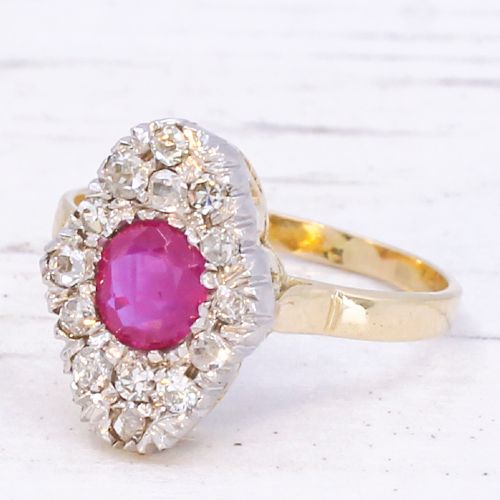


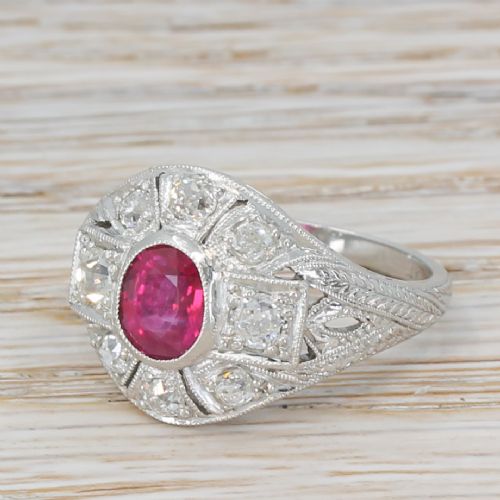
Vintage Burmese Ruby Ring
A vintage burmese ruby ring combines exceptional colour with historic character, offering an extraordinary central gemstone paired with period diamonds in precious settings.
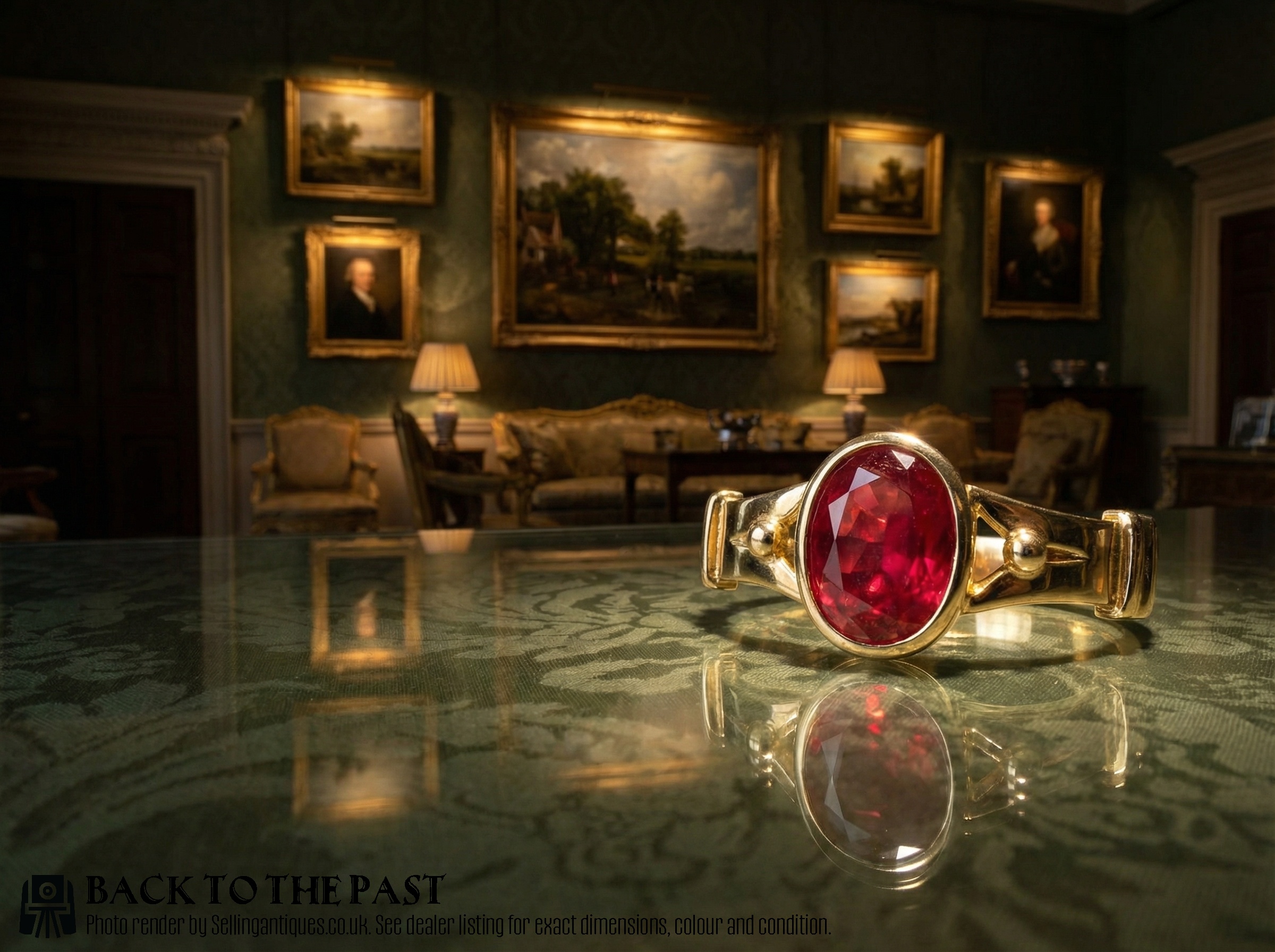
Vintage Burmese Ruby Ring
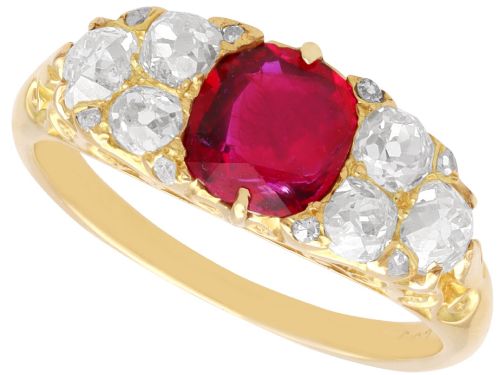
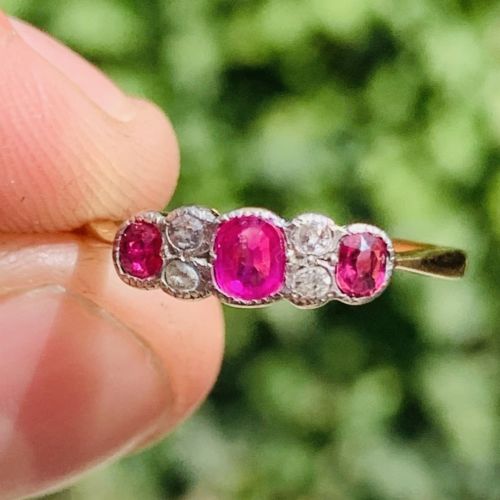
A vintage burmese ruby ring is a piece of fine jewellery centring on a ruby originating from Myanmar, historically known as Burma. These rings span periods from the late Victorian era through the Edwardian years and the Art Deco period into mid-century designs.
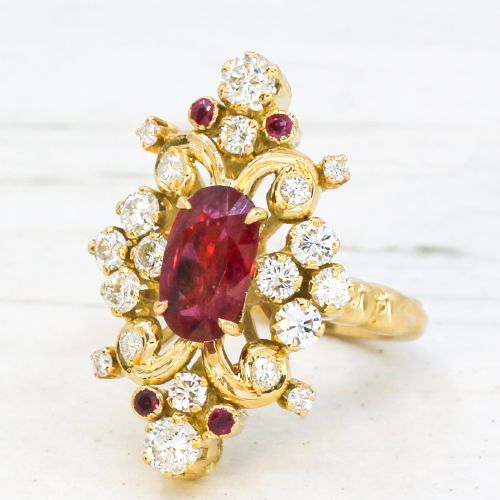
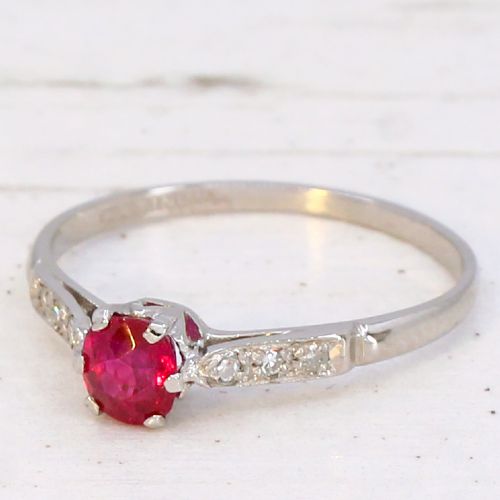
The most common examples encountered on this page date from the late nineteenth century up to the 1960s. Forms include classic solitaire rings, intricate navette clusters, twisting platinum bands, and diamond-halo settings.
Mogok and Mong Hsu are specific locations in Burma frequently associated with these rubies. Buyers find stones originating from these regions mounted in metals such as yellow gold, white gold, platinum, and silver.
Materials and construction
Goldsmiths utilised yellow gold, white gold, platinum, and silver to house the rubies and accompanying diamonds. Platinum became particularly favoured during the Art Deco period for its strength and fine white finish.
Old cut diamonds frequently accompany the central ruby in cluster, navette, and halo arrangements. These stones are hand-set to complement the deep red hue of the Burmese gemstone.
Current listings span periods from the late Victorian era through Art Deco to the 1960s, utilising platinum, yellow gold, and white gold.
Evaluating quality
The saturation and vibrancy of the ruby's red colour determine much of the visual impact. Stones described as unheated often hold greater desirability among collectors.
The precision of the mounting and the cut of the surrounding diamonds influence the overall elegance of the piece. Craftsmanship from periods like Art Deco displays intricate metalwork that enhances the central gemstone.
The Vintage Burmese Ruby Ring Glossary
- Burmese ruby
- A ruby mined in Myanmar, prized for a natural fluorescence and rich red colour. These stones are historically significant in fine antique jewellery.
- Old cut diamond
- A diamond cut by hand before modern machinery, featuring a smaller table and larger facets. This cut produces a softer, candlelit sparkle.
- Navette ring
- A ring featuring a pointed, boat-shaped silhouette. This elongated form sits gracefully along the finger.
- Solitaire ring
- A ring featuring a single prominent gemstone set on a plain or diamond-accented band. It places total visual focus on the central stone.
Vintage Burmese Ruby Ring: Frequently Asked Questions
What makes a Burmese ruby special?
Burmese rubies are celebrated for a vivid red colour and natural properties that create an intense glow. Their origin in Myanmar adds historical prestige.
Collectors value these stones for their distinct geological characteristics, which set them apart from rubies sourced elsewhere.
How do I care for a vintage ring?
Regular cleaning with mild soapy water and a soft brush maintains the sparkle of the ruby and diamonds. Avoid harsh chemical dips that might harm softer metals or older settings.
Storing the ring in a fabric-lined box prevents scratches from other jewellery. Have a professional jeweller inspect the prongs periodically.
Can I wear these rings daily?
Rubies rank very high on the hardness scale, making them durable enough for everyday wear. However, older settings from Victorian or Art Deco eras require a gentle approach.
Removing the ring during heavy manual tasks protects both the gold or platinum band and the delicate diamond accents.
How do I identify Art Deco style?
Art Deco rings feature geometric lines, symmetrical patterns, and frequent use of platinum paired with diamonds. This aesthetic dominated the 1920s and 1930s.
The designs often emphasise stark contrasts and architectural shapes rather than the flowing organic motifs of earlier Victorian periods.