


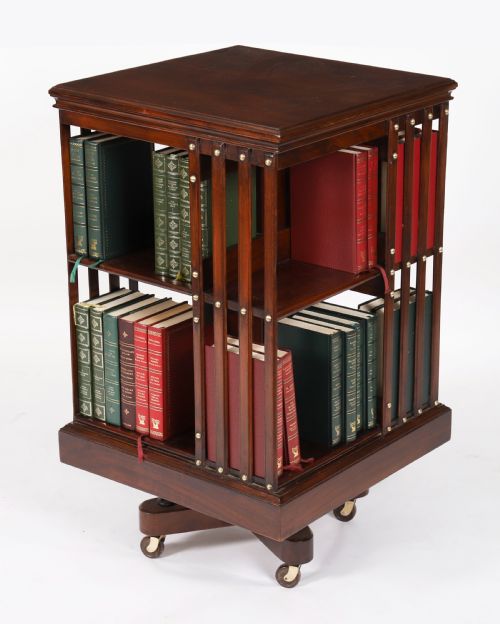


Victorian Rotating Bookstand
A victorian rotating bookstand brings desk-height convenience and traditional timber warmth to any corner, holding daily volumes within easy reach.
Victorian Rotating Bookstand
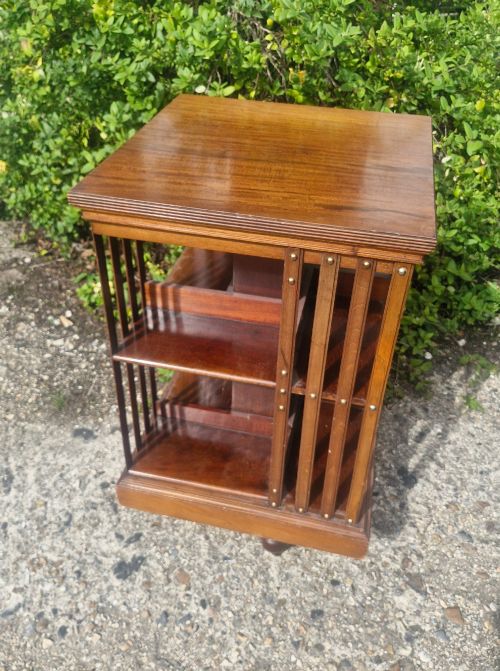
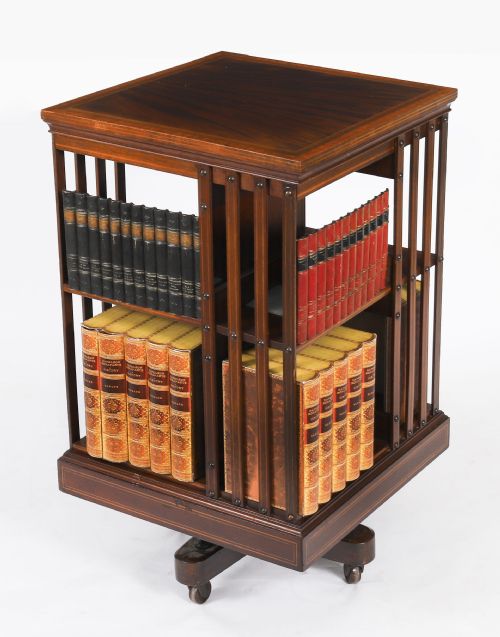
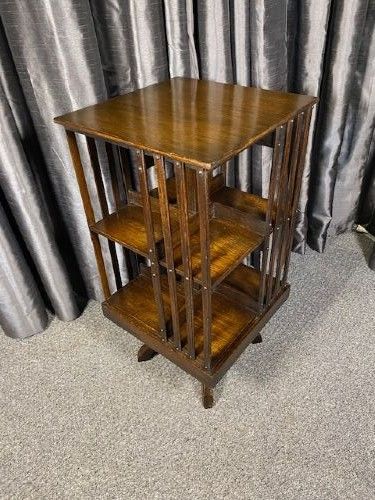
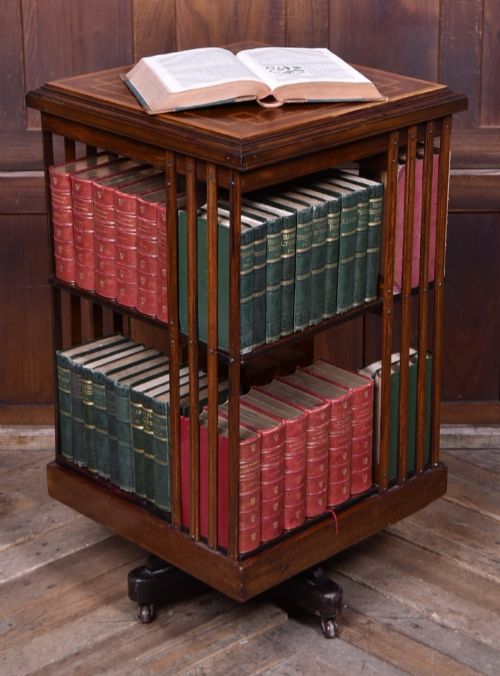
A victorian rotating bookstand sits on a clever internal pivot that lets users spin a square or circular tier to select a volume without leaving a chair. These functional library pieces appear in several forms, from low table-top models designed for desks to taller floor-standing variations.
Most examples found here date from the nineteenth century into the Edwardian period, built primarily to serve domestic studies and parlours. The revolving bookcase structure provides efficient multi-directional storage whilst occupying minimal floor space.
Makers produced these stands in various dimensions, accommodating everything from pocket editions to heavy reference volumes. Their enduring appeal lies in the combination of mechanical ingenuity and solid cabinet-making.
How they were made
Cabinet-makers relied on dense hardwoods like mahogany, walnut, and oak to construct the sturdy framework required to bear the weight of heavy books. Many pieces feature figured flame mahogany veneers or subtle boxwood inlay to enhance the visual appeal of the rotating tier.
Internal mechanisms frequently incorporate brass and iron components to ensure a smooth, balanced rotation without wobbling. These metal actions remain concealed beneath the timber structure, engineered for daily domestic use over generations.
Table-top versions let readers spin an entire library while sitting firmly in an armchair.
What varies in quality
Quality rests upon the smoothness of the internal revolving action and the stability of the central pivot under a full load of books. Finer examples display superior timber selection, such as rich flame mahogany or carefully figured walnut grain.
Caches of quality appear in the crispness of any inlay work and the solidity of the slatted dividers that keep volumes upright during rotation. Simpler utilitarian pieces lack decorative banding and rely on plain oak or mahogany construction.
Maple & Co
The Victorian Rotating Bookstand Glossary
- Flame mahogany
- A timber veneer displaying a distinctive flickering flame-like grain pattern. Cabinet-makers reserved this decorative wood for the most visible surfaces.
- Boxwood inlay
- Contrasting pale wood inserted into recesses within the darker primary timber. This technique adds fine linear detail and geometric borders to the piece.
- Revolving tier
- The movable upper section containing the book compartments. It turns freely upon a hidden spindle and base mechanism.
- Slatted divider
- The vertical wooden bars separating individual book compartments. They prevent volumes from sliding sideways as the stand turns.
Victorian Rotating Bookstand: Frequently Asked Questions
How do I care for the revolving mechanism?
Keep the internal pivot clean and free from dust to maintain a smooth rotation. Avoid applying heavy oils or lubricants unless the mechanism shows stiffness.
Period bearings are often simple metal or wooden assemblies that require gentle treatment rather than heavy maintenance. Regular use actually helps keep the pivot action even.
Can these bookstands hold heavy hardbacks?
The sturdy mahogany and oak frameworks are designed to support substantial volumes of reference books and standard literature. The weight distribution across the central pivot keeps the structure balanced.
Even table-top models use solid timber construction capable of bearing daily reading loads without straining the joints.
Where should I place a revolving bookstand?
These pieces function well beside an armchair, desk, or sofa where easy access to multiple books matters. Their ability to turn means they fit comfortably into corners or tight spaces.
Placing them away from direct heat sources protects the timber veneers and prevents the wood from drying out over time.
How do I distinguish Victorian from Edwardian stands?
Victorian examples often employ deeper, richer mahogany and heavier proportions associated with nineteenth-century libraries. Edwardian pieces can feature lighter timbers like satinwood or simpler oak framing.
Inlay styles also shift over periods, with later Edwardian versions favouring delicate neoclassical motifs whilst maintaining the same practical revolving format.