





Victorian Rotating Bookcase
A victorian rotating bookcase is a clever space-saving invention for storing reference books within arm's reach while seated.
Victorian Rotating Bookcase
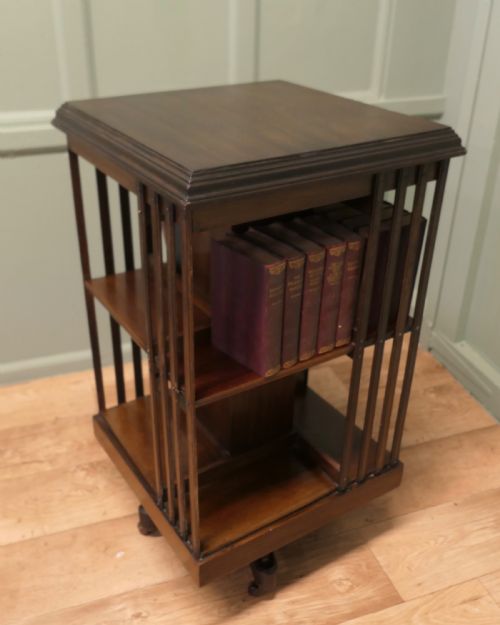
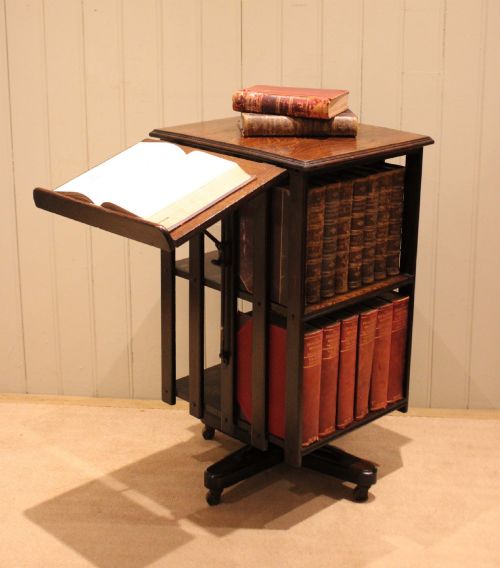
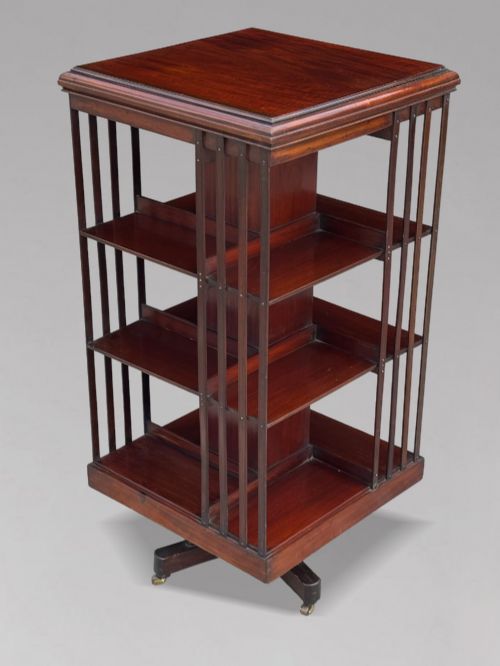
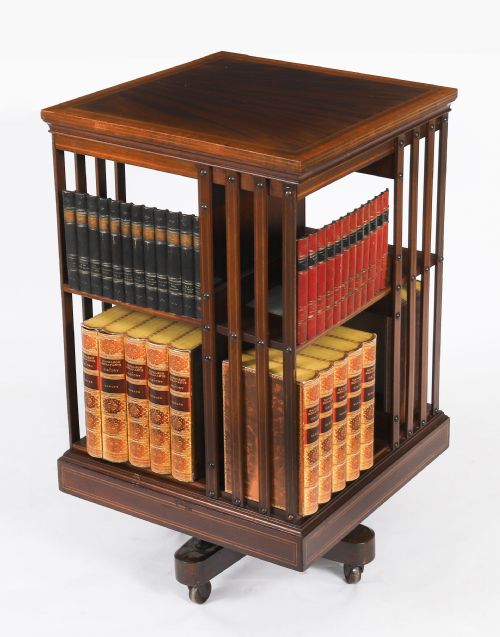
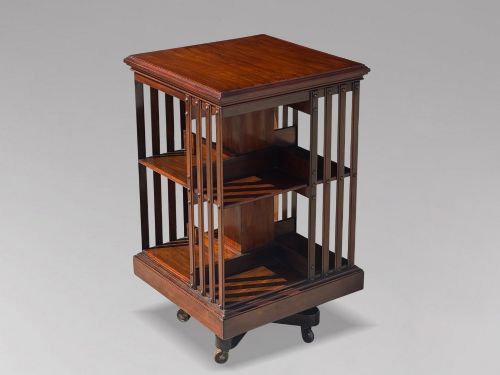
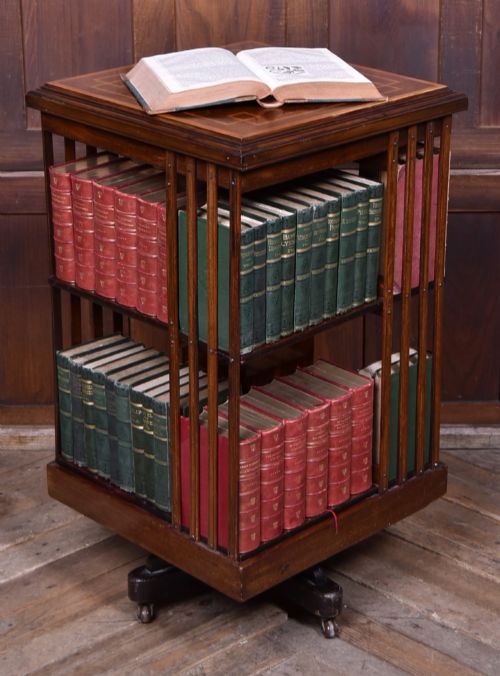
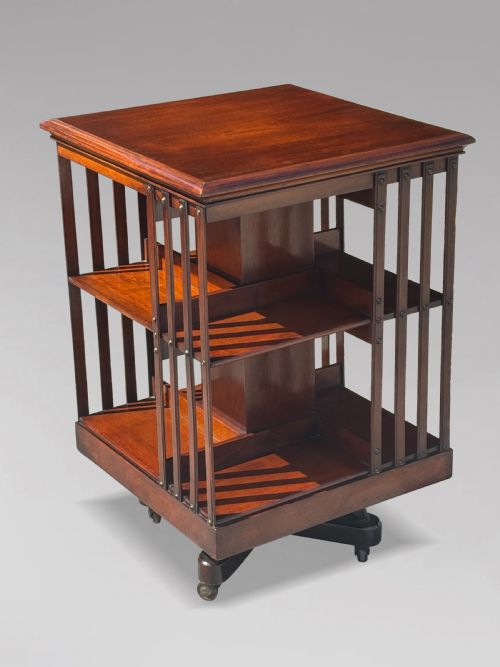
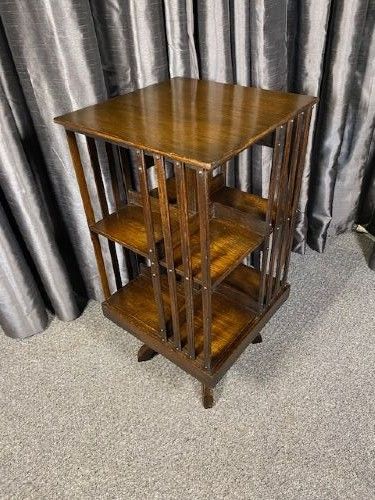
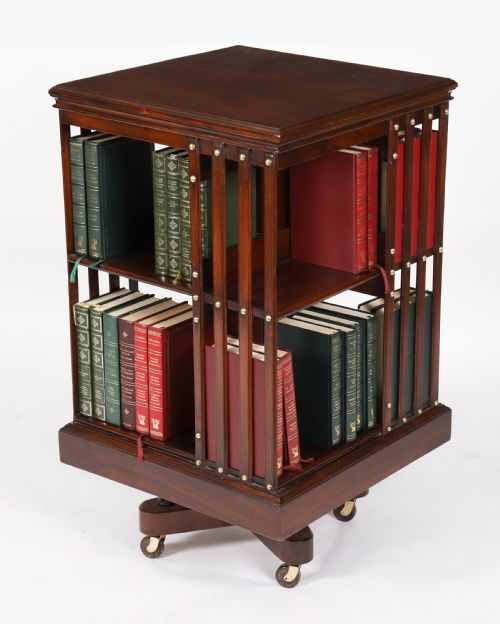
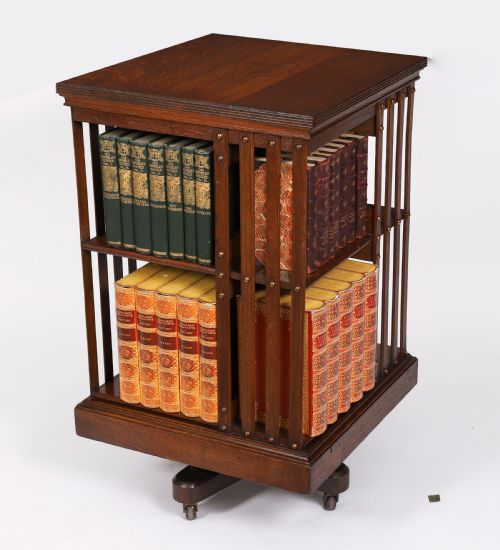
A victorian rotating bookcase is a compact piece designed to spin smoothly on a concealed base, keeping multiple volumes accessible from a single spot. Most examples encountered here date from the late nineteenth century and the Edwardian era.
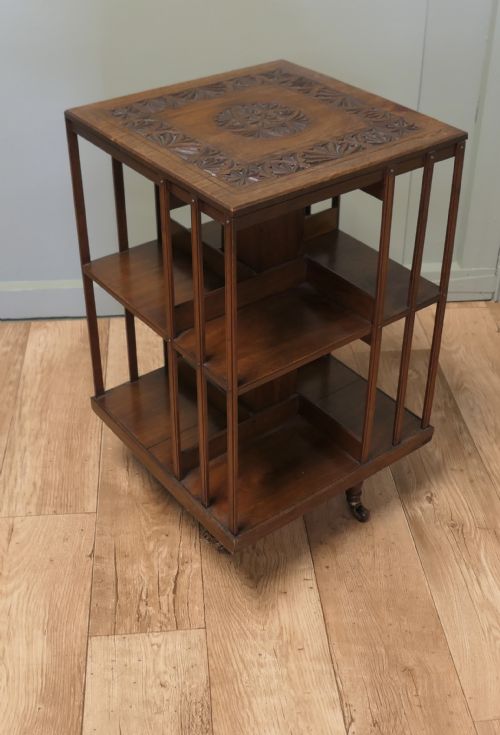
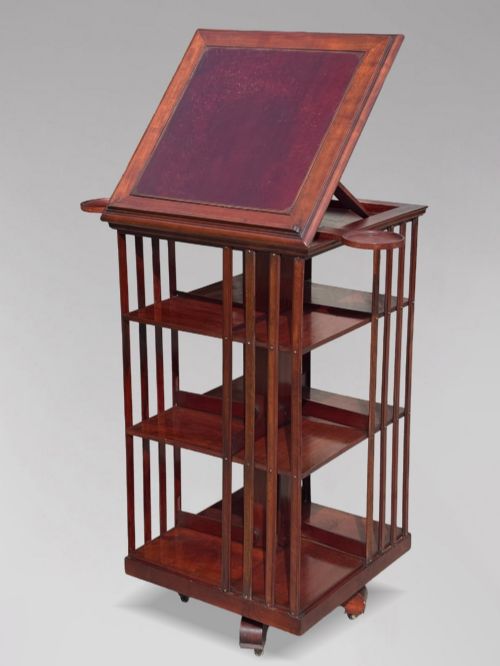
The standard form is square or circular with slatted sides to hold octavos and folios upright. Some variations appear as smaller table-top models or taller multi-tiered versions made for studies and libraries.
Makers utilised rich timbers including mahogany, walnut, and oak to suit the formal interiors of the period. Stylistic influences range from plain utilitarian designs to pieces featuring brass inlay and marble tops.
Materials and construction
Cabinet makers built the framework using solid timbers and flame mahogany veneers over sturdy pine or oak carcases. Timber selection dictated both the visual grain pattern and the structural strength needed to bear heavy loads of books.
Internal mechanisms relied on cast iron and brass components to ensure the revolving action remained balanced and smooth over decades of daily use. Cross-banding and boxwood stringing frequently decorated the top surfaces and shelves.
Victorian Rotating Bookcase Retail Price Guide 2026
Typical asking prices for victorian rotating bookcase among the pieces listed under this phrase on Sellingantiques today, from the lower quarter to the upper quarter. They describe what is for sale here now, not the wider market.
Listings for this phrase feature pieces predominantly in mahogany and oak, spanning the late nineteenth century into the Edwardian era.
Assessing quality and craftsmanship
Superior pieces demonstrate tight joinery at the slatted corners and feature finely turned columns or carved detailing rather than plain pressed mouldings. The stability of the central pivot mechanism determines how true the bookcase spins without wobbling.
Finer examples incorporate select timber veneers with matching grain patterns across the tiers and incorporate secondary woods like satinwood for contrast. The presence of maker stamps or high-grade brass and marble additions elevates the stature of the piece.
Maple & Co
The Victorian Rotating Bookcase Glossary
- Flame mahogany
- A timber veneer sliced from the branch junctions of the tree to produce a flickering, decorative wave pattern. This high-status finish was chosen for the primary display surfaces of better furniture.
- Revolving bookcase
- A freestanding or table-top unit mounted on a concealed central bearing that allows the entire structure to turn. It was designed to sit beside a desk or armchair for easy book selection.
- Satinwood
- A pale, hard exotic timber with a lustrous sheen used for banding and inlay work. It provides sharp visual contrast against darker woods like mahogany and walnut.
- Cross-banding
- A decorative border of veneer laid so that the grain runs at right angles to the main surface. This technique frames the top panel and adds structural stability to the edges.
Victorian Rotating Bookcase: Frequently Asked Questions
How do I care for a revolving mechanism?
Keep the central bearing clean and apply a small amount of appropriate lubricant only if the rotation becomes stiff over time.
Avoid overloading one side unevenly, as balanced weight distribution protects the internal iron and brass spindle from unnecessary wear.
Can these hold heavy modern books?
Standard Victorian models easily accommodate most hardcover novels and standard reference volumes within their slatted compartments.
Heavier oversized folios should be placed on the lower tiers to maintain a low centre of gravity and ensure smooth spinning.
Where should I place a rotating bookcase?
These pieces excel beside an armchair, desk, or sofa where books need to be reached without standing up.
Allow enough clearance on all sides for the full rotation of the shelves without striking nearby walls or furniture.
How do I distinguish Victorian from Edwardian pieces?
Victorian examples tend to use dense solid mahogany or oak with deeper tones and heavier carved details.
Edwardian pieces often feature lighter satinwood inlay, walnut timbers, and slightly more restrained proportions.