
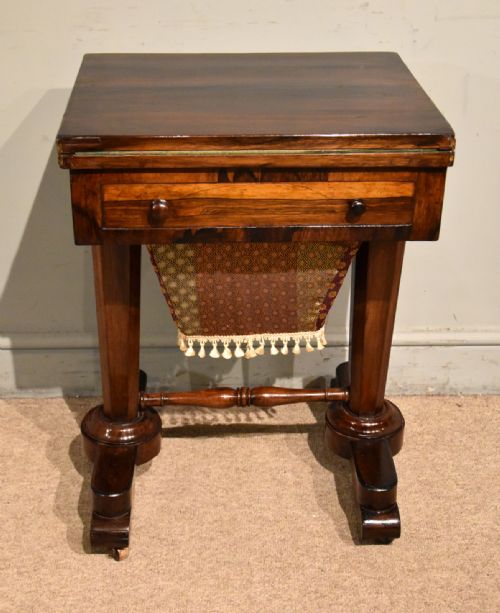


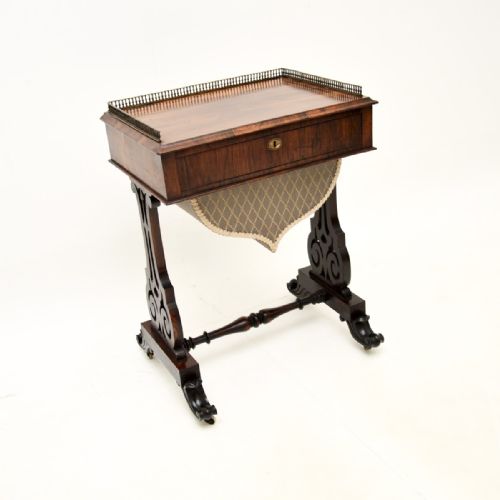


Victorian Rosewood Work Table
A victorian rosewood work table is a versatile domestic piece designed for needlework and small crafts, offering rich grain and compartmented storage.
Victorian Rosewood Work Table
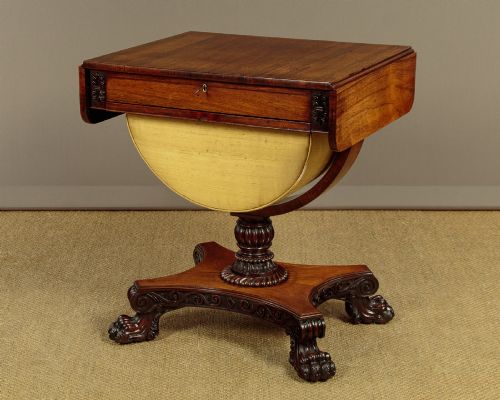
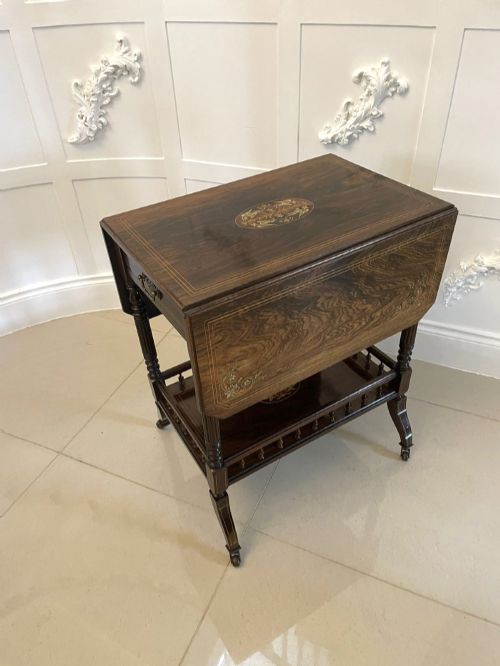
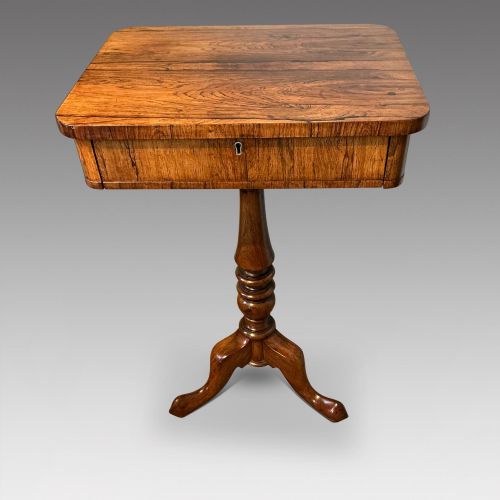
A victorian rosewood work table is a domestic piece designed for sewing, needlework, and small writing tasks, combining display surfaces with functional internal compartments. The most frequent versions on this page feature hinged lids over fitted work boxes, drop leaves, or tapering trumpet bodies supported on pedestals.
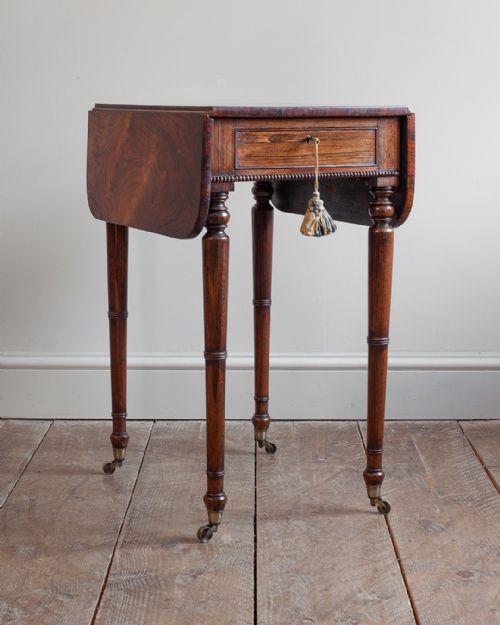
Makers produced these tables throughout the nineteenth century, with examples spanning the Regency, William IV, and Victorian periods. Forms range from simple pembroke and side tables to multi-functional games tables and octagonal sewing stands.
How They Were Made
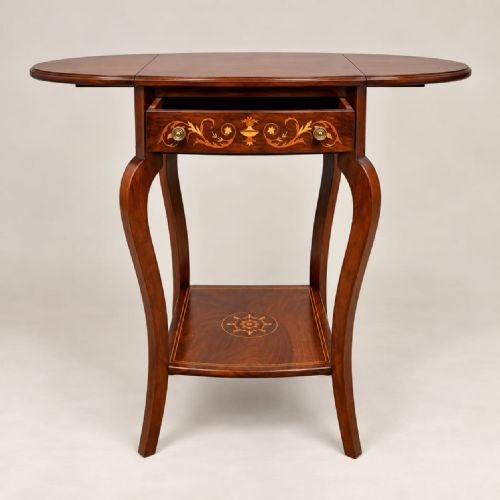
Cabinet makers utilised dense rosewood timber, often laid as veneers over secondary woods, to achieve deep grain patterns and polished dark surfaces. Many examples incorporate intricate satinwood inlay, marquetry, and brass hardware to ornament the hinged lids and pedestal bases.
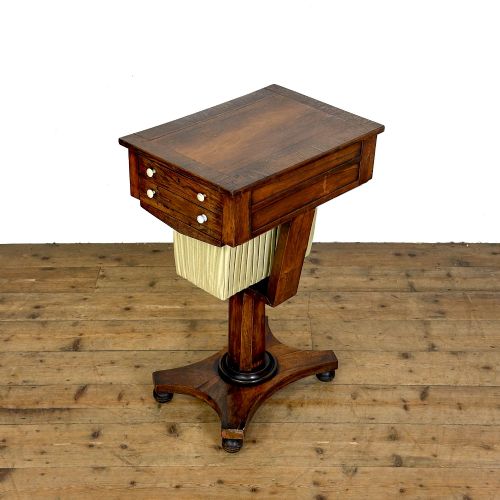
Internal compartments frequently employ silk, velvet, or fabric linings within fitted boxes, alongside pull-out storage bags designed for sewing materials and yarn.
Victorian Rosewood Work Table Retail Price Guide 2026
Typical asking prices for victorian rosewood work table among the pieces listed under this phrase on Sellingantiques today, from the lower quarter to the upper quarter. They describe what is for sale here now, not the wider market.
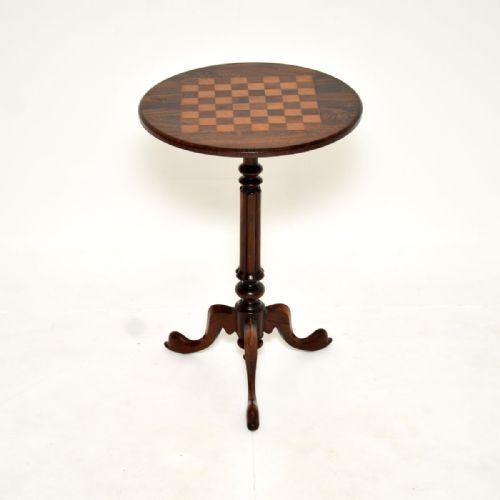
Form variations include sewing tables, trumpet work tables, games tables, and pembroke side tables equipped with drop leaves and fitted interiors.
What Varies in Quality
Quality rests upon the precision of the cabinet work, the complexity of the internal fittings, and the richness of the timber grain. Finer examples display meticulous marquetry, intact silk or velvet linings, and well-balanced pedestal proportions rather than plain surfaces.
Gillows·Holtzapffel
The Victorian Rosewood Work Table Glossary
- Trumpet table
- A work table featuring an octagonal or round body that flares outward toward the base, resembling the bell of a musical instrument. This form usually contains a fitted interior accessed via a hinged lid.
- Drop leaf
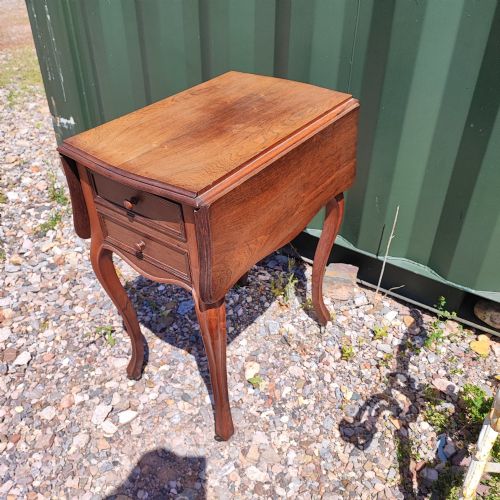
- A table top configuration featuring hinged flaps on one or two sides that can be raised to extend the surface or lowered when space is limited. Brackets or swing legs support the leaves when in use.
- Marquetry
- Decorative veneer work arranged in pictorial or geometric patterns using various coloured woods, brass, or shell. Craftsmen inlay these designs directly into the primary surface of the table.
- Pembroke table
- A small occasional table featuring two hinged drop leaves on opposite sides and a single drawer. It originated in the eighteenth century and remained popular through the Victorian period.
Victorian Rosewood Work Table: Frequently Asked Questions
What is a victorian rosewood work table used for?
These tables served as dedicated stations for sewing, embroidery, and small crafts within nineteenth-century domestic interiors. The integrated boxes and fabric bags kept threads, needles, and personal items organised near seating areas.
Over time, many adapted to serve as general occasional tables, lamp stands, or games surfaces in sitting rooms and parlors.
How do you tell the periods apart?
Earlier pieces from the Regency and William IV eras often display bolder architectural pedestals, carved paw feet, and heavier mahogany or rosewood proportions. Mid-to-late Victorian examples frequently incorporate lighter frames, trumpet-shaped bases, and detailed marquetry or satinwood inlay.
Late Victorian and French revival pieces lean toward delicate veneering styles and marquetry motifs inspired by continental cabinet making.
What is inside the compartment?
The interior typically contains a shallow tray with small lidded compartments, ivory or bone spool pegs, and needle holders. A suspended pleated silk or velvet bag hangs below to hold loose wools and unfinished sewing projects.
Some variations include writing slopes, folio stands, or reversible tops configured for chess and backgammon.
How do you care for rosewood furniture?
Rosewood surfaces require stable indoor humidity away from direct sunlight and heat sources to prevent timber movement and veneer lifting. Regular dusting with a soft, dry cloth preserves the polished finish without chemical buildup.
Original fabric or silk linings inside compartments benefit from gentle handling and protection from sharp objects to maintain their condition.