





Victorian Rosewood Balloon Back Chairs
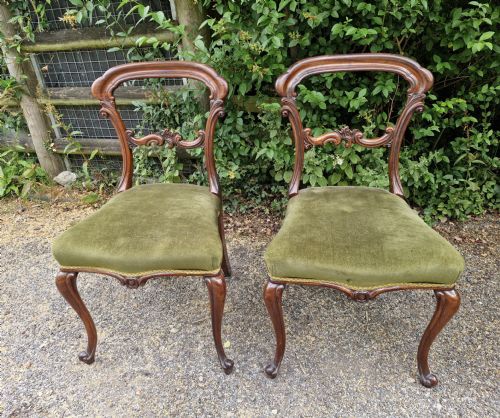
Victorian rosewood balloon back chairs combine curved timber framing with upholstered seating, offering refined seating forms originating in the nineteenth century.
Victorian Rosewood Balloon Back Chairs
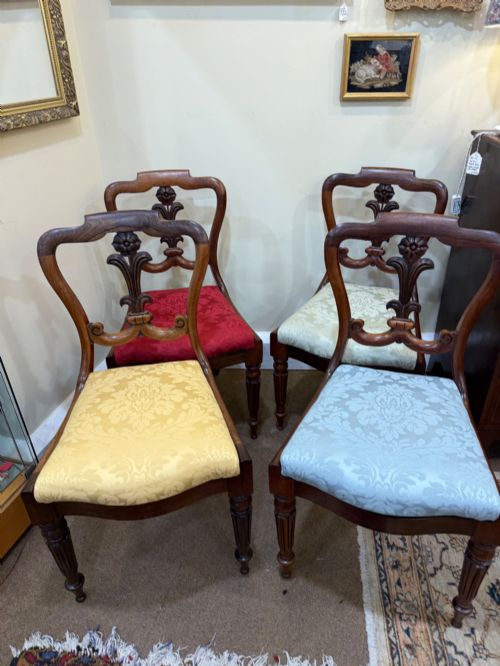
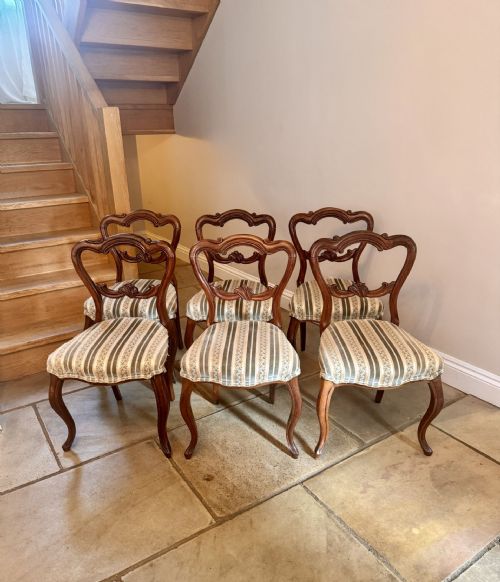
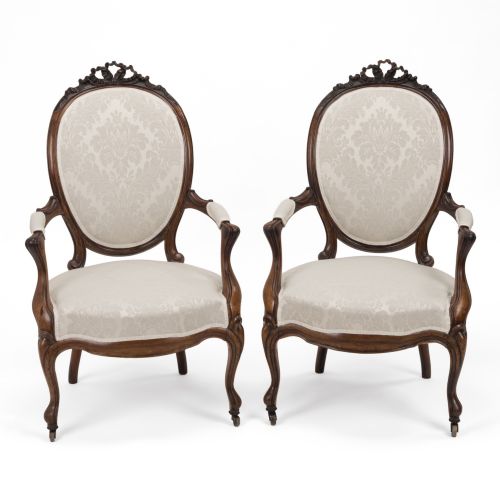
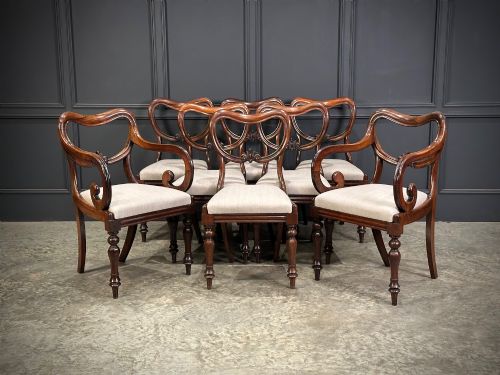
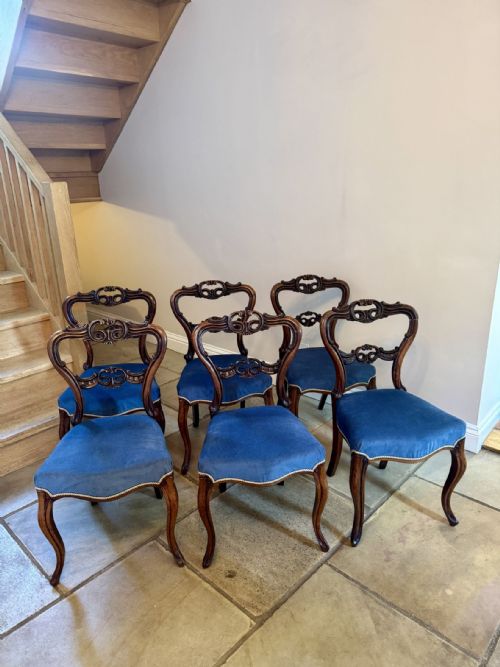
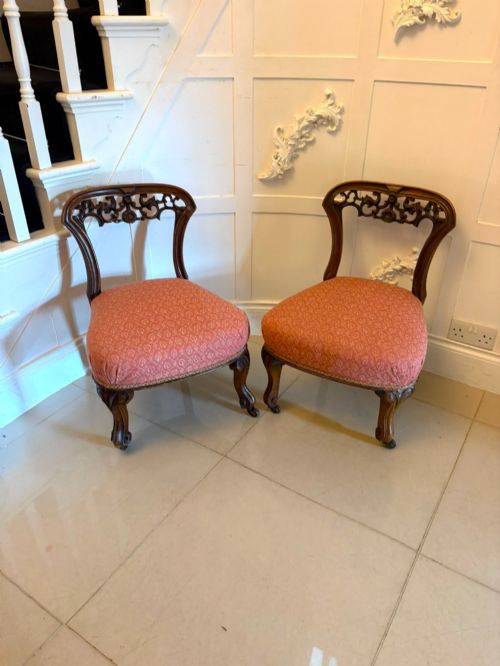
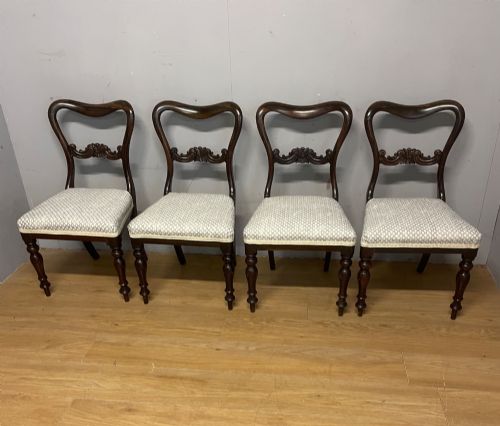
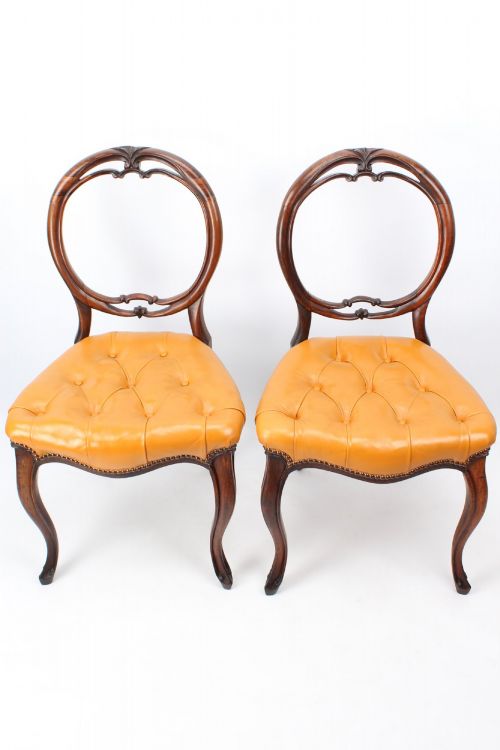
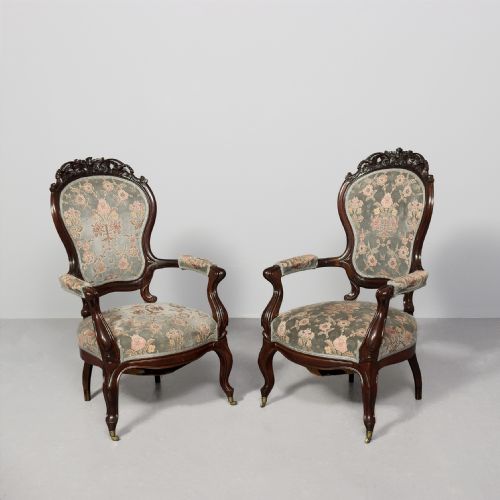
Victorian rosewood balloon back chairs are nineteenth-century seating forms defined by their characteristic curved, oval-shaped backrests resembling the profile of a balloon. They appear primarily as dining chairs, alongside pairs of side chairs, armchairs, desk chairs, and bedroom chairs.
Most examples date from the Victorian period, specifically the middle decades around eighteen-fifty and eighteen-sixty, though some connect to earlier William IV, Regency, and Victorian Rococo Revival styles. Buyers typically encounter them in sets of four, six, or eight, as well as in pairs.
How They Were Made
Cabinet makers utilised dense, richly grained rosewood to construct the continuous curved frames of the balloon backs, often shaping the timber through steam bending or careful carving. Many frames display detailed foliate carving, particularly along the top rail and cabriole legs.
The drop-in or fixed seats feature varied upholstery materials, including traditional fabric, velvet, textile, leather, and needlepoint work, occasionally secured with brass detailing.
Victorian Rosewood Balloon Back Chairs Retail Price Guide 2026
Typical asking prices for victorian rosewood balloon back chairs among the pieces listed under this phrase on Sellingantiques today, from the lower quarter to the upper quarter. They describe what is for sale here now, not the wider market.
Some chairs arrive with removable backs, hinting at nineteenth-century guests who preferred customisable lumbar angles over strict etiquette.
What Varies in Quality
Quality rests in the crispness of the timber carving and the structural integrity of the continuous balloon back frame. Superior examples demonstrate substantial rosewood scantlings and careful joinery that resists the stresses placed on dining seating over generations.
The choice of upholstery materials and the retention of original needlepoint or fabric elements also distinguish standard utility seating from finer decorative pieces.
The Victorian Rosewood Balloon Back Chairs Glossary
- Balloon back
- A chair back shaped in a continuous oval curve resembling a balloon, popular during the nineteenth century. This ergonomic profile supports the spine while presenting a graceful silhouette.
- Rosewood
- A dense, dark timber featuring pronounced figuring and deep colour variations. It was heavily favoured by Victorian makers for high-end dining and parlour furniture.
- Cabriole leg
- A furniture leg that curves out and then tapers inward, typically ending in a scroll or plain foot. It appears frequently on mid-nineteenth-century seating.
- Needlepoint
- A form of counted thread embroidery used historically for chair seat covers. It provides a durable and decorative surface for antique upholstery.
Victorian Rosewood Balloon Back Chairs: Frequently Asked Questions
How are balloon back chairs dated?
Dating relies on stylistic shifts in the timber framing, the curvature of the backrest, and leg shapes such as cabriole or turned supports. Mid-nineteenth-century examples often display sharper carving and richer rosewood grains than later iterations.
Evidence from the period points toward specific decades like eighteen-fifty and eighteen-sixty for the majority of these dining and side chairs.
Were these chairs used only for dining?
While the larger sets served formal dining rooms, smaller groupings and individual pieces functioned as desk chairs, bedroom chairs, and hall seating. Pairs were frequently placed in parlours or drawing rooms for social gatherings.
The versatility of the balloon back design suited domestic spaces throughout the Victorian household.
How should rosewood furniture be maintained?
Maintenance involves keeping the dense timber away from direct heat sources and sudden humidity changes to prevent splitting. Regular dusting with a soft cloth preserves the natural lustre of the polished rosewood surface.
Harsh chemical polishes should be avoided in favour of traditional waxes suited to antique hardwoods.
What defines the Regency influence on these chairs?
Regency elements introduce classical restraint, leaner proportions, and occasional brass inlay or sabre legs into nineteenth-century seating. These transitional pieces bridge the gap between earlier classical revivals and full Victorian styles.
They retain the characteristic rosewood material while exhibiting slightly stricter geometric lines in the frame.