



Victorian Rose Gold Pin
A victorian rose gold pin brings together warm metal and old stones in forms that sit easily on a lapel or scarf.
Victorian Rose Gold Pin
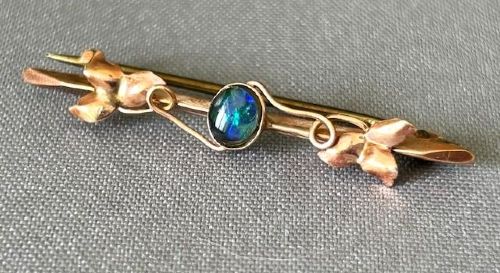
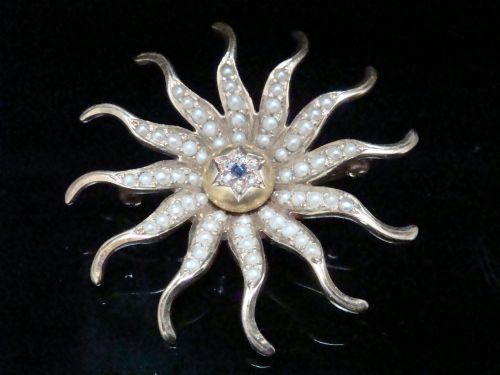
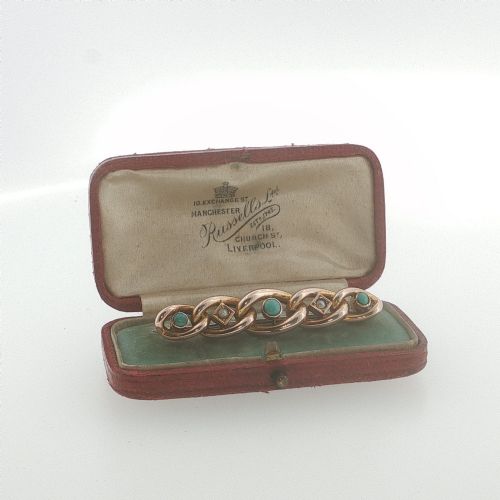
A victorian rose gold pin most commonly appears as a bar brooch, stick pin, or cluster piece set with gems such as opal, turquoise, and seed pearls. These jewels date from the nineteenth century through the Edwardian era and into the nineteen-twenties, showing styles that range from simple linear mounts to elaborate floral sprays and starbursts.
The heavier pieces function as both pendants and brooches, offering two ways to wear a single item of jewellery. Simpler stick pins and bar brooches provide understated detail, while larger star and butterfly forms command attention through intricate metalwork and stone settings.
How they were made
Goldsmiths worked with varying purities of gold, sometimes combining rose gold with yellow gold, silver, or platinum to alter the visual tone of the piece. Stones such as rose-cut and old-cut diamonds, garnets, and sapphires were hand-set into the metal mounts, often backed with silver in earlier examples to enhance their brilliance.
Assay marks and hallmarks stamped into the metal reveal the origins of pieces, such as the Chester mark found on certain bar brooches. Construction methods rely on traditional soldering and wire-work techniques that give structural integrity to delicate motifs like leaves, swallows, and bows.
Victorian Rose Gold Pin Retail Price Guide 2026
Typical asking prices for victorian rose gold pin among the pieces listed under this phrase on Sellingantiques today, from the lower quarter to the upper quarter. They describe what is for sale here now, not the wider market.
Swallow motifs flutter across these Edwardian pins, bringing a touch of Victorian sentiment straight to the lapel.
What varies in quality
The quality of a piece rests on the precision of the stone-setting and the condition of the original components, such as pin stems and catches. Finer examples display well-matched gems and crisp detail in hand-carved or chased metal motifs.
The presence of clear hallmarks adds assurance regarding metal purity and origin, distinguishing standard workshop production from better-documented pieces.
The Victorian Rose Gold Pin Glossary
- Rose-cut
- A diamond cut featuring a flat base and a domed crown with triangular facets that meet at a point. This style was favoured in older jewellery to catch candlelight.
- Bar brooch
- A slender horizontal metal pin, often set with stones or central motifs, designed to fasten clothing. They became especially popular during the nineteenth and early twentieth centuries.
- Stick pin
- A long pin topped with a decorative head, originally used to secure cravats or lapels. The head frequently incorporates gems or goldwork matching larger brooches of the period.
- Suffragette chain
- Jewellery incorporating specific gemstone combinations associated with the women's suffrage movement. These pieces typically feature stones in purple, white, and green.
- Assay mark
- A stamp or series of stamps indicating the purity of the precious metal and the office that tested it. These marks help determine the age and origin of a piece.
Victorian Rose Gold Pin: Frequently Asked Questions
How do I wear a victorian rose gold pin safely?
Most of these pieces attach securely using traditional pin stems and C-clasp or safety catches. Heavier pendant brooches benefit from sturdy fabrics like wool or tweed to support their weight without pulling.
For delicate silk or cotton garments, a stick pin or lightweight bar brooch places less strain on the material. Ensure the clasp is fully engaged before wearing the piece out.
What is the difference between rose gold and yellow gold?
Rose gold contains an alloy of copper mixed with gold and silver, which gives the metal its characteristic warm pinkish hue. Yellow gold maintains a traditional golden colour through a balanced alloy of silver and copper.
Many antique pieces combine both metals, or pair gold mounts with silver settings for the stones, creating subtle contrast within a single item.
Can these brooches be worn as pendants?
Certain larger pieces, particularly starbursts and bow brooches, incorporate integrated loops or hinged bails designed to accommodate a chain. This dual functionality was common in the nineteenth century.
Checking the reverse of the mount reveals whether a hidden loop exists for hanging the piece around the neck.
How should I clean my antique pin?
Gentle cleaning with a soft microfibre cloth removes everyday dust and skin oils from the metal and stones. Avoid harsh chemical dips, especially when dealing with softer organic gems like seed pearls or opals.
Professional jewellers can inspect the setting claws if stones feel loose or if the pin requires deeper maintenance.