


Victorian Rose Cut Diamond
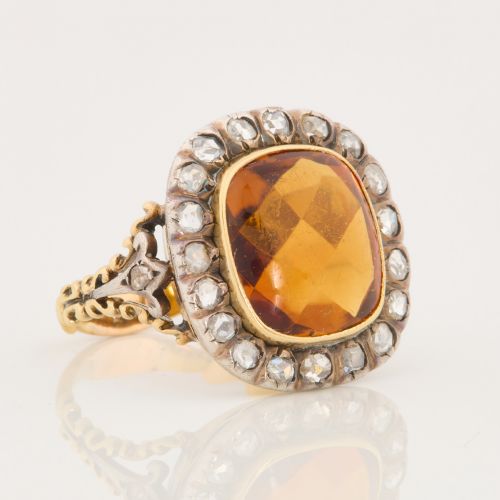
A victorian rose cut diamond brings a soft, domed facet pattern to rings, brooches, and pendants that catches candlelight rather than modern electric glare.
Victorian Rose Cut Diamond
A victorian rose cut diamond brings together stones shaped with flat bases and triangular crown facets arranged in a dome, paired predominantly with rings, brooches, and pendants.
Most examples date from the nineteenth century, spanning early Victorian to late Edwardian periods, frequently incorporating clusters, starbursts, and floral motifs.
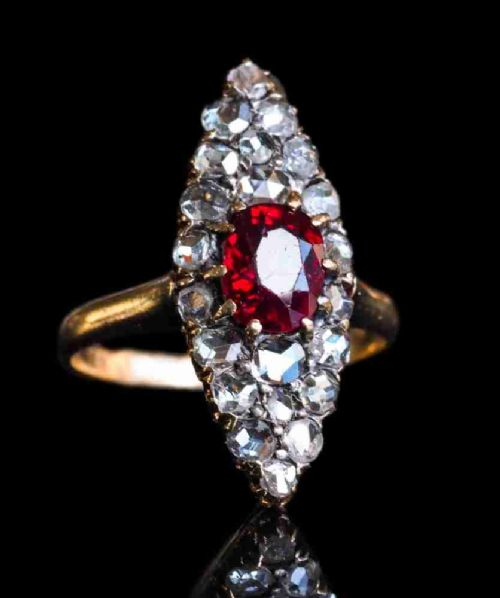
These pieces often combine diamonds with coloured gemstones such as rubies, sapphires, garnets, and turquoise, mounted in yellow gold, rose gold, or silver-topped gold.
How They Were Made
Goldsmiths set stones by hand into silver laid over gold backings, a method that kept white metals bright against the diamond tables before the widespread use of platinum.
Mounts utilised high-carat yellow and rose gold, often shaped into intricate wirework, cluster settings, and solid cast bands bearing hallmarked dates.
Enamel work, including guilloche and blue or green details, frequently framed the central stones alongside split pearls and cabochon gems.
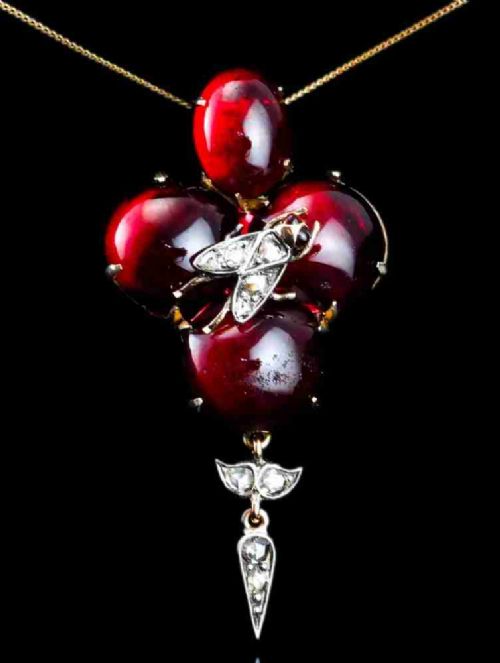
Snakes, swallows, and beetles made of gold and rose-cut diamonds served as Victorian symbols of eternal love and fidelity.
What Varies in Quality
The symmetry and dome height of the rose cut stones dictate much of the visual depth, alongside the proportion of foil or closed-back settings used to reflect light underneath.
Workmanship shows in the crispness of the surrounding gold or silver granulation, the secure tension of claw or collet settings, and the preservation of delicate enamel.
The integration of secondary stones, such as matched natural pearls or unheated rubies, alters the overall harmony and survival condition of the piece.
The Victorian Rose Cut Diamond Glossary
- Rose cut
- A historic diamond cut featuring a flat base and a domed crown with triangular facets. It produces a gentle, glassy lustre rather than the sharp brilliance of modern brilliant cuts.
- Silver-topped gold
- A mounting technique where a thin layer of silver is soldered to a gold backing. This kept the metal holding the stones bright white while utilising sturdy gold underneath.
- Cabochon
- A gemstone shaped and polished with a smooth, convex surface rather than faceted. These stones appear frequently as garnets, opals, and turquoises in nineteenth-century clusters.
- Guilloche
- An ornamental engraving technique producing intricate geometric patterns beneath translucent enamel. It provides coloured background depth behind diamonds and pearls in lockets and pendants.
- Navette
- A boat-shaped marquise silhouette that elongates rings and brooches across the finger. This outline frames central diamond clusters alongside rubies or sapphires.
Victorian Rose Cut Diamond: Frequently Asked Questions
How do I care for a victorian rose cut diamond ring?
Clean these pieces gently with a soft brush and warm soapy water, avoiding harsh ultrasonic cleaners that can loosen closed-back foils or damage delicate enamel.
Store them separately in lined boxes to protect the softer gold alloys and prevent scratching against harder modern jewellery.
Are these diamonds certified natural?
Many stones are period originals recovered from nineteenth-century jewellery, though specific laboratory certification varies across individual listings. Some pieces include explicit gemological reports noting unheated rubies or natural pearls alongside the diamonds.
Documentation generally relies on period hallmarks, assay office marks, and traditional mounting characteristics rather than modern grading sheets.
Can I wear a victorian brooch as a pendant?
Several pieces are designed with dual fittings featuring both pin stems and hidden hanging loops or folding Bails. This allows them to function interchangeably as brooches or necklaces depending on the mount.
For pieces without a loop, conversion requires professional assistance from a jeweller to avoid damaging the original silver-topped gold structure.
What metal purity should I expect?
The listings feature a range of gold purities including nine-carat, fourteen-carat, fifteen-carat, and eighteen-carat yellow and rose gold, alongside unmarked high-carat gold and silver settings.
British pieces frequently display stamped town marks, maker stamps, and crown standards, while French items often bear eagle or boar head hallmarks.