






Victorian Rose Accent Chair
A victorian rose accent chair brings mid-century 19th-century comfort and low seating into a modern drawing room.
Victorian Rose Accent Chair
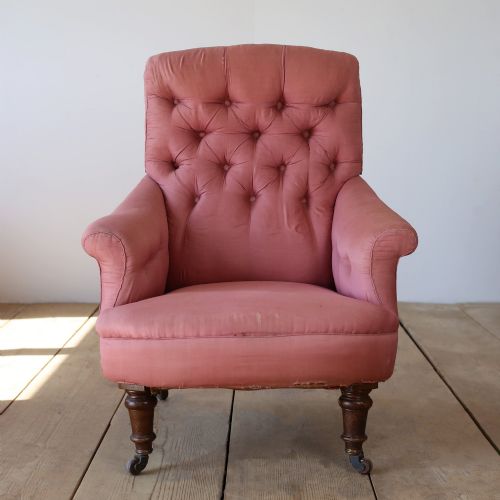
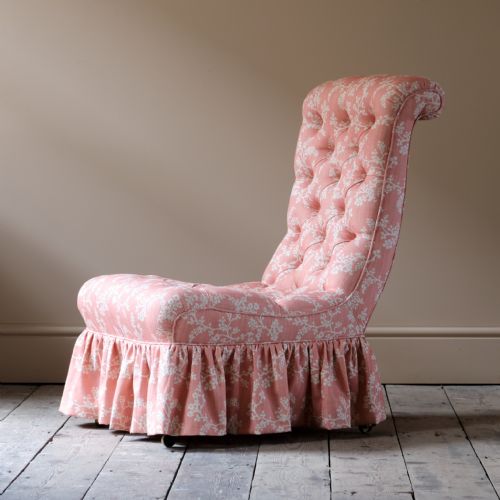
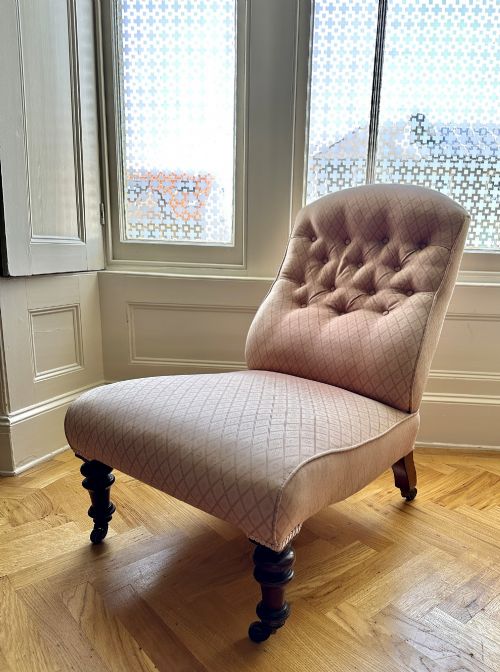
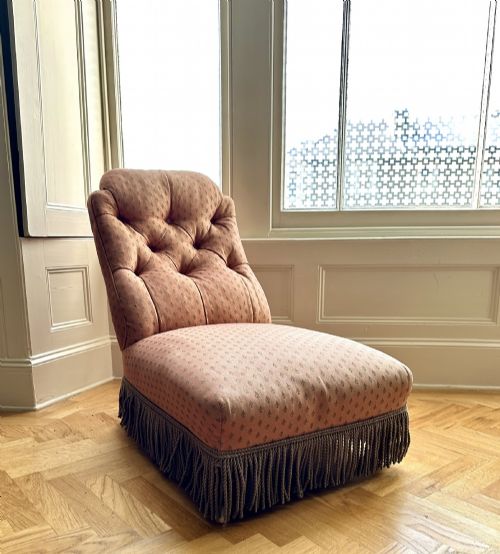
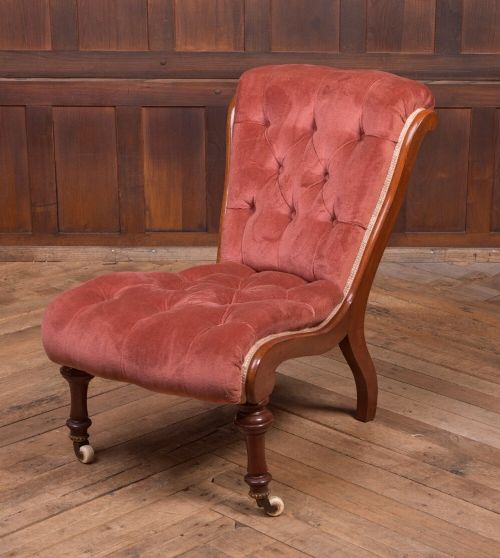
A victorian rose accent chair covers low-seated bedroom and slipper chairs from the nineteenth century, including nursing and fireside chairs. These low-slung seats were designed for ladies' chambers and private parlours during the reign of Queen Victoria.
The selections on this page span the periods from eighteen-fifty to eighteen-seventy, showing the transition from mid-century forms to late Victorian styles. Button back upholstery and open timber frames dominate the available selection.
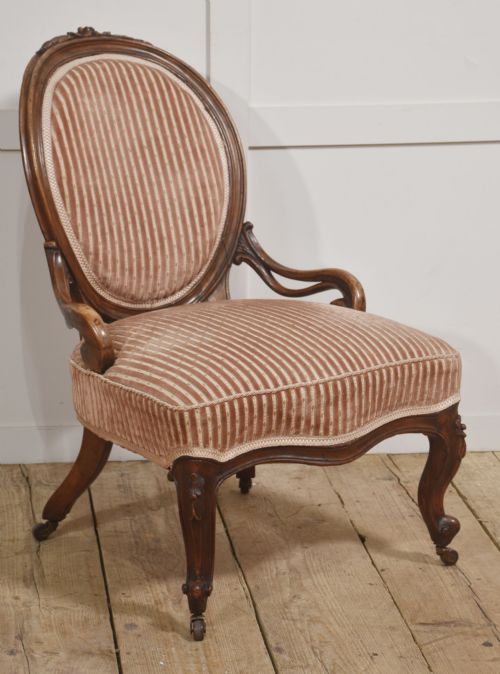
Buyers will encounter various forms, from walnut framed fireside armchairs to mahogany nursing chairs and slipper chairs finished with decorative fringe. Each piece serves as a low accent seating option for bedroom or drawing room placement.
How they were made
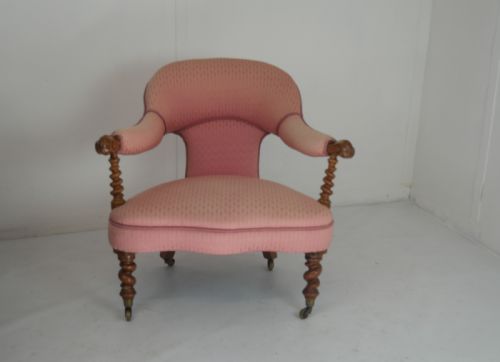
Cabinet makers utilised solid timbers such as mahogany, walnut, and general wood to construct the sturdy internal frames of these chairs. Carved walnut frames often feature shaped oval backs and decorative woodwork.
Upholstery techniques involved deep buttoning on plush velvet, textile, and fabric coverings, sometimes accented with fringe trim along the base. Iron backs and brass elements occasionally provided structural support within the nineteenth-century framework.
Listings on this page feature nineteenth-century seating constructed from walnut, mahogany, and brass.
What varies in quality
The refinement of the timber carving and the sophistication of the frame silhouette dictate the grade of a nineteenth-century seat. Finely shaped mahogany and carved walnut structures represent the higher tier of cabinet work.
Upholstery presentation and fabric selection also separate standard examples from superior pieces, particularly where historic textiles or button-backed detailing remain intact. Maker attribution further elevates the standing of an individual armchair.
Gillows
The Victorian Rose Accent Chair Glossary
- Slipper chair
- A low-seated bedroom chair designed without arms to allow women to dress easily. These Victorian pieces sit close to the floor.
- Nursing chair
- A low armchair originally intended for feeding infants in Victorian chambers. They typically feature a padded back and low seat height.
- Button back
- An upholstery style where depressions are created by pulling tethers through the padding and securing them with buttons. This secures the internal stuffing and creates a tufted pattern.
- Open armchair
- A seat featuring open wooden arms rather than fully upholstered sides. The timber frame remains visible around the cushioned areas.
Victorian Rose Accent Chair: Frequently Asked Questions
Where did they place these chairs?
Victorian ladies placed these low seats in bedrooms, dressing rooms, and intimate drawing room corners. Their compact proportions suited private chambers rather than large formal dining spaces.
The low height also made them practical as fireside seating where warmth from the hearth was concentrated near the floor.
How do I spot a Victorian piece?
Examine the timber species and construction methods typical of the nineteenth century, such as solid walnut or mahogany framing. Look for stylistic indicators like button-backed upholstery and Rococo revival carved details.
Dates cluster around the mid to late nineteenth century, reflecting the prevailing domestic fashions of that era.
Are they comfortable for daily sitting?
These nineteenth-century chairs offer a supportive upright posture due to their firm internal padding and button-backed construction. Their low seat height provides a distinct lounging experience compared to modern armchairs.
They function well as reading seats or decorative accents in contemporary living spaces.
What fabrics were originally used?
Velvet, patterned textiles, and woven fabrics dominated nineteenth-century upholstery choices for drawing room and bedroom seating. Rich pink and red velvet tones frequently appeared on fine Victorian frames.
Many surviving pieces retain either period fabric or sympathetic modern replacement textiles.