
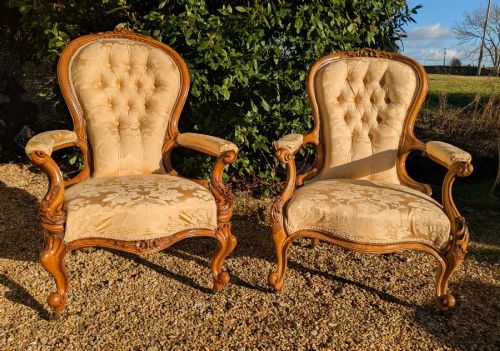
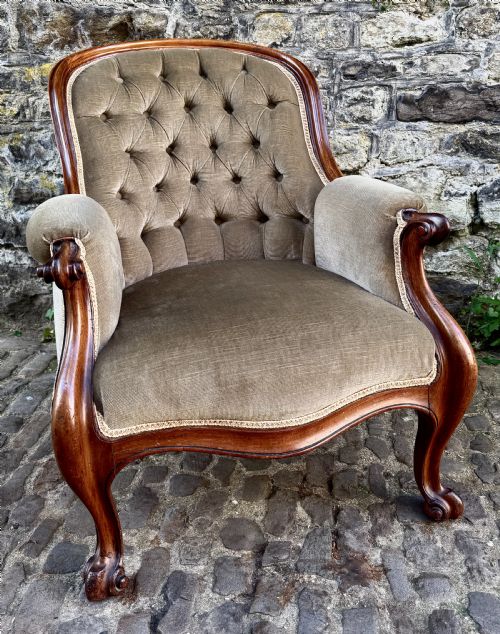
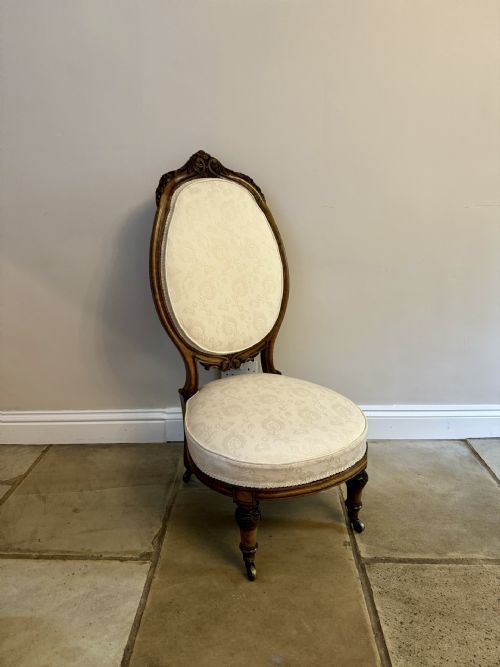
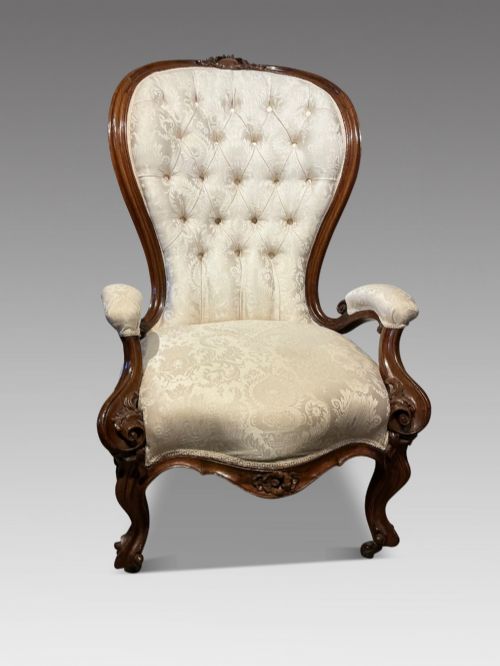


Victorian Rococo Armchair
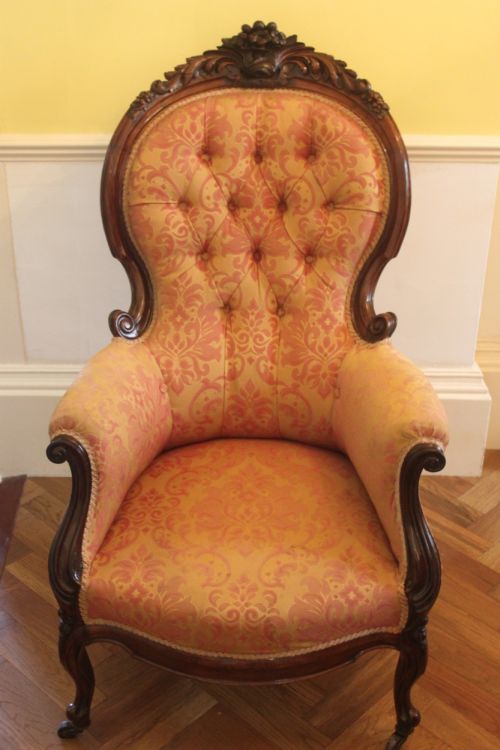
These walnut and mahogany victorian rococo armchairs combine curved frames with rich upholstery to anchor a room.
Victorian Rococo Armchair
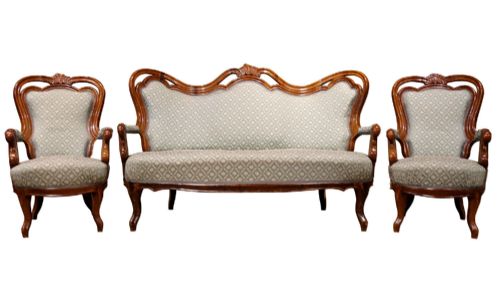
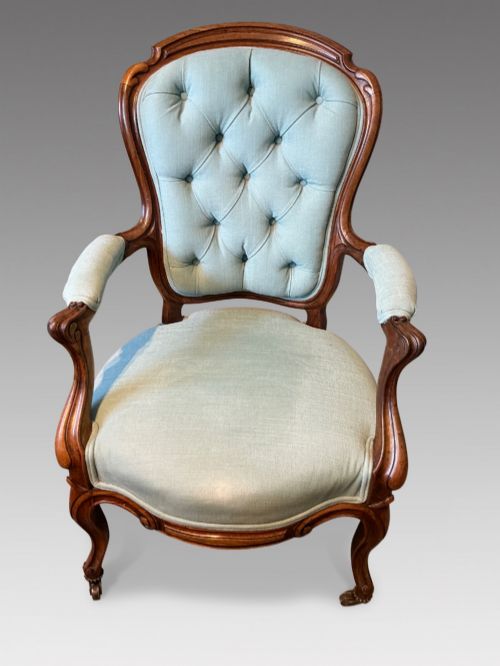
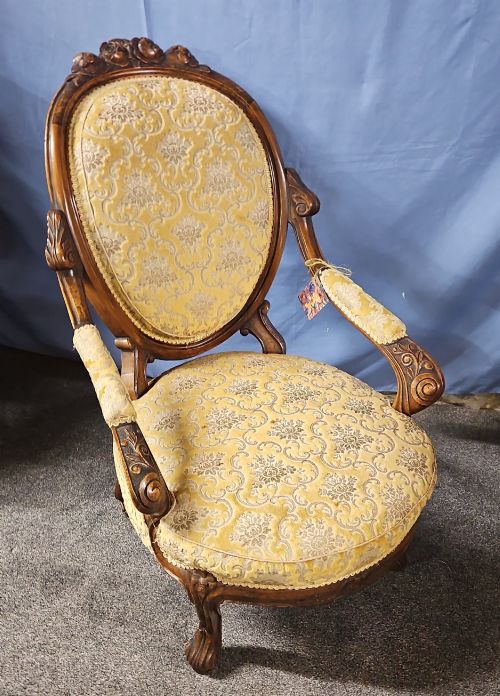
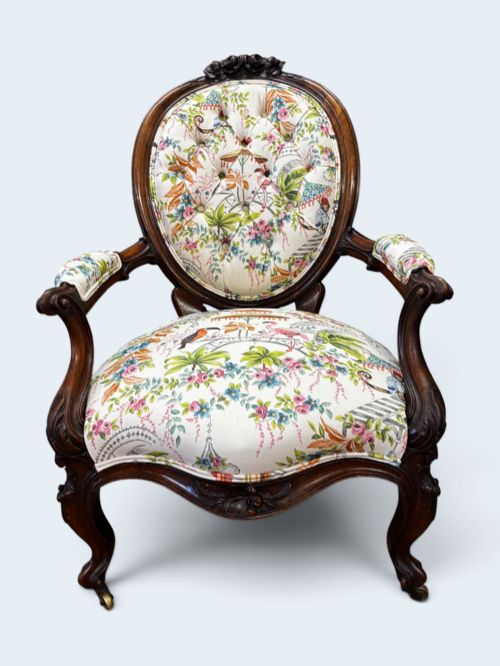
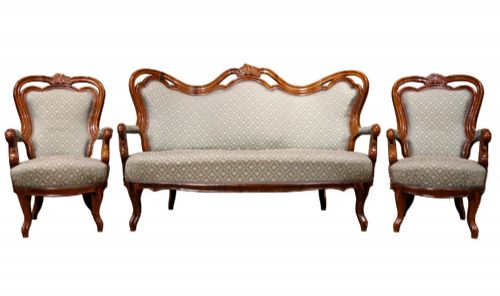
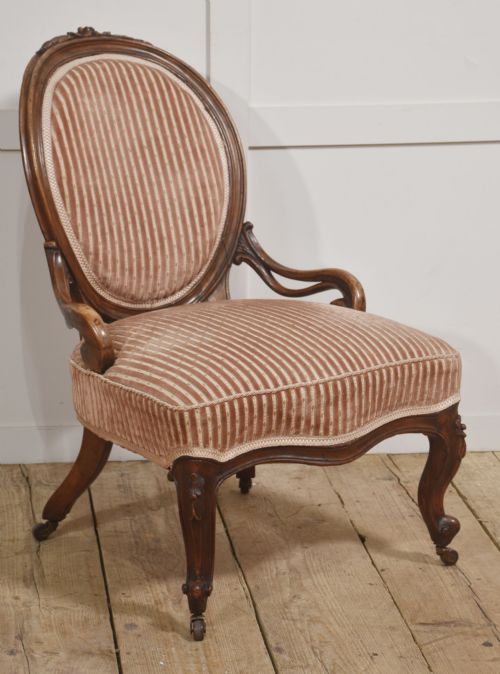
A victorian rococo armchair brings curved walnut or mahogany frames and distinct carved details into a Victorian interior. The selection on this page ranges from compact ladies chairs and nursing chairs to broad gentleman's armchairs and complete salon suites.
Most examples date through the nineteenth century, reflecting revival styles that borrow from Louis XV and French rococo forms. Pieces appear with open arms, spoon backs, and balloon backs alongside needlework, velvet, and textile upholstery.
Materials and construction
Cabinetmakers shaped these frames primarily from solid walnut and mahogany, occasionally using rosewood or ebonised timber. Carved ornament follows the contours of the wood, highlighting crest rails, cabriole legs, and scrollwork.
Frames hold sprung and padded interiors covered in contemporary or replacement upholstery fabrics. Brass castors support the legs on certain larger library and salon armchairs for ease of movement.
Object types include nursing chairs, ladies chairs, gentleman's armchairs, and three-piece salon suites featuring settee and chair combinations.
Judging the execution
Depth and crispness of the hand carving separate standard production from superior examples. Timber selection dictates visual weight, with figured walnut and rich mahogany showing greater depth in the grain.
Proportion and structural harmony define the finer pieces, particularly where cabriole legs meet shaped seat rails. The quality of the joinery beneath the upholstery determines how well the frame endures daily sitting.
The Victorian Rococo Armchair Glossary
- Cabriole leg
- A furniture leg that curves outward at the knee and tapers inward to a foot, typical of rococo revival seating. This design echoes animal limbs with smooth, sweeping lines.
- Spoon back
- A padded chair back shaped like the bowl of a spoon to fit the human spine. This ergonomic form appears frequently on Victorian ladies and nursing chairs.
- Salon suite
- A matched set of seating comprising a settee and armchairs intended for formal entertaining. These groupings share identical timber framing and textile covers.
- Petit point
- A fine counted-thread needlework technique executed on canvas, used for upholstery on nineteenth-century chair seats and backs. It allows for intricate pictorial and floral patterns.
Victorian Rococo Armchair: Frequently Asked Questions
Where should I place a victorian rococo armchair?
These armchairs suit reception rooms, bedrooms, or studies where their curved profiles stand away from walls. Pair a single open armchair with a reading lamp or place a matching pair of gentleman's and ladies chairs by a fireplace.
Consider the scale of the room when positioning these pieces, as open arms and cabriole legs require space around them to show the carving properly.
How do I care for the wooden frame?
Dust the carved walnut or mahogany regularly with a dry, soft cloth to prevent buildup in the recessed areas. Avoid placing the chair near direct heat sources or strong sunlight that can dry out the timber.
Apply a microcrystalline wax sparingly once or twice a year to nourish the polish without leaving a heavy film.
Can I use these chairs every day?
Victorian seating was built for domestic use, but nineteenth-century frames require thoughtful treatment today. Check the stability of the joints and the condition of the internal webbing before regular seating.
Lighter salon and nursing chairs suit occasional use, while heavier mahogany gentleman's armchairs handle heavier daily service.
How do I distinguish early Victorian from later pieces?
Early Victorian examples often feature denser mahogany and restrained carving, while later nineteenth-century pieces embrace more flamboyant walnut rococo revival curves. Look at the boldness of the cabriole legs and the complexity of the crest rail ornamentation.
Later Victorian suites from the eighteen-eighties and nineties frequently display lighter timber tones and more elaborate floral crests.