





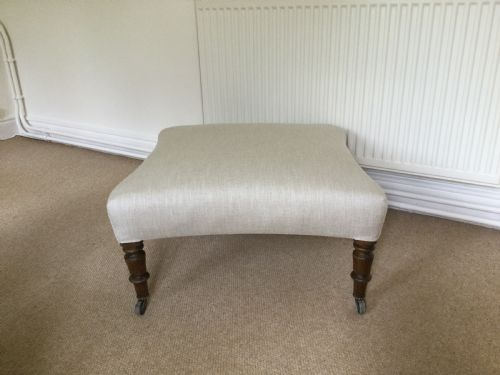


Victorian Rectangular Footstool
These Victorian rectangular footstools combine solid timber frames with traditional upholstery to provide practical low seating.
Victorian Rectangular Footstool
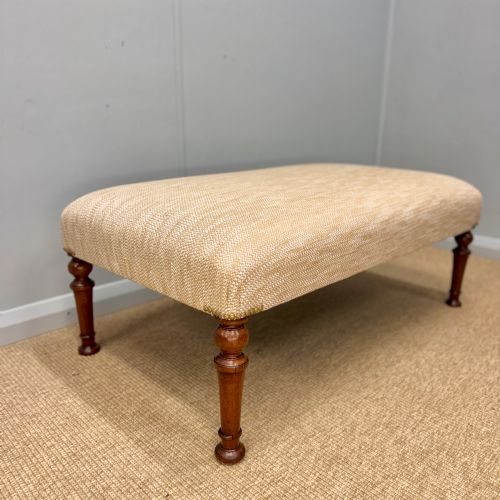
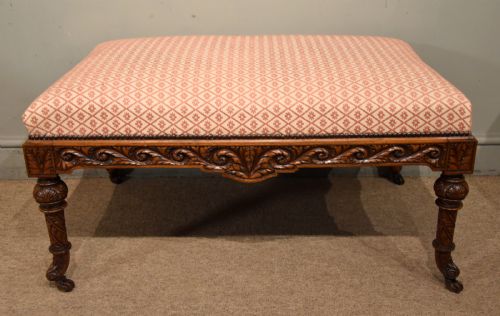
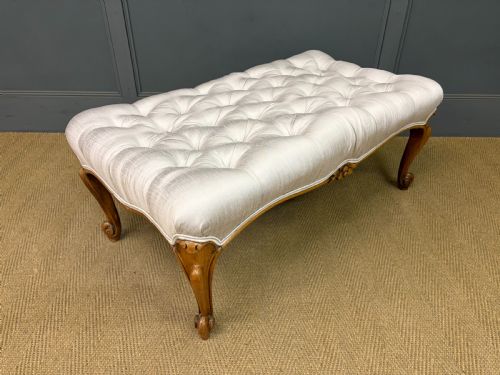
A Victorian rectangular footstool takes many forms across this selection, ranging from small dressing stools to large salon pieces and country house ottomans. The standard shape provides a stable low platform designed for resting feet or providing casual seating.
Makers shaped these timber frames from dense hardwoods like mahogany, rosewood, walnut and oak, often incorporating carved details or turned supports. Many examples rest on brass castors to ease movement across heavy carpets.
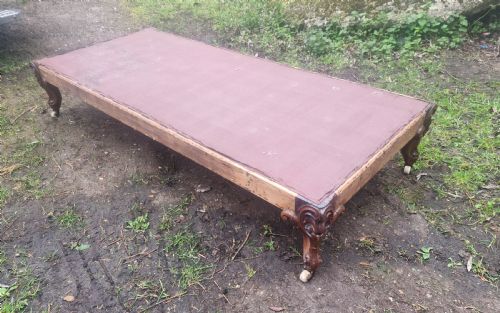
Upholstery defines much of the upper surface, utilising buttoned leather, woven rattan, cane, velvet and damask textiles. Some items retain lift-out seats or arrive ready for fresh fabric selection.
Assessing quality in period stools
Quality rests upon the weight and selection of the timber, where dense grain and crisp hand-carving distinguish finer salon pieces from utilitarian items. The depth of the frame and the integrity of the underlying joinery dictate structural longevity.
Victorian Rectangular Footstool Retail Price Guide 2026
Typical asking prices for victorian rectangular footstool among the pieces listed under this phrase on Sellingantiques today, from the lower quarter to the upper quarter. They describe what is for sale here now, not the wider market.
Some industrious Victorians clearly put their feet up so hard they required sturdy brass castors just to keep the room in order.
Howard and Sons
The Victorian Rectangular Footstool Glossary
- Castor
- A small wheel attached to the base of furniture legs to facilitate movement across floor coverings. These are frequently cast in brass on nineteenth-century seating.
- Damask
- A reversible figured fabric woven on a jacquard loom with patterns formed by contrasting warp and weft threads. It provides a formal, decorative top covering for salon furniture.
- Ottoman
- A low, upholstered seat or footstool without a back or arms, often built on a large scale for country house interiors. They accommodate multiple sitters or extended leg rests.
- Rattan
- A slender, pliable palm stem woven to form resilient seat panels. It offers a light, breathable alternative to solid wood or deep upholstery.
Victorian Rectangular Footstool: Frequently Asked Questions
What is a Victorian rectangular footstool?
A low timber-framed seat designed for resting feet or casual seating, constructed during the nineteenth century in various woods and upholstered finishes.
These pieces range from small dressing stools to large salon items fitted with castors and decorative carving.
How were these stools used originally?
Victorian households utilised them in drawing rooms, dressing rooms and parlours to support feet or provide moveable extra seating near firesides.
Larger country house versions functioned as ottomans or centre pieces within spacious reception rooms.
How do I care for antique upholstery?
Protect delicate textiles like velvet and damask through regular gentle vacuuming with a soft brush attachment and professional cleaning when necessary.
Condition leather surfaces with appropriate balms and keep timber frames away from direct heat sources to prevent wood splitting.
Can I reupholster a period footstool?
Many surviving examples require reupholstering to match modern interiors or to replace worn interior padding and historic fabric.
Working with traditional materials helps maintain the structural integrity and historical character of the wooden frame.
How do I identify the wood type?
Examine the grain pattern, colour and weight of the exposed frame to distinguish between mahoganies, walnuts, rosewoods and oaks.
Darker patinas and dense grain structures typically indicate high-quality hardwoods selected by Victorian cabinet makers.