


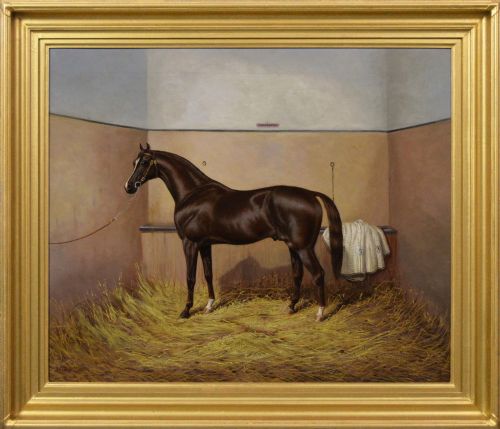


Victorian Racehorse Portrait
These Victorian racehorse portrait works capture the power and prestige of 19th-century turf champions on canvas.
Victorian Racehorse Portrait
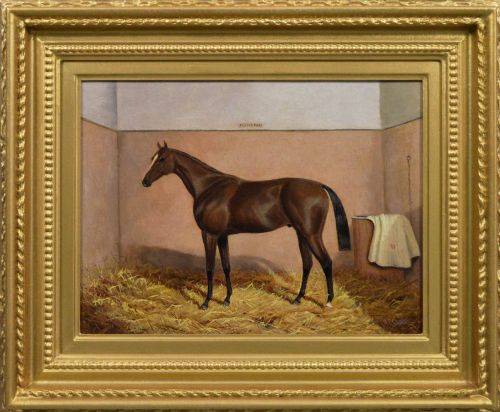
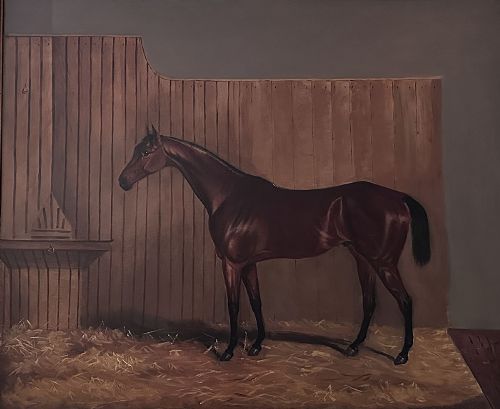
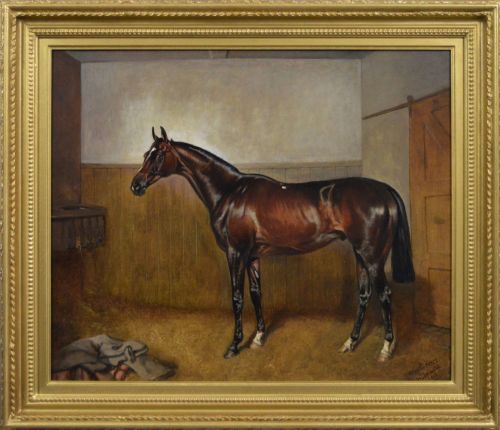
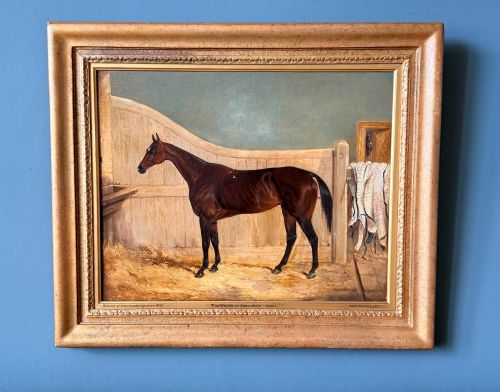
A victorian racehorse portrait depicts champion thoroughbreds and winners from the 19th century, frequently recording specific historic victories and named horses. Buyers find works spanning periods from 1890 to 1900, alongside broader 19th-century examples.
The subjects include celebrated equine athletes such as Flying Fox, Persimmon, and Diamond Jubilee, often shown with their jockeys or owners. These oil paintings belong firmly to the tradition of Victorian sporting art and equestrian portraiture.
Materials and technique
The pieces are executed in oil paint upon canvas surfaces, capturing the musculature and sheen of the thoroughbreds. Artists utilised traditional pigments and canvas supports standard to the period.
Many works retain their original giltwood or gold leaf wooden frames, complementing the rich tones of the oil paintings within.
Victorian Racehorse Portrait Retail Price Guide 2026
Typical asking prices for victorian racehorse portrait among the pieces listed under this phrase on Sellingantiques today, from the lower quarter to the upper quarter. They describe what is for sale here now, not the wider market.
The listings on this page consist exclusively of oil paintings on canvas dating from the 19th century and 1900.
Assessing the standard
Quality rests upon the fidelity of the horse's anatomy and the artist's ability to render the likeness of named champions like General Peace or Worcester. Works by documented painters command greater attention than anonymous portraits.
The skill in depicting the jockey and the surrounding racing context, such as Kempton Park or the Colombo Races, elevates the execution of the painting.
Albert Clark·John Alfred Wheeler·Thomas Walker Bretland·Samuel Spode·Alfred Wheeler
The Victorian Racehorse Portrait Glossary
- Giltwood
- Wood carved and covered with gold leaf or gold paint. This material forms the traditional framing for Victorian oil paintings.
- Victorian Sporting Art
- A genre of painting dedicated to horses, racing, and field sports. These works document the prominent thoroughbreds and events of the 19th century.
- Oil on Canvas
- Pigments bound in a drying oil medium applied to a stretched fabric support. This technique allows for subtle blending and rich tonal depth in equine portraits.
- Thoroughbred
- A horse breed developed for racing, noted for agility and speed. These animals form the primary subject matter for the portraits on this page.
Victorian Racehorse Portrait: Frequently Asked Questions
What is a victorian racehorse portrait?
It is an oil painting on canvas depicting a champion thoroughbred from the 19th century.
These artworks often record specific race winners, jockeys, and historic owners from the era.
Who painted these racehorse portraits?
The works are created by 19th-century sporting artists who specialised in equine subjects.
Painters such as Albert Clark, Samuel Spode, and John Alfred Wheeler documented famous racehorses of the period.
How were these paintings framed?
Many period pieces are housed in their original wooden frames finished with gold leaf.
This giltwood framing enhances the visual presence of the oil painting.
What subjects appear in the art?
The canvases feature named thoroughbred racehorses, frequently accompanied by their jockeys or trainers.
Specific events like the Colombo Races or races at Kempton Park are also depicted.