

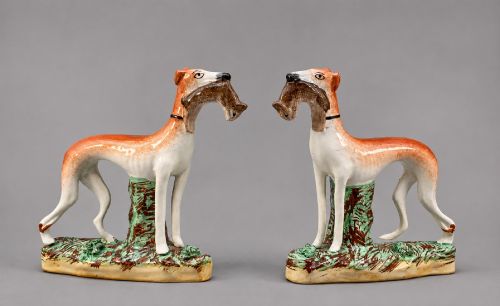
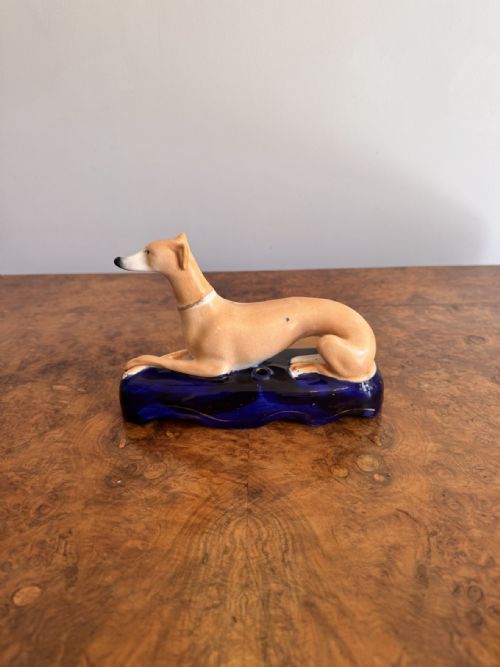
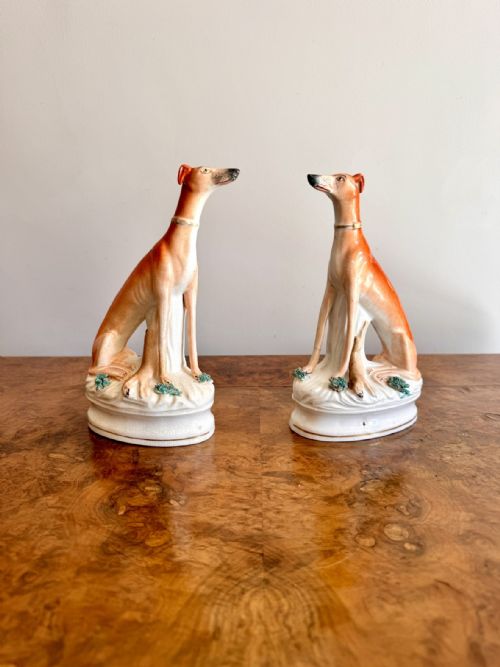
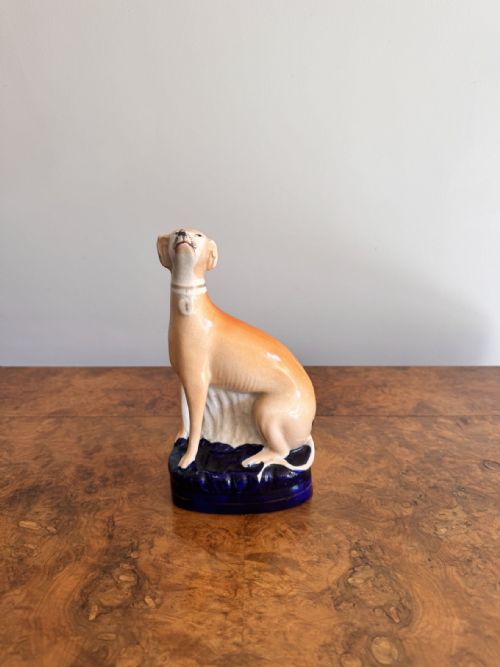


Victorian Pottery Greyhounds
Victorian pottery greyhounds are spirited ceramic figures capturing the nineteenth-century fascination with hunting dogs, offering instant charm to any mantelpiece.
Victorian Pottery Greyhounds
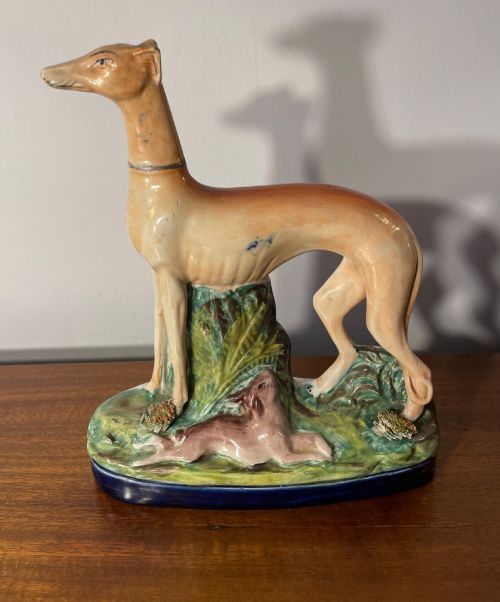
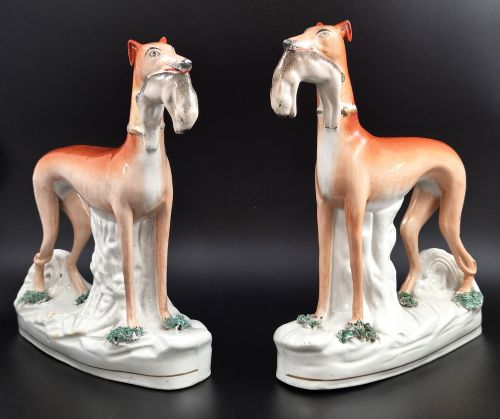
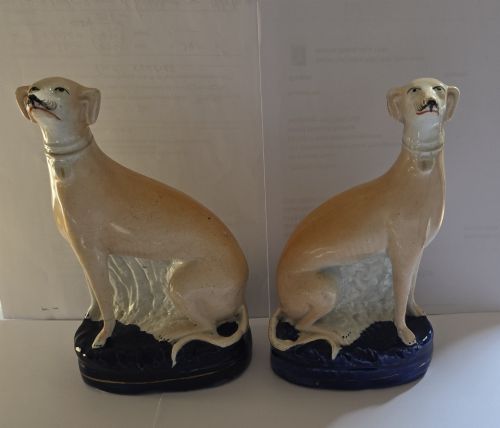
Victorian pottery greyhounds are decorative figures and functional items like inkwells or quill holders, modelled as seated hounds often paired with hares. These charming ceramics stem primarily from Staffordshire potteries during the nineteenth century, spanning decades from eighteen-forty to eighteen-eighty.
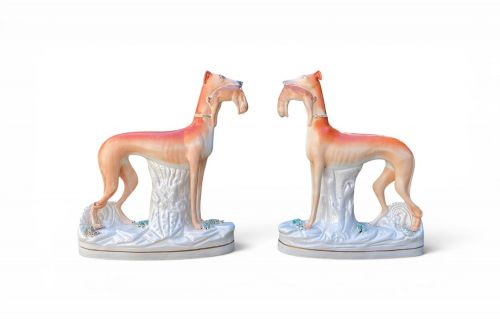
Buyers meet pairs most frequently on this page, alongside solitary seated hounds and larger figures. The forms range from standard mantel ornaments to desk accessories, reflecting the domestic utility and decorative tastes of the era.
Materials and Manufacture
Makers formed the figures using traditional Staffordshire ceramic techniques, firing the clay bodies before applying hand-painted enamels. The combination of earthenware and glaze yields the characteristic glossy finish seen across these nineteenth-century pieces.
Victorian Pottery Greyhounds Retail Price Guide 2026
Typical asking prices for victorian pottery greyhounds among the pieces listed under this phrase on Sellingantiques today, from the lower quarter to the upper quarter. They describe what is for sale here now, not the wider market.
Many of these noble hounds share space with a remarkably small hare.
Assessing Quality and Character
Proportion and scale also distinguish the pieces, with larger or unusually well-matched pairs demanding attention. The retention of original gold leaf accents and clean lead glazes elevates the visual impact of individual figures.
Thomas Parr
The Victorian Pottery Greyhounds Glossary
- Staffordshire pottery
- Ceramic wares produced in the pottery district of Staffordshire, England, encompassing numerous regional works.
- Lead glaze
- A shiny, glass-like coating containing lead oxide applied to earthenware to seal the porous clay body.
- Enamel paint
- Opaque coloured decoration applied over the fired glaze and subjected to a lower temperature secondary firing.
- Quill holder
- A desk accessory featuring a hollow or slot designed to hold writing feathers, often modelled as a seated hound.
Victorian Pottery Greyhounds: Frequently Asked Questions
What were greyhound figures used for?
Victorian pottery greyhounds served primarily as mantelpiece ornaments, bringing domestic scenes of the hunt into the nineteenth-century parlour.
Certain pieces also doubled as functional desk accessories, functioning specifically as inkwells or quill holders for writing desks.
How do I date these pottery hounds?
Dating relies on stylistic clues, ceramic bodies and known operating periods of Staffordshire potteries active during the nineteenth century.
Changes in enamel palettes and glaze compositions across the decades from eighteen-forty to eighteen-eighty help establish the approximate period.
Are these figures usually found in pairs?
Potters frequently produced these greyhounds as symmetrical matched pairs intended to sit at either end of a mantelpiece.
Solitary seated hound figures also appear regularly, alongside specific groupings that include a hare beneath the hound.
How do I care for antique earthenware?
Keep these glazed ceramic pieces away from direct sunlight and dust them gently with a dry, soft cloth.
Avoid using water or liquid cleaners on the enamel paint and gold leaf details to preserve the surface finish.